Watermelon Candy Electrolytes Review: My Adventure to Fit's Flagship Flavor Tested
We break down what's actually in My Adventure to Fit's Watermelon Candy electrolytes - the nutrition panel, sodium and potassium levels, real customer ratings, and how it stacks up against the brand's other flavors.
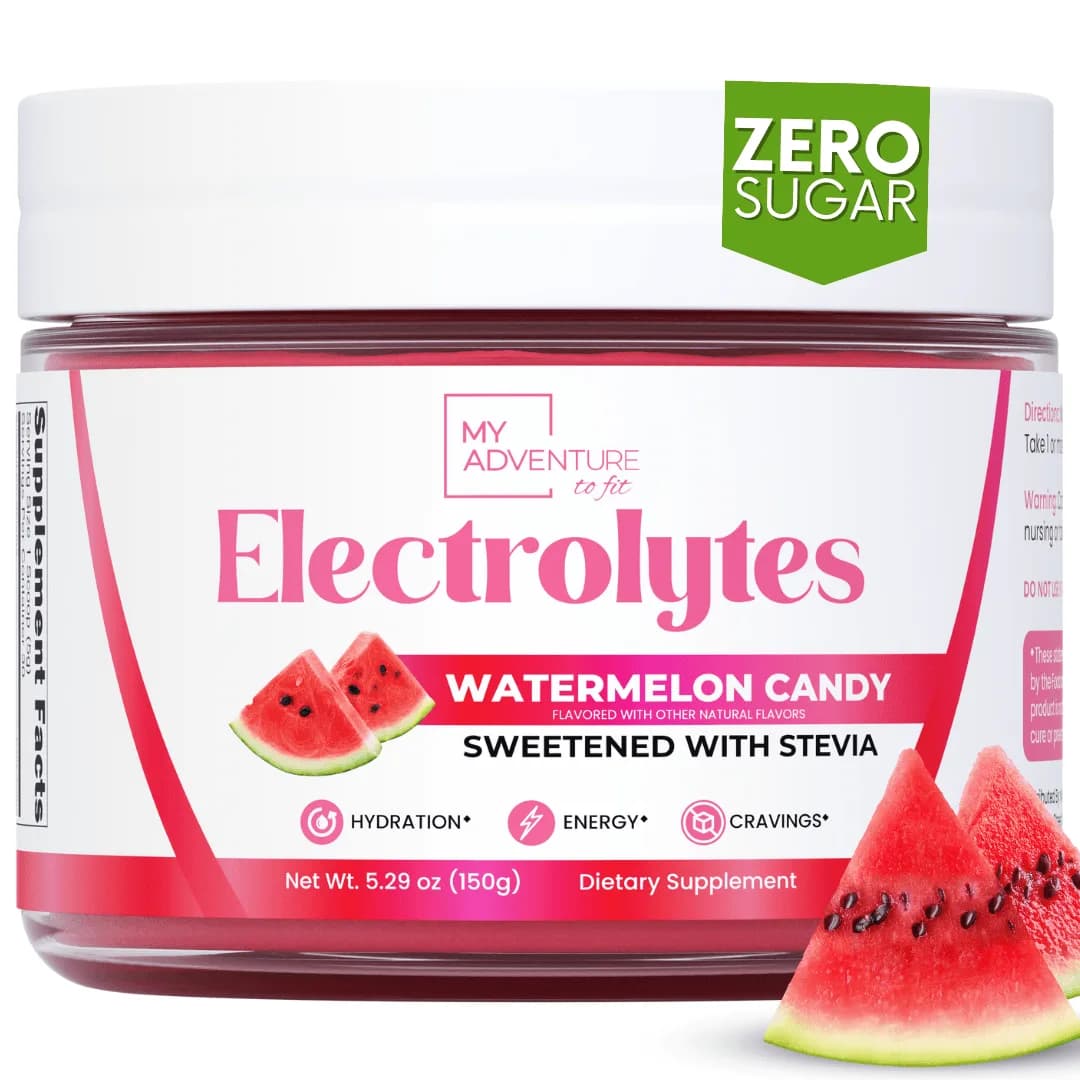
What's in the Watermelon Candy electrolyte formula
- What's in the Watermelon Candy electrolyte formula
- Behind the formula: My Adventure to Fit's founder story
- How Watermelon Candy tastes and mixes
- Watermelon Candy vs the brand's other electrolyte flavors
- What the sodium and potassium numbers actually mean
- Why the potassium content stands out
- Who this electrolyte mix actually fits
- How to read any electrolyte label
Watermelon Candy electrolytes is the flagship flavor in My Adventure to Fit's hydration line, and it's also the brand's most-reviewed electrolyte SKU by a wide margin. This is not another general brand overview — our full My Adventure to Fit brand review covers the whole product catalog. Here we open the canister on one specific mix: what's actually in it, how it tastes, and whether the formulation backs up the hype.
A low-sugar, potassium-forward hydration mix best suited to everyday hydration and lighter sessions, not hours-long endurance heat work
If you want a clean-label, zero-sugar electrolyte mix for daily hydration or shorter workouts, Watermelon Candy electrolytes deliver a pleasant candy-like taste with a real (if modest) sodium and potassium profile. If you're training for hours in the heat, this formulation alone is unlikely to replace what heavy sweating takes out.
Check Watermelon Candy ElectrolytesKey Highlights
- 5 calories, 1g carb, 1g sugar per 5g serving — sweetened with Stevia Leaf Extract, no added sugar.
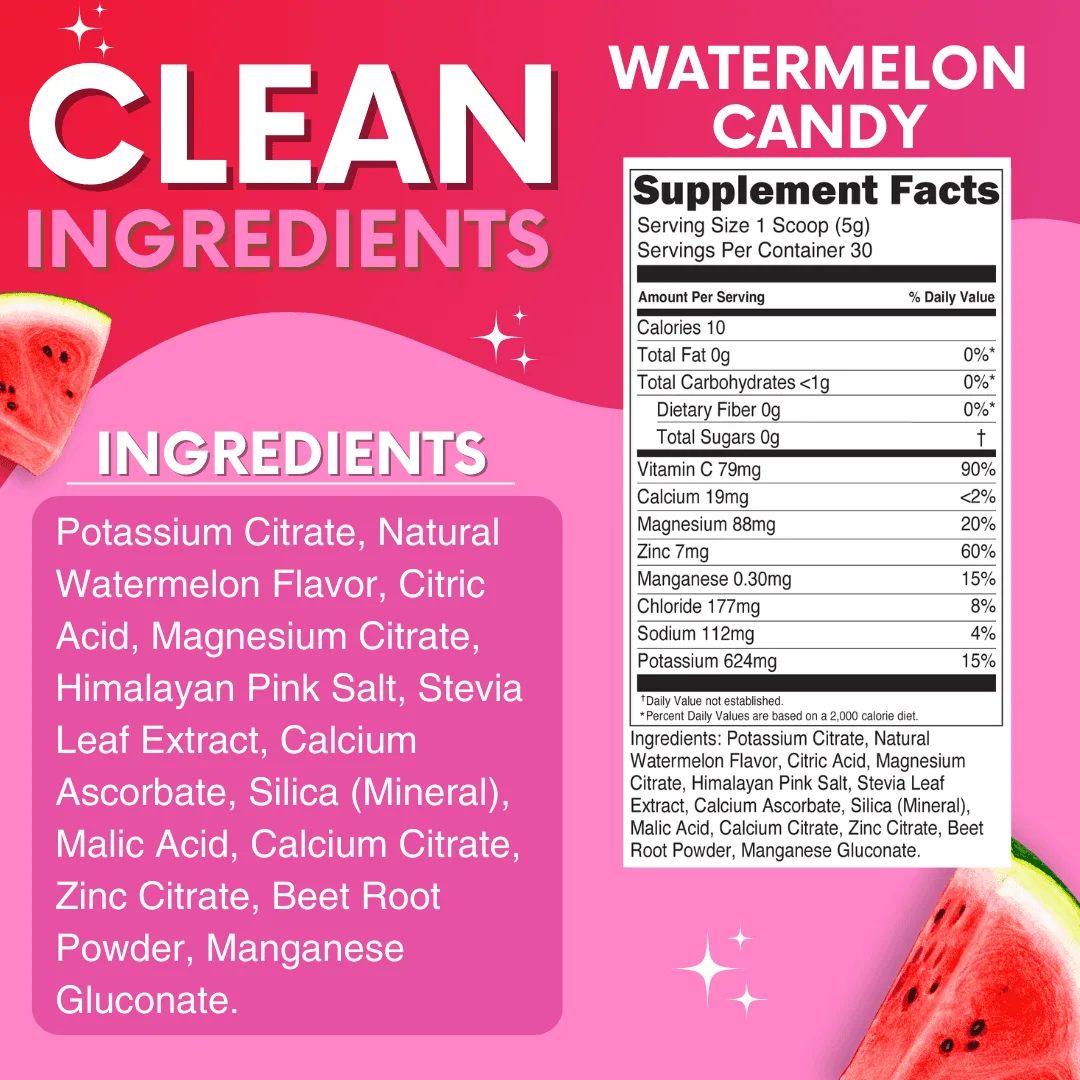
- 114mg sodium (5% DV) and 623mg potassium (13% DV) per serving, as printed on the label.
- Rated 4.79/5 from 705 reviews — the most-reviewed flavor in the four-flavor electrolyte line, though not the top-rated one.
- Magnesium citrate is listed in the ingredients, but the brand does not publish a per-serving milligram figure.
What's in the Watermelon Candy electrolyte formula
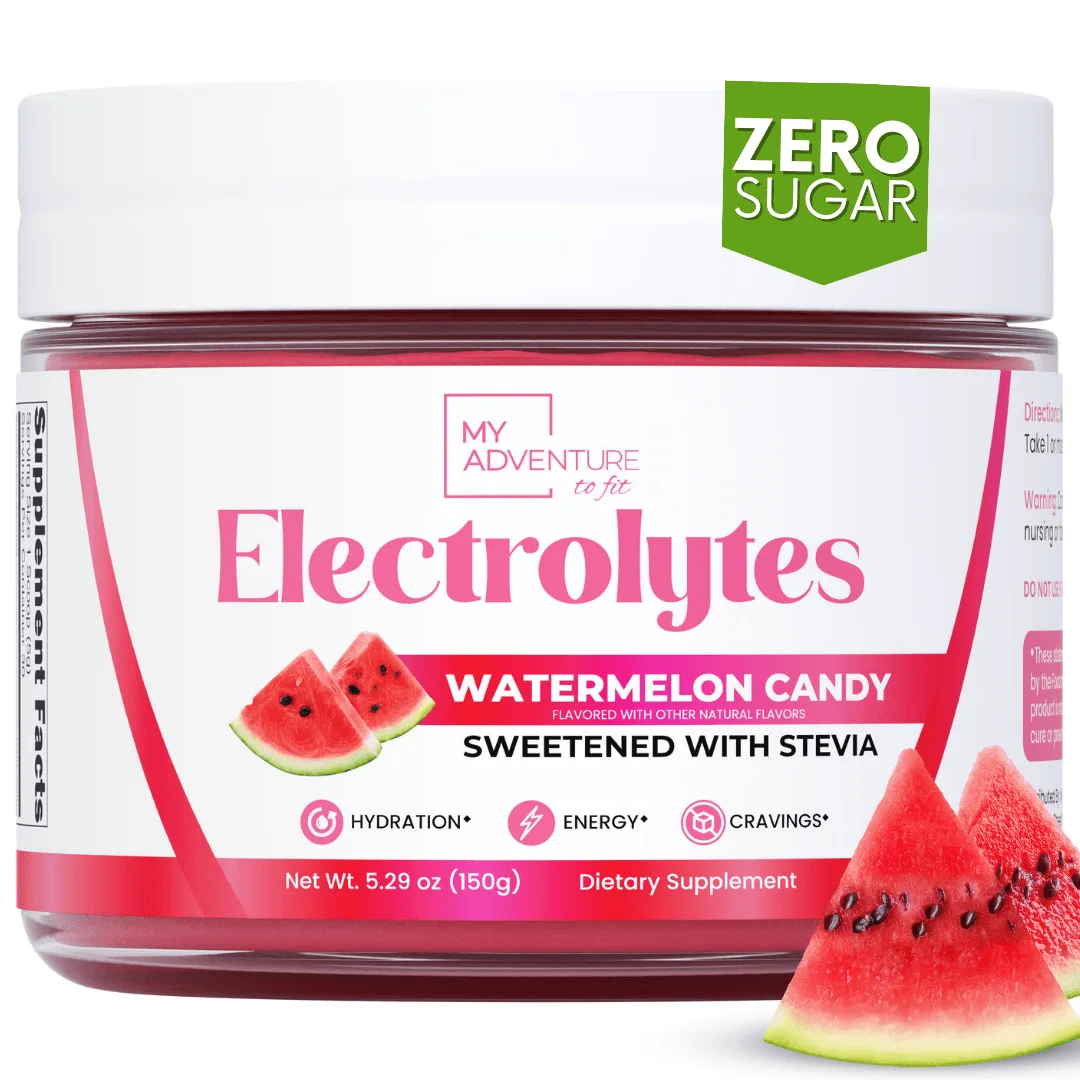
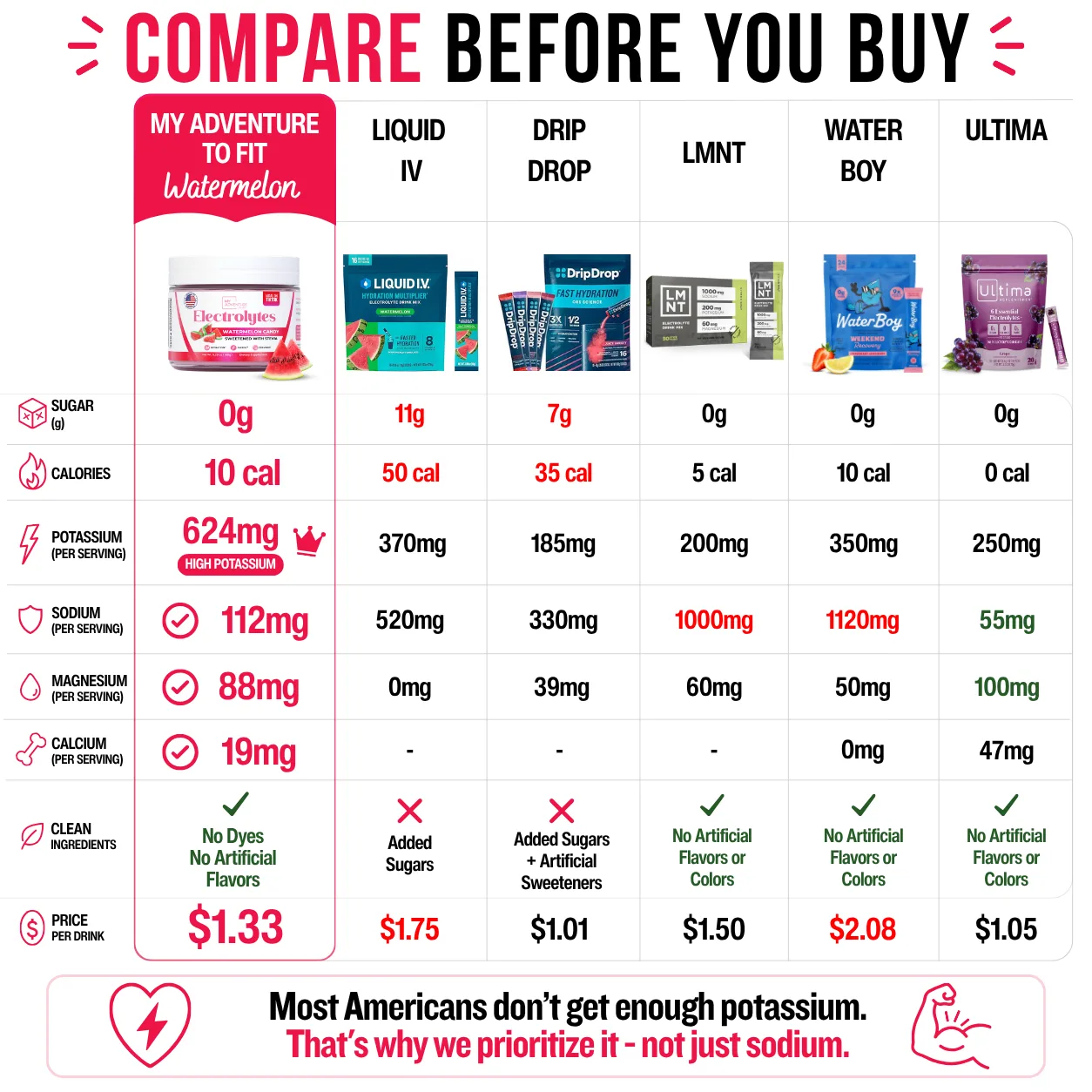
Per 5g serving, the label lists 5 calories, 1g of carbohydrate, 1g of sugar, 114mg sodium (5% Daily Value), 623mg potassium (13% Daily Value), and 18mg calcium (2% Daily Value). It's sweetened with Stevia Leaf Extract, has zero added sugar, and the brand states it uses no artificial flavors, colors, or sweeteners, with plant-based coloring instead of synthetic dyes.
Magnesium citrate does appear on the ingredient list, which is worth knowing if you're specifically shopping for a magnesium source — but the exact milligram amount per serving is not published anywhere on the label or product page, so treat any magnesium benefit as unquantified rather than a stated dose.
Behind the formula: My Adventure to Fit's founder story
My Adventure to Fit was founded by Tiffany Magee, who began documenting her weight-loss journey on Instagram in May 2016, starting at over 230 pounds as a single mother. By 2018 she had lost 93 pounds and built a community of roughly 170,000 women around shared health goals. In 2019, after surgery to remove loose skin from the weight loss, Magee launched a line of supplements built around clean, transparent ingredient lists — the electrolyte line, including Watermelon Candy, grew out of that same clean-formulation focus.
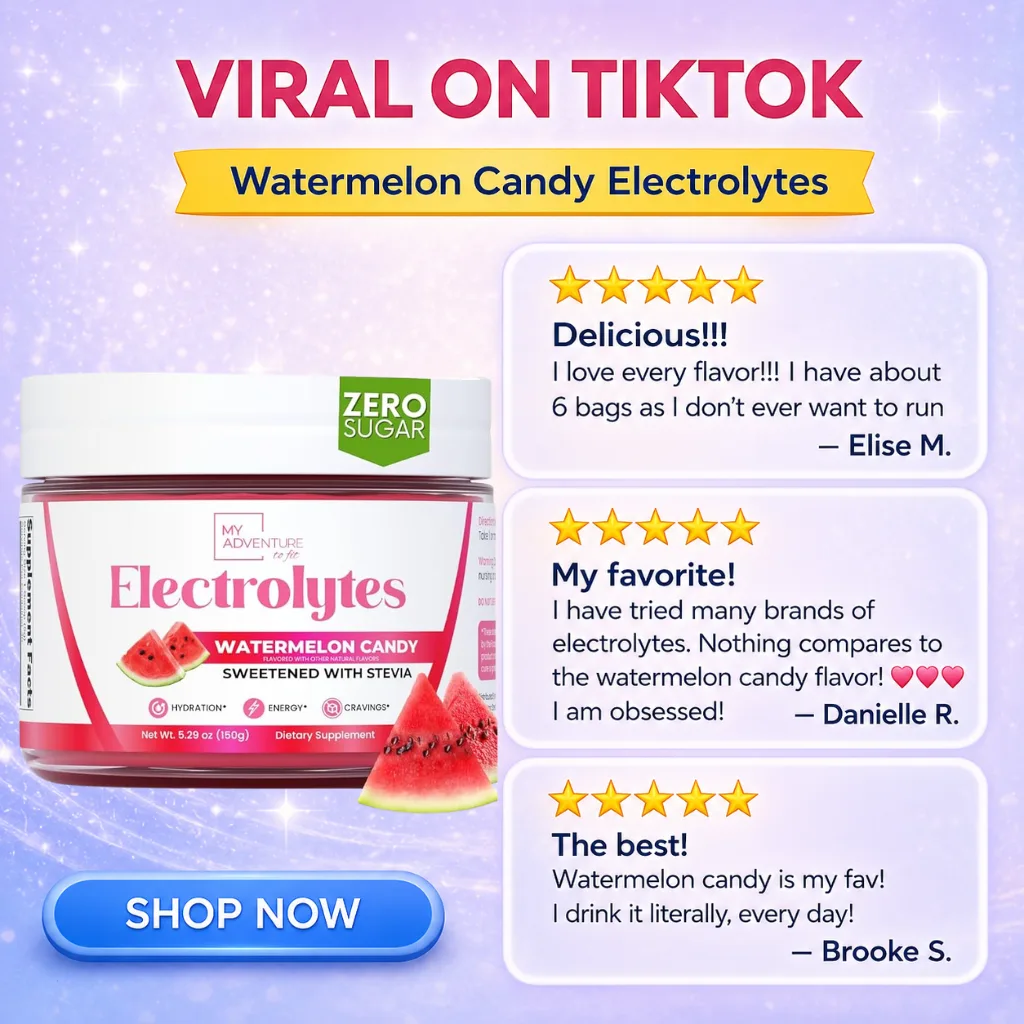
Watermelon Candy Electrolytes
4.79/5 from 705 reviews, zero sugar, stevia-sweetened.
How Watermelon Candy tastes and mixes
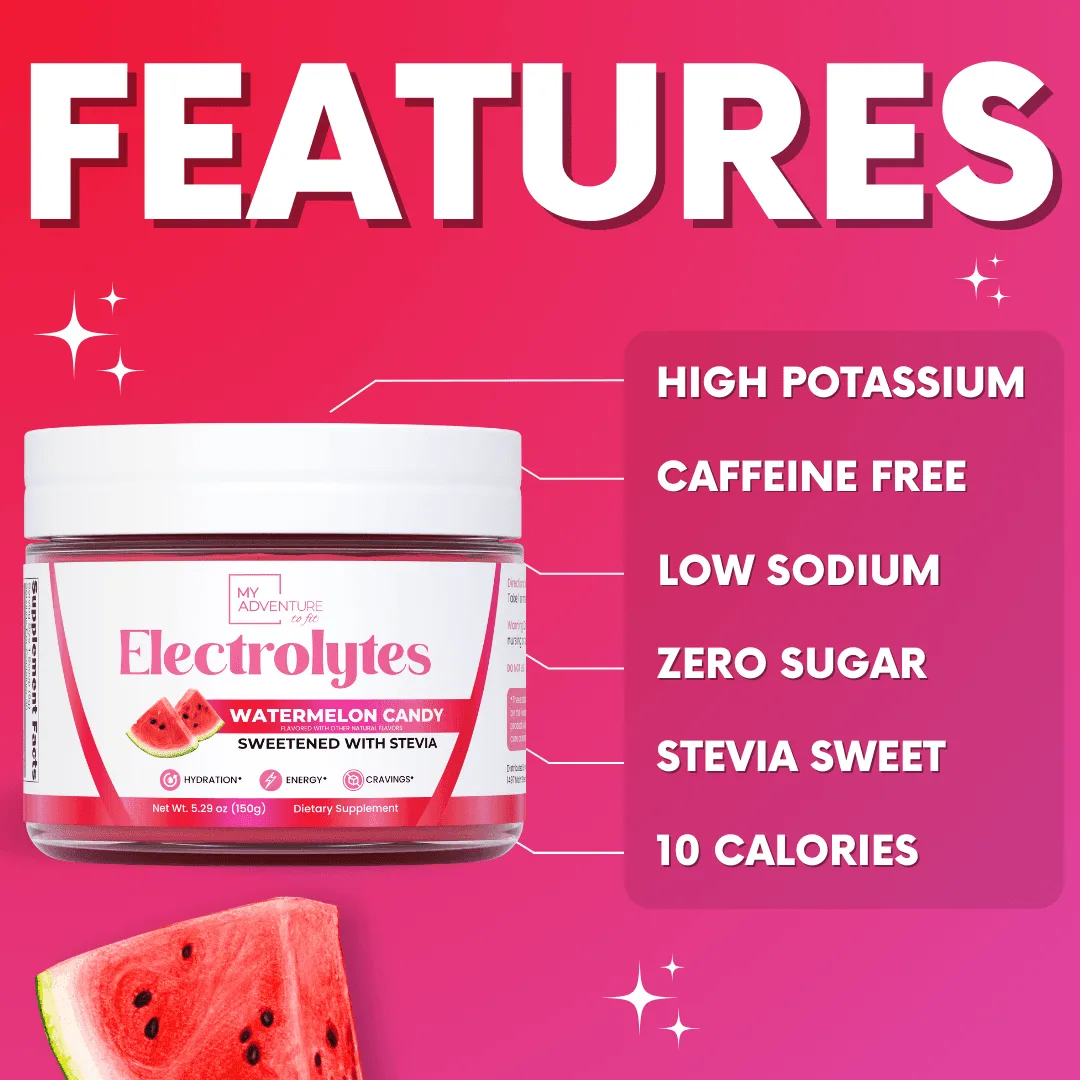
The brand markets this flavor line as having "no salty taste" despite the sodium and potassium content, which is a common formulation goal for candy-style electrolyte mixes — the stevia sweetness and fruit flavoring are designed to mask the mineral taste that plain electrolyte salts usually carry. Because the powder is fine and the serving size is small (5g), it dissolves quickly in cold water without the grittiness some magnesium-heavy mixes can leave behind. It's also caffeine-free, so it works as an any-time-of-day sipper rather than something you have to time around sleep.
The core trade-off with a candy-flavored, stevia-sweetened mix is personal preference: readers who dislike stevia's aftertaste in general will likely notice it here too, since it's the sole sweetener. There's no cane sugar or sugar alcohol blended in to soften that profile.
Watermelon Candy vs the brand's other electrolyte flavors
My Adventure to Fit sells four electrolyte flavors, all built on the same zero-sugar, stevia-sweetened, plant-colored formulation. Shopify-verified customer ratings as of July 2026 show Watermelon Candy carries by far the largest review volume, but it is not the highest-rated flavor in the lineup:
| Flavor | Rating | Review count |
|---|---|---|
| Watermelon Candy | 4.79 / 5 | 705 |
| Blue Raspberry | 4.91 / 5 | 556 |
| Lemon Candy | 4.88 / 5 | 181 |
| Dragon Fruit | 4.98 / 5 | 95 |
The honest read here: Watermelon Candy's popularity (by review count) doesn't mean it's the line's best-tasting flavor by rating — Dragon Fruit and Blue Raspberry both score slightly higher, just with far fewer reviews behind them. If you're flavor-sensitive, it may be worth trying a sample pack rather than assuming the most-reviewed option is automatically the best-tasting one for your palate.
What the sodium and potassium numbers actually mean
Per the label, Watermelon Candy electrolytes provide 114mg sodium and 623mg potassium per 5g serving. Those are the only figures the brand publishes — we're not going to convert them into a per-liter or per-bottle estimate, because that math depends entirely on how much water you mix into a single scoop, and any such conversion the brand or a reviewer might state would be an assumption dressed up as a fact.
What we can compare it to is published exercise-science guidance. The American College of Sports Medicine's position stand on exercise and fluid replacement recommends sodium in the range of 0.5–0.7g per liter of fluid for exercise sessions lasting longer than an hour, partly to improve palatability and fluid retention and partly to guard against hyponatremia in people who drink large volumes of fluid. The International Society of Sports Nutrition's position stand puts a similar range — 500–700mg of sodium per liter — for ultrarunning and other multi-hour endurance efforts.
Real-world sweat losses back up why that guidance exists: research compiled by the National Center for Biotechnology Information notes a two-hour endurance session can cost an athlete roughly 1.6g of sodium through sweat, and high-intensity sessions can push that as high as 5g in one workout. NASEM's 2019 dietary reference intake update separately sets a general adult Adequate Intake of 1,500mg of sodium a day and a potassium Adequate Intake of 3,400mg for men and 2,600mg for women — figures for daily diet, not sweat replacement, but useful context for how small a single 114mg sodium serving really is next to full-day needs.
Put plainly: this is a low-sodium, potassium-forward electrolyte mix. That's a reasonable, even deliberate, trade-off for everyday hydration, gentle workouts, or people managing blood pressure who don't want a sodium-heavy drink. It is not designed to replace what a long, hot endurance session sweats out — for that use case, the published sodium figure is well under what ACSM and ISSN guidance suggests athletes need to replace.
Why the potassium content stands out
Potassium works alongside sodium to regulate muscle contractions; Mayo Clinic guidance notes potassium plays a role in storing the carbohydrates that fuel muscles, and how often muscles contract depends heavily on having adequate potassium on board. Potassium and sodium also cooperate through the cellular sodium-potassium pump that governs fluid balance, and up to 20% of total body potassium can be lost through sweat during exercise — so a formula skewed toward potassium, like this one at 623mg (13% DV) per serving, is a legitimate design choice rather than a shortfall.
Magnesium citrate, meanwhile, is described in ingredient-science sources as acting as a kind of gatekeeper for cellular hydration and a factor in muscle contraction and relaxation. Because My Adventure to Fit doesn't publish the milligram amount, we can only note that the ingredient is present — not claim a specific dose or benefit level.
Who this electrolyte mix actually fits
Ohio State Health & Discovery notes that for light activity under an hour in mild conditions, plain water is typically sufficient, and electrolyte drinks earn their keep once workouts exceed an hour, conditions turn hot or humid, or training intensity climbs. Peer-reviewed research on the Beverage Hydration Index has also found that electrolyte content is the single biggest lever in how well a beverage is retained by the body, ahead of added carbohydrate or protein.
Given Watermelon Candy's modest sodium level, the best fit is everyday hydration, short-to-moderate workouts, hot-weather sipping, zero-sugar diets, and people who specifically want more potassium than sodium in their mix. If your training regularly runs multiple hours in the heat, or you know you're a heavy "salty sweater," pair it with a higher-sodium option or added electrolytes rather than relying on this formulation alone.
My Adventure to Fit Watermelon Candy Electrolytes
What We Like
- Zero added sugar, Stevia-sweetened, only 5 calories per serving
- Potassium-forward profile (623mg, 13% DV) supports muscle function
- Largest review base of any flavor in the line, at a strong 4.79/5
What to Consider
- 114mg sodium per serving sits well under ACSM/ISSN guidance for long endurance sessions
- Magnesium citrate is present but the mg per serving is not published
- Stevia sweetness may not suit every palate
Watermelon Candy electrolytes deliver a clean-label, zero-sugar mix with a real if modest mineral profile, backed by a large base of customer ratings. It's a sound daily-hydration pick; just don't expect it to fully cover the sodium losses of a multi-hour endurance session in the heat.
How to read any electrolyte label
Whether you're comparing Watermelon Candy to another flavor or a different brand entirely, a few label checks tell you most of what you need to know:
Sodium content
Look for roughly 450–700mg of sodium per liter of finished drink, or about 100–160mg per 8oz serving, for a mix built around longer or hotter exercise. ACSM's guidance of 0.5–0.7g per liter for sessions over an hour is a useful benchmark if that's your primary use case.
Potassium and magnesium
Potassium in the 100–300mg per serving range is typical; magnesium, when included, is commonly citrate or another bioavailable form at roughly 10–50mg per serving in sports drinks — though as this review shows, not every brand publishes that number, so ask if it isn't on the label.
Sugar, sweeteners, and additives
Electrolytes (sodium, potassium, magnesium, chloride, calcium) work together to balance fluid, power nerve signals and muscle contractions, and maintain proper pH — but how a brand delivers that (cane sugar vs. stevia, synthetic dye vs. plant color) is a formulation choice, not a hydration-science requirement. Decide what fits your diet, then compare cost per serving across brands and formats — our guide to simplifying a supplement routine covers how to avoid stacking overlapping products.
How We Chose
We evaluated Watermelon Candy electrolytes against its own published label data, the brand's three sibling flavors, and peer-reviewed hydration and sports-nutrition guidance — not against unrelated competing brands, since this review is scoped to one specific product.
The Bottom Line
Watermelon Candy electrolytes is a clean, zero-sugar, potassium-forward hydration mix that earns its large review base for taste and everyday use. It's a smart daily-hydration pick, not a dedicated endurance-heat formula — pair it with more sodium if your training goes long and hot.
See Watermelon Candy ElectrolytesReferences
- American College of Sports Medicine. Position Stand: Exercise and Fluid Replacement.
- International Society of Sports Nutrition. Position Stand on sodium intake for endurance and combat sports.
- National Academies of Sciences, Engineering, and Medicine. Dietary Reference Intakes for Sodium and Potassium (2019 update).
- National Center for Biotechnology Information. Sodium loss during exercise — sweat sodium rates and dehydration risk.
- National Center for Biotechnology Information. Beverage Hydration Index study on electrolytes and fluid retention.
- Ohio State Health & Discovery. Hydration and electrolytes during exercise.
- Mayo Clinic. Q&A on hydration in the summer.
Recommended for you
 SEEQ clear protein Review: 22g Protein, Zero Sugar (2026)
 Sunday Moss Review 2026: 7 Things to Check Before You Buy
 Wild Society Protein Powder Review 2026: Best Whey Pick?
 Wild Society Superfoods: 6 Best Clean Picks (2026 Guide)
 Clean Protein for an Active Lifestyle: The Best 2026 Guide
 Wild Society vs Other Clean Protein: Best 2026 Guide