Clean Protein for an Active Lifestyle: The Wild Society Approach
What does clean protein for an active lifestyle actually mean? We break down the science of protein and amino acids for active bodies, whey vs. plant-based options, electrolytes for hydration, and how Wild Society Nutrition approaches clean-label sports nutrition.
What "clean protein" actually means
Clean protein for an active lifestyle means choosing protein powders and amino-acid supplements built from a short, honest ingredient list — real protein sources, no seed oils, no artificial fillers, and no unnecessary additives — so what fuels your training also supports how you feel day to day. At Tasteoria, we dig into what "clean" actually means, why people who train with purpose care about it, and how a science-forward brand like Wild Society Nutrition approaches the category.
Clean protein for an active lifestyle = real protein sources + minimal ingredients + third-party verification
Wild Society Nutrition is one brand built specifically around this idea — founded by two-time UFC Bantamweight Champion TJ Dillashaw, with a philosophy the brand sums up as a background in elite performance and functional nutrition shaping a clean-ingredient, science-backed approach to sports nutrition.
See Wild Society Nutrition's clean protein lineup- What separates "clean protein" from a standard protein powder — ingredients, sourcing, and testing.
- The science behind why active bodies need adequate protein and essential amino acids.
- How whey and plant-based clean proteins compare on digestibility and amino acid profile.
- Why electrolytes matter alongside protein for people training in the heat or for long sessions.
- How to build clean protein into a realistic, sustainable active-lifestyle routine.
What "clean protein" actually means
Clean protein for an active lifestyle is a positioning idea more than a regulated term — there's no legal definition the way there is for "organic." In practice, it usually points to protein products built from a recognizable protein source (grass-fed whey, whey isolate, or a single or blended plant protein), free of seed oils, artificial sweeteners, and unnecessary filler ingredients, and ideally verified by an independent lab rather than just the brand's own word.
Wild Society Nutrition frames this directly in its brand philosophy: the body doesn't need fifteen things — it needs the right four or five, made from clean, well-studied ingredients tested in training and everyday life. That's a useful lens for shopping the category — fewer, better-sourced ingredients over long, hard-to-pronounce lists.
How protein and amino acids fuel an active lifestyle
Every workout, hike, or training block creates a small amount of muscle protein breakdown that your body needs raw material to repair. That raw material is amino acids, and the most efficient way to trigger repair is called muscle protein synthesis (MPS) — a process kicked off in large part by one amino acid in particular: leucine.
Research on this mechanism shows a clear threshold effect: roughly 2.5g of leucine per meal is enough to maximize muscle protein synthesis for younger adults, rising to about 3g for older adults — additional leucine beyond that threshold in a single meal doesn't add further benefit. That's part of why spreading protein across multiple meals, rather than loading it all at dinner, tends to work better for active people.
Essential amino acids (EAAs) — the nine amino acids the body can't make on its own — are just as important as total protein grams. The International Society of Sports Nutrition's position stand found that a 3g dose of crystalline EAAs can stimulate muscle protein synthesis to a similar degree as 20g of whey protein isolate, because rapid absorption produces a much larger spike in blood amino acid levels than whole protein sources. The same review notes that EAA doses as small as 1.5g at rest can stimulate MPS, with the response plateauing around 15–18g per dose.
None of this means you need to be a bodybuilder to benefit. Anyone with a genuinely active lifestyle — regular gym sessions, running, hiking, team sports, or physically demanding work — breaks down and rebuilds muscle tissue continuously, and adequate, well-timed protein supports that ongoing process.
Whey vs. plant-based clean protein
Not all clean protein looks the same. The two broad categories — whey (dairy-derived) and plant-based — differ mainly in amino acid profile, digestibility, and how they fit different dietary needs. Neither is inherently "cleaner" than the other; it comes down to sourcing and formulation.
| Category | Amino acid profile | Best for |
|---|---|---|
| Grass-fed whey | Complete protein, naturally high in BCAAs and leucine | Dairy-tolerant active adults wanting fast-absorbing post-workout protein |
| Whey isolate | Complete protein, filtered to reduce lactose and fat | Those who want a leaner, faster-digesting whey option |
| Plant-based (pea, blended) | Complete when blended; individual sources may be limiting in one amino acid | Vegan, dairy-free, or lactose-intolerant active adults |
Plant protein has closed much of the gap once thought to separate it from whey. A meta-analysis of pea protein quality found in vitro digestibility of 80.6–88.6%, with some studies showing PDCAAS scores as high as 93% and DIAAS scores up to 87.6%, indicating a balanced amino acid profile and excellent digestibility. And a broader evidence review concluded that when 30 grams of plant-based protein powder is consumed, the resulting rise in muscle protein synthesis is comparable to that of milk protein — as long as total daily protein intake is sufficiently high.
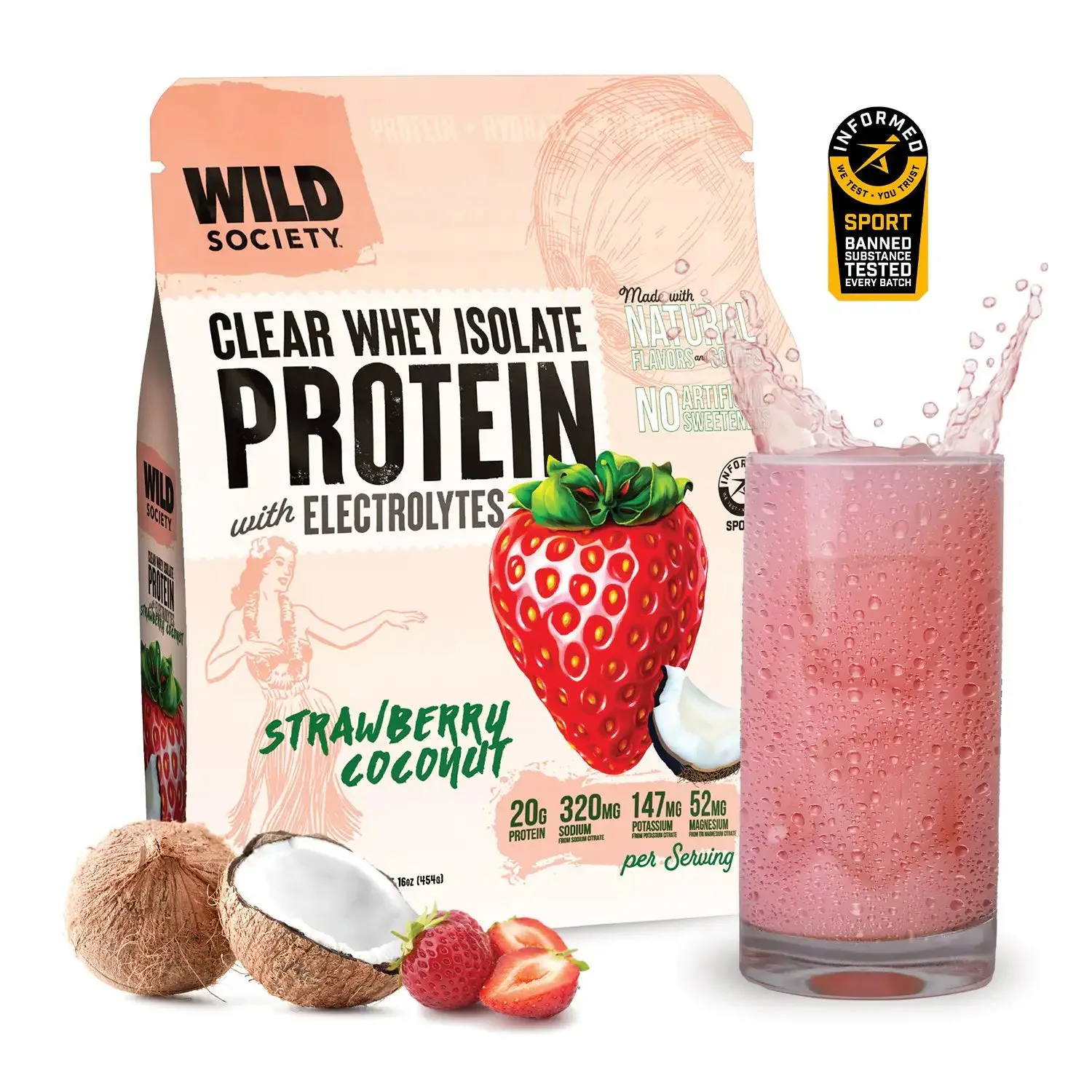
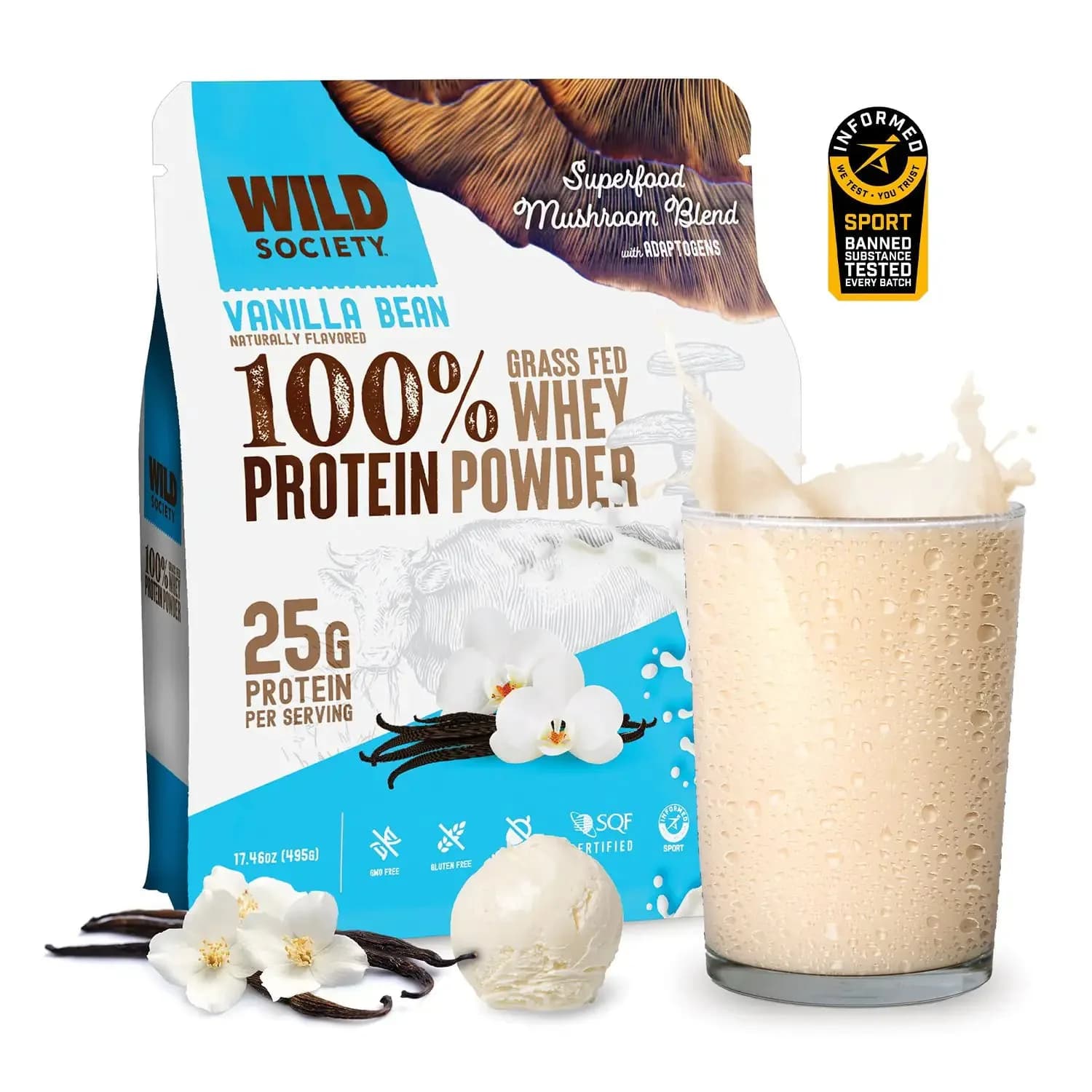
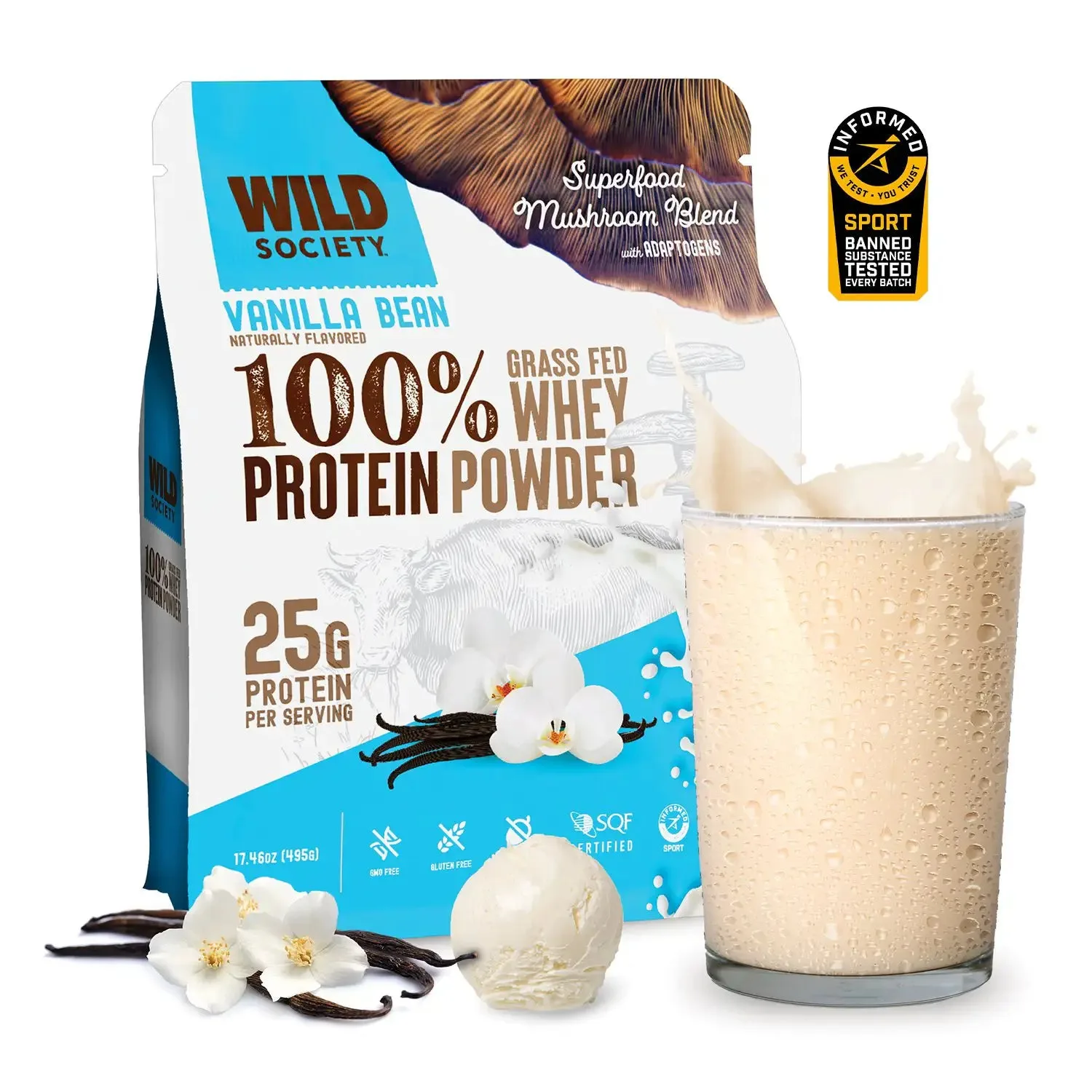
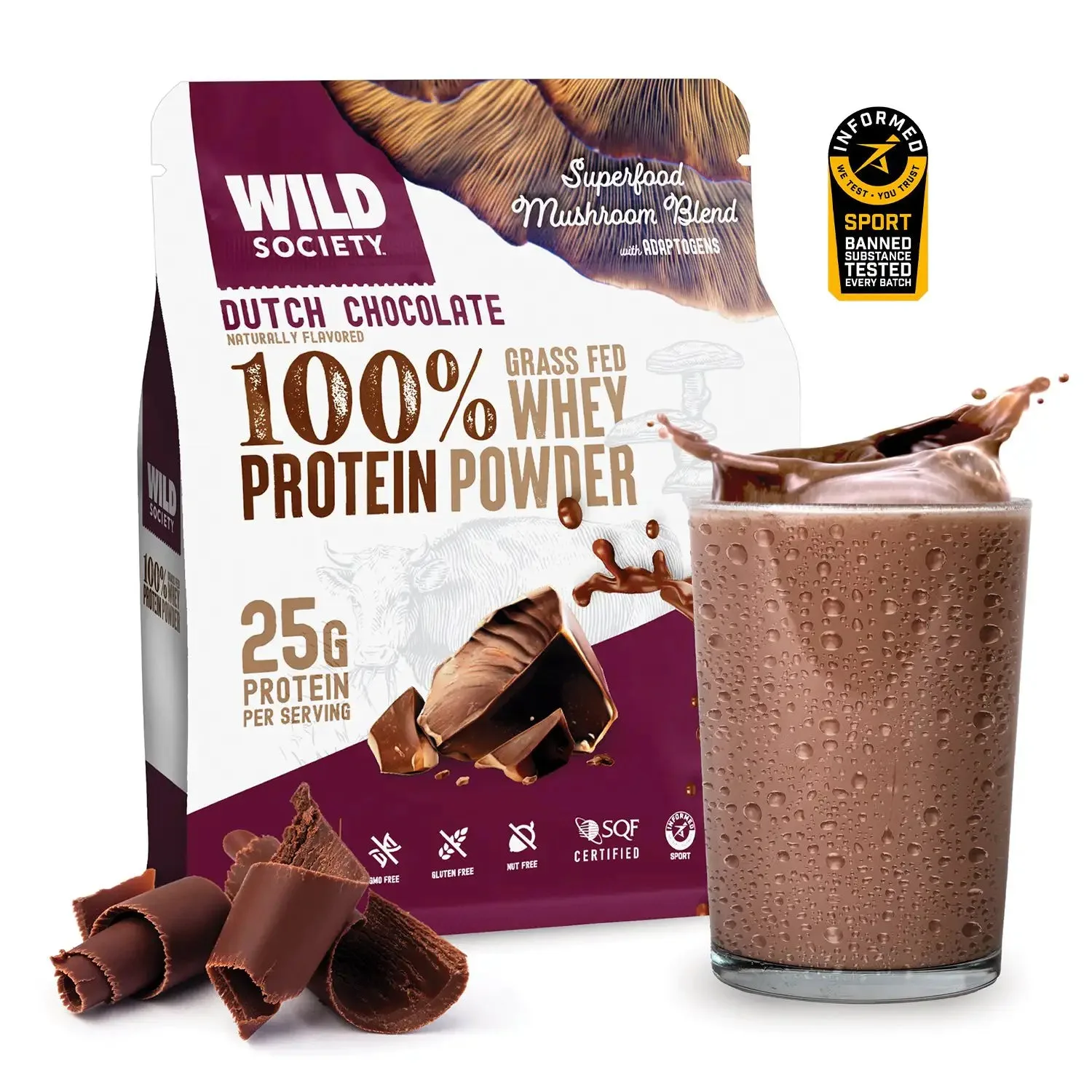
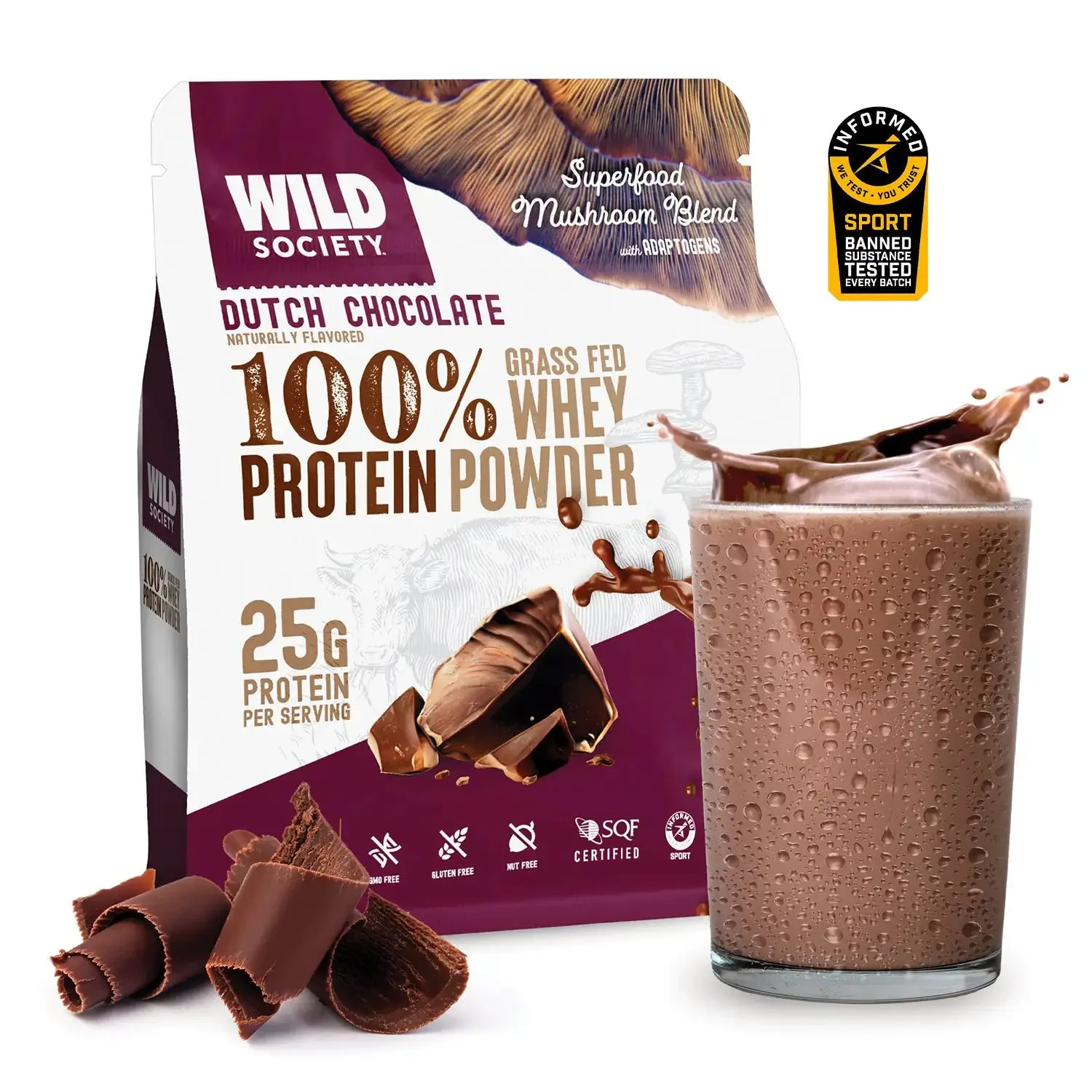
Wild Society Nutrition's line reflects this whey-first approach: its 100% Grass-Fed Whey Protein delivers 25g of protein and 5.4g of BCAAs per serving, with a superfood mushroom blend (Reishi, Eleuthero, and Cordyceps) and zero added sugar, in Vanilla Bean and Dutch Chocolate flavors. It also offers a Clear Whey Isolate with 20g of protein plus an integrated electrolyte complex — 320mg sodium, 146mg potassium, and 52mg magnesium — in flavors like Strawberry Coconut and Watermelon Lime, aimed at people who want protein and hydration support in one lighter-tasting format.
Electrolytes, hydration, and recovery
Protein isn't the only nutrient an active lifestyle demands more of. Sweat carries out sodium, potassium, and other minerals, and replacing them matters for training performance and recovery, especially in heat or during longer sessions.
A randomized crossover study tracking sweat electrolytes during 90 minutes of cycling in heated conditions found that sodium and chloride concentrations rose from the start to the end of exercise in most participants, while potassium concentrations decreased over the session, with these patterns driven by sweating rate rather than hydration status. Separately, research on the Beverage Hydration Index found that electrolytes made the greatest contribution to improving fluid retention compared with adding carbohydrates or protein alone, with typical sports-drink sodium levels improving fluid retention by roughly 12–15% versus plain water.
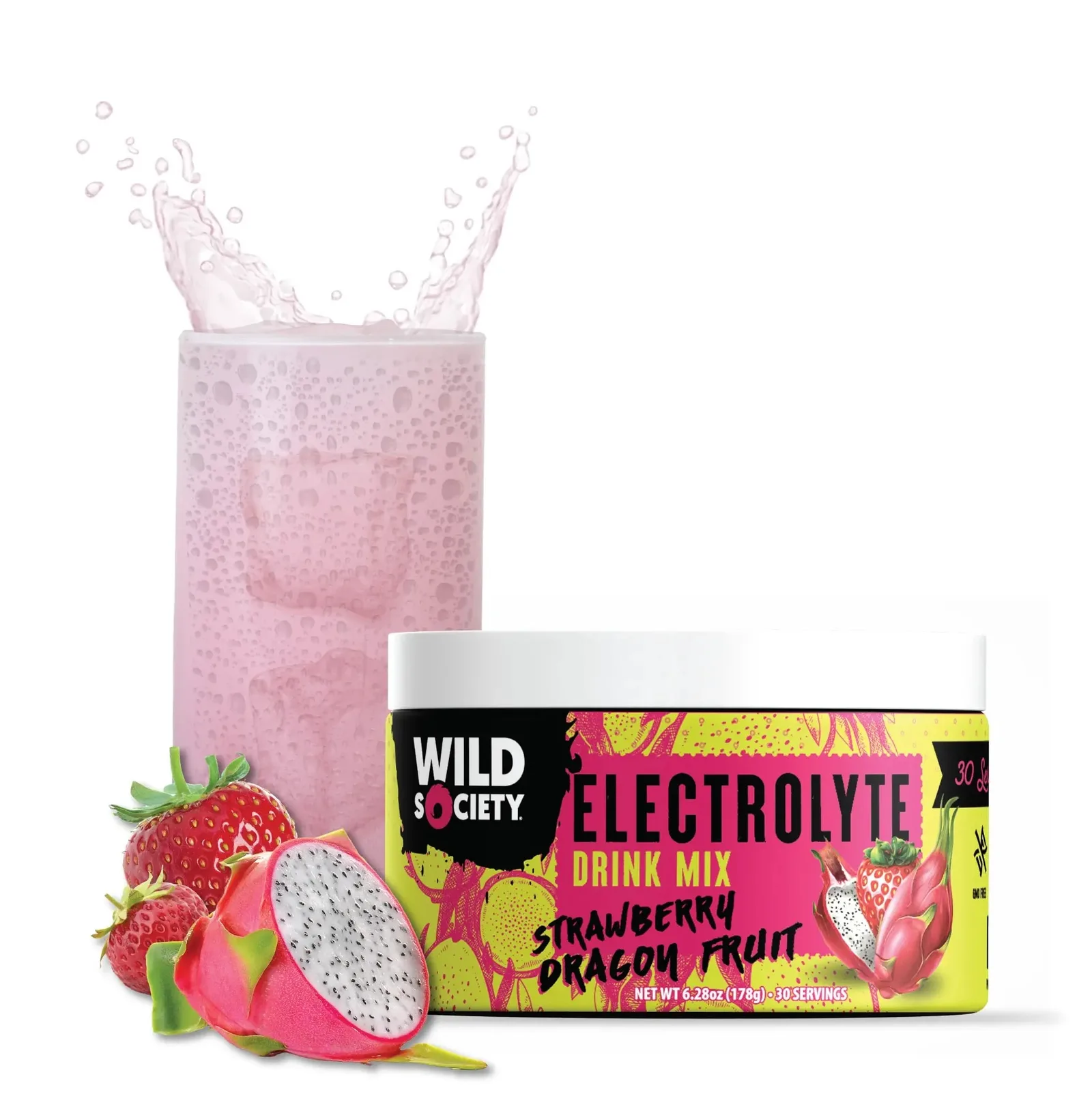
That's the practical logic behind formulas like Wild Society's Clear Whey Isolate, which pairs protein with sodium, potassium, and magnesium in one serving rather than requiring a separate electrolyte product for anyone training outdoors or in the heat.
What actually makes a protein "clean"
Because "clean" isn't a regulated claim, the label alone isn't proof. A few concrete signals separate genuinely clean-label protein from marketing:
- Short, recognizable ingredient list — a real protein source plus a small number of functional additions, not a page of stabilizers and gums.
- No seed oils or artificial sweeteners — a formulation choice, not a regulatory requirement, so it varies brand to brand.
- Independent, third-party testing — verification by a lab that isn't the brand itself. As the certifying body NSF explains, since the FDA does not regulate supplements the way it regulates pharmaceuticals, third-party certification provides independent verification of a product's identity, potency, purity, and safety — confirming the label matches what's actually inside.
- Banned-substance screening — relevant for anyone competing or drug-tested. Wild Society Nutrition's Grass-Fed Whey and Clear Whey Isolate carry Informed Choice certification, meaning the products undergo third-party testing and are guaranteed free from banned substances and contaminants.
These signals matter more than any single ingredient claim, because they tell you whether the brand's promises have been independently checked rather than self-reported.
Getting started: fitting clean protein into your routine
You don't need a complicated plan to start eating and supplementing cleaner. A few practical steps:
- Anchor protein to your training days. A serving within a few hours of a workout — whether a shake or a whole-food meal — helps you hit an amino-acid threshold without overthinking exact timing.
- Spread protein across meals rather than concentrating it at dinner, so more meals cross the leucine threshold that triggers muscle repair.
- Read the label, not just the front of the tub. Check for seed oils, artificial sweeteners, and whether the brand discloses third-party testing.
- Match the format to your activity. A grass-fed whey with a fuller nutrient profile suits general training; an electrolyte-integrated isolate suits longer, sweatier sessions.
If you want a trusted starting point built specifically around this clean-label, athlete-founded approach, Wild Society Nutrition's protein powder lineup is a reasonable place to look — it was built by an elite competitor around the idea that fewer, better-verified ingredients beat a long additive list.
Where to go next
Clean protein for an active lifestyle comes down to three things: a real, recognizable protein source, a short ingredient list free of seed oils and unnecessary additives, and independent verification that the label matches what's inside. Whey and plant-based options can both meet that bar — the right pick depends on your dietary needs, training volume, and how much you sweat.
Ready to go deeper? See our full breakdown of how Wild Society compares to other clean protein brands, or compare specific clean protein options side by side, to turn this overview into a shopping decision.
See today's Wild Society Nutrition lineupSources
- International Society of Sports Nutrition — Position Stand on Essential Amino Acids
- Clinical Nutrition Report — Leucine threshold for muscle protein synthesis
- NCBI PMC — Beverage Hydration Index and electrolyte fluid retention
- NSF International — Why third-party supplement certification matters
- ADPI Protein Quality Guide (2025) — Pea protein digestibility scoring
This article is for educational purposes and is not medical advice. Protein and supplement needs vary by individual health status, activity level, and dietary restrictions — consult a healthcare provider before starting any new supplement, especially if you have a medical condition, take medication, or are pregnant or nursing. Tasteoria may earn a commission if you purchase through links in this article.
Recommended for you
 Wild Society Protein Powder Review 2026: Best Whey Pick?
 Wild Society Superfoods: 6 Best Clean Picks (2026 Guide)
 Wild Society vs Other Clean Protein: Best 2026 Guide
 Iron Brothers Clean Amino Energy Review: Best Low-Stim Pick (2026)
 Iron Brothers Collagen Review 2026: Does It Really Work?
 Iron Brothers Vegan Protein: Best Plant Formula? (2026 Review)