Wild Society vs Other Clean Protein Brands: How Does It Compare?
Wild Society vs other clean protein brands: how the grass-fed whey and electrolyte-infused clear whey isolate compare on sourcing, third-party testing, and ingredient philosophy.
What "clean protein" actually means
- What "clean protein" actually means
- Wild Society vs other clean protein: how sourcing compares
- Third-party testing and certification, side by side
- Wild Society vs other clean-protein brands: side-by-side
- How to choose the right clean protein for your goals
- Common mistakes when comparing "clean" protein labels
- Alternatives and adjacent options
If you are comparing Wild Society vs other clean protein brands, the real question is not which label says "clean" the loudest, it is which brand can actually back that word up with sourcing, testing, and a short ingredient list. Wild Society Nutrition builds its Grass-Fed Whey Protein and Clear Whey Isolate around pasture-raised USA milk, cold-processing, and third-party testing, which are the exact criteria that separate a genuinely clean-label protein from one that just markets itself that way. Below, we break down how Wild Society stacks up against the category on sourcing, testing, ingredient philosophy, transparency, and retail availability, so you can judge any protein powder, including Wild Society's, with the same checklist.
Wild Society leads on sourcing transparency and third-party testing among grass-fed, functional-add-in protein brands
Wild Society is not the biggest protein brand on the shelf, but its two core products, a grass-fed whey and an electrolyte-infused clear whey isolate, are built around the same criteria buyers use to judge any "clean" protein: sourcing, minimal ingredients, and independent testing. If those are your priorities, it is worth a look; if you need a full stack (creatine, EAAs, greens) under one brand, you may need to combine it with other lines.
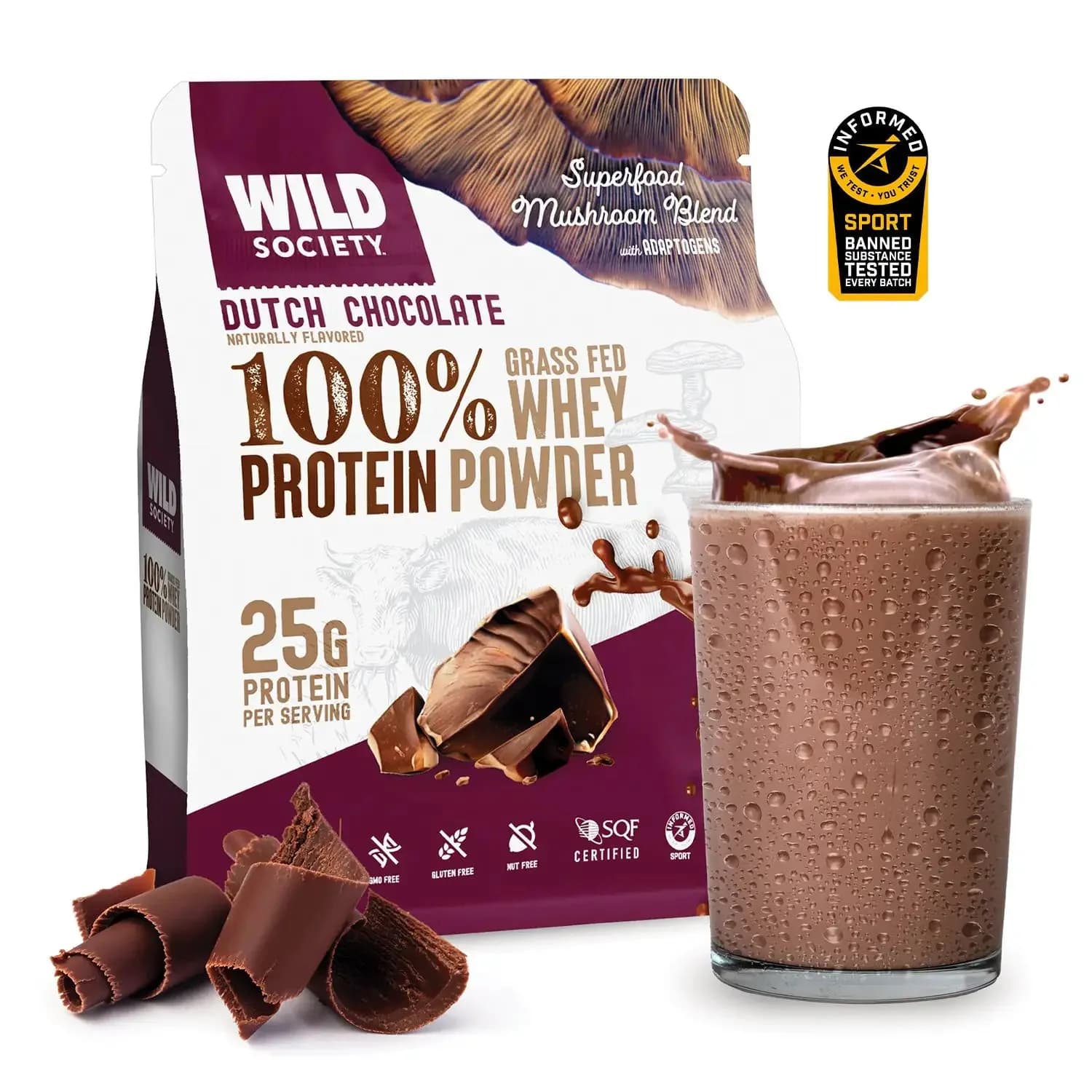
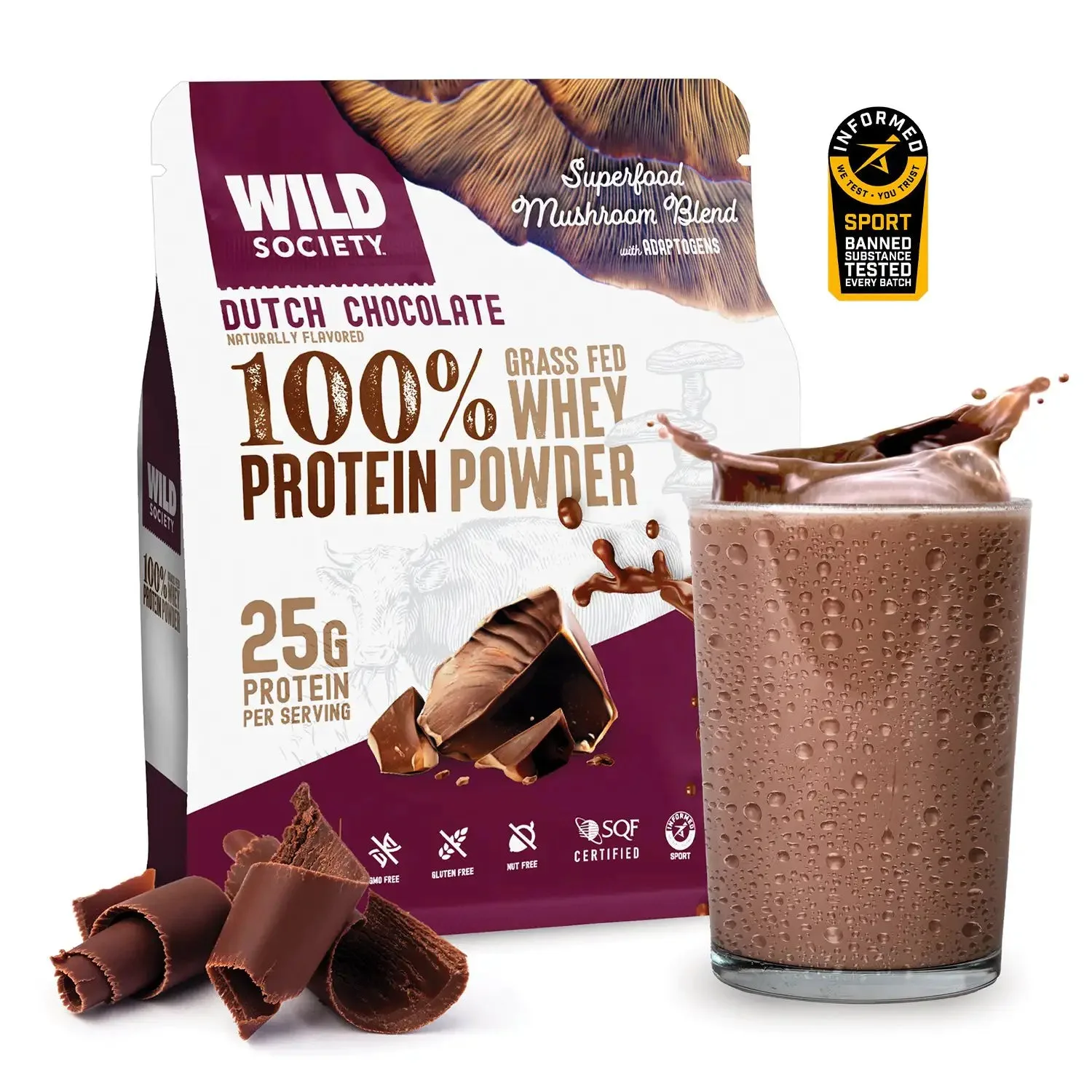
See Wild Society Protein- Wild Society's Grass-Fed Whey uses pasture-raised, grass-fed USA milk and is cold-processed with no seed oils.
- Both core products carry Informed Choice third-party testing certification, and manufacturing is SQF certified.
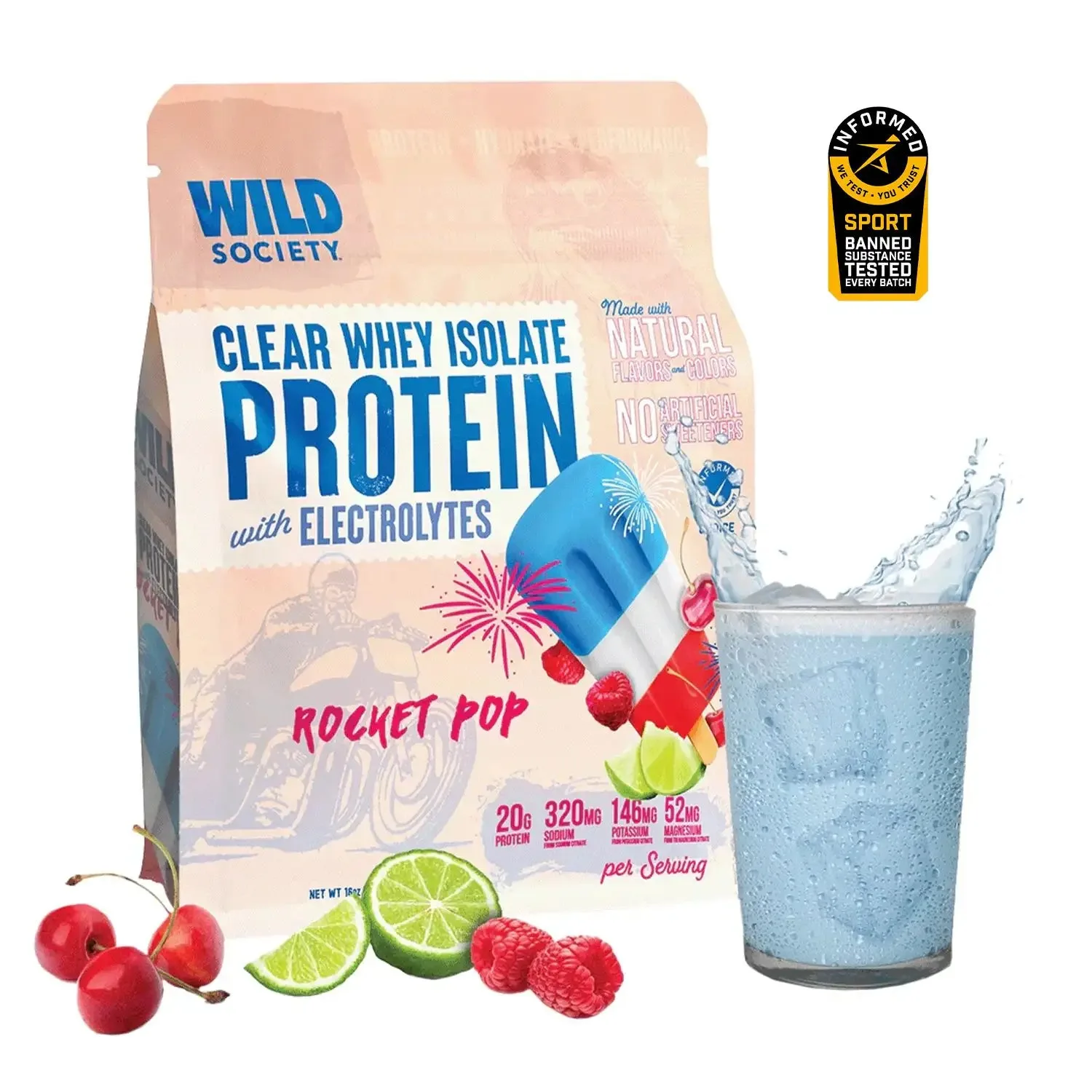
- The Clear Whey Isolate builds in electrolytes (sodium, potassium, magnesium) instead of relying on a separate hydration product.
- "Clean" protein claims are only as strong as the testing and sourcing disclosure behind them, not the word on the label.
What "clean protein" actually means
"Clean protein" is not a regulated term, so it means whatever the brand decides to build behind it. In practice, buyers use it to describe a protein powder with a short, recognizable ingredient list, disclosed sourcing (where the protein comes from and how it is processed), no unnecessary fillers or artificial additives, and independent verification that the label matches what is actually in the tub. Wild Society's philosophy is built around that last point directly: the brand's stated principle is that the body does not need 15 ingredients, but the right 4 to 5, clean and well studied*. That framing, "Fuel Your Wild" and "Greatness is Never Artificial"*, is the brand's own shorthand for a minimalist formulation approach rather than a long proprietary blend.
The other half of "clean" is verification. Because the FDA does not regulate supplements the way it regulates pharmaceuticals, an independent, third-party certifier is the main way a buyer can confirm a label's claims. NSF International, one of the best-known certifiers, evaluates three things: whether the ingredients listed are actually present (label claim), whether the formulation itself is safe (toxicology review), and whether the product is free of contaminants such as heavy metals, pathogens, or pesticides*. That is the standard any protein brand, Wild Society included, should be measured against, not just the word "clean" on the front of the tub.
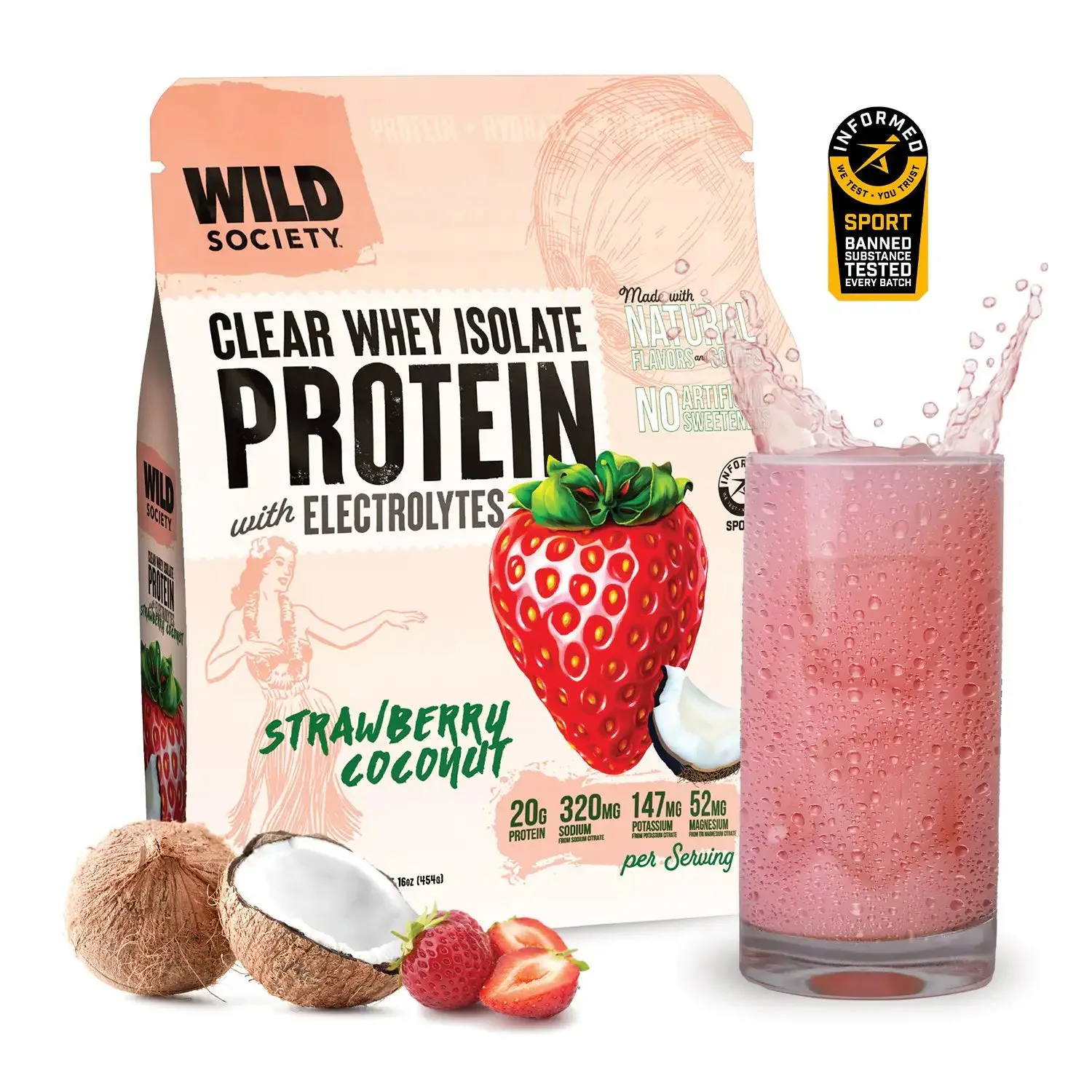
Wild Society Clear Whey Isolate
20g of filtered whey protein isolate plus a built-in electrolyte complex, zero sugar and zero lactose, in five flavors.*
Check Current PriceWild Society vs other clean protein: how sourcing compares
Sourcing is usually the first differentiator buyers look for when a brand claims to be "clean." In the whey category, the two sourcing markers that matter most are: (1) how the dairy was raised, and (2) how the protein was processed after milking. Wild Society's Grass-Fed Whey Protein is made from pasture-raised, grass-fed USA milk*, and the brand's stated production approach avoids seed oils and relies on cold-processing rather than high-heat methods, which is consistent with the minimalist-formulation philosophy described in its own brand positioning*.
When evaluating any other clean-protein brand against that standard, ask the same three questions: Is the milk source disclosed (grass-fed, pasture-raised, or generic "USA dairy")? Is the processing method disclosed (cold-processed vs standard)? And are seed oils or artificial thickeners used to stabilize flavor systems? A brand that cannot answer those questions in its own product description is asking you to take "clean" on faith rather than on disclosure.
Third-party testing and certification, side by side
This is where the "clean" claim is either backed up or exposed. Wild Society's Grass-Fed Whey Protein and Clear Whey Isolate both carry Informed Choice certification (as of June 18, 2025), meaning they undergo third-party testing and are verified free from banned substances and contaminants; the brand's manufacturing is also SQF (Safe Quality Food) certified*. Informed Choice and NSF Certified for Sport are the two certifications most credible clean-protein and sports-nutrition brands pursue, because both require ongoing, independent lab testing rather than a one-time internal check. NSF Certified for Sport products, for example, are tested for more than 290 banned substances*, and general NSF certification separately verifies label accuracy, toxicology, and contaminant screening*. For a deeper look at how these programs work, see our guide to NSF-certified sports supplements.
When you compare Wild Society against any other clean-protein brand, the fair question is not "does it say clean on the label," it is "which certification body verified that, and when." A brand with no named third-party certifier, only an in-house quality claim, has not cleared the same bar.
Wild Society vs other clean-protein brands: side-by-side
Use this checklist to compare Wild Society, or any protein powder, against the category standard for a genuinely clean-label product.
| Criteria | What to look for in any "clean" protein | Wild Society Nutrition |
|---|---|---|
| Dairy/protein sourcing | Disclosed origin (grass-fed, pasture-raised) vs generic "USA dairy" | Pasture-raised, grass-fed USA milk, cold-processed* |
| Third-party testing | Named certifier (Informed Choice, NSF Certified for Sport) with a verification date | Informed Choice certified as of June 18, 2025* |
| Manufacturing standard | Facility-level food-safety certification disclosed | SQF (Safe Quality Food) certified facility* |
| Ingredient philosophy | Short, functional ingredient list vs long filler list | Minimalist core (4–5 ingredients) plus functional add-ins like a mushroom blend* |
| Added functional ingredients | Disclosed doses of any add-ins (electrolytes, adaptogens) | Clear Whey Isolate: 320mg sodium, 146mg potassium, 52mg magnesium per serving* |
| Allergen/sugar disclosure | Clear labeling on sugar, lactose, and gluten content | Zero added sugar, gluten-free across both core products* |
| Retail availability | Available direct and through established retail channels | Sold via the official Wild Society site and Amazon* |
How to choose the right clean protein for your goals
Once you have confirmed sourcing and testing, the right pick usually comes down to your training pattern and digestive needs, not the marketing.
If you want a daily, all-purpose protein
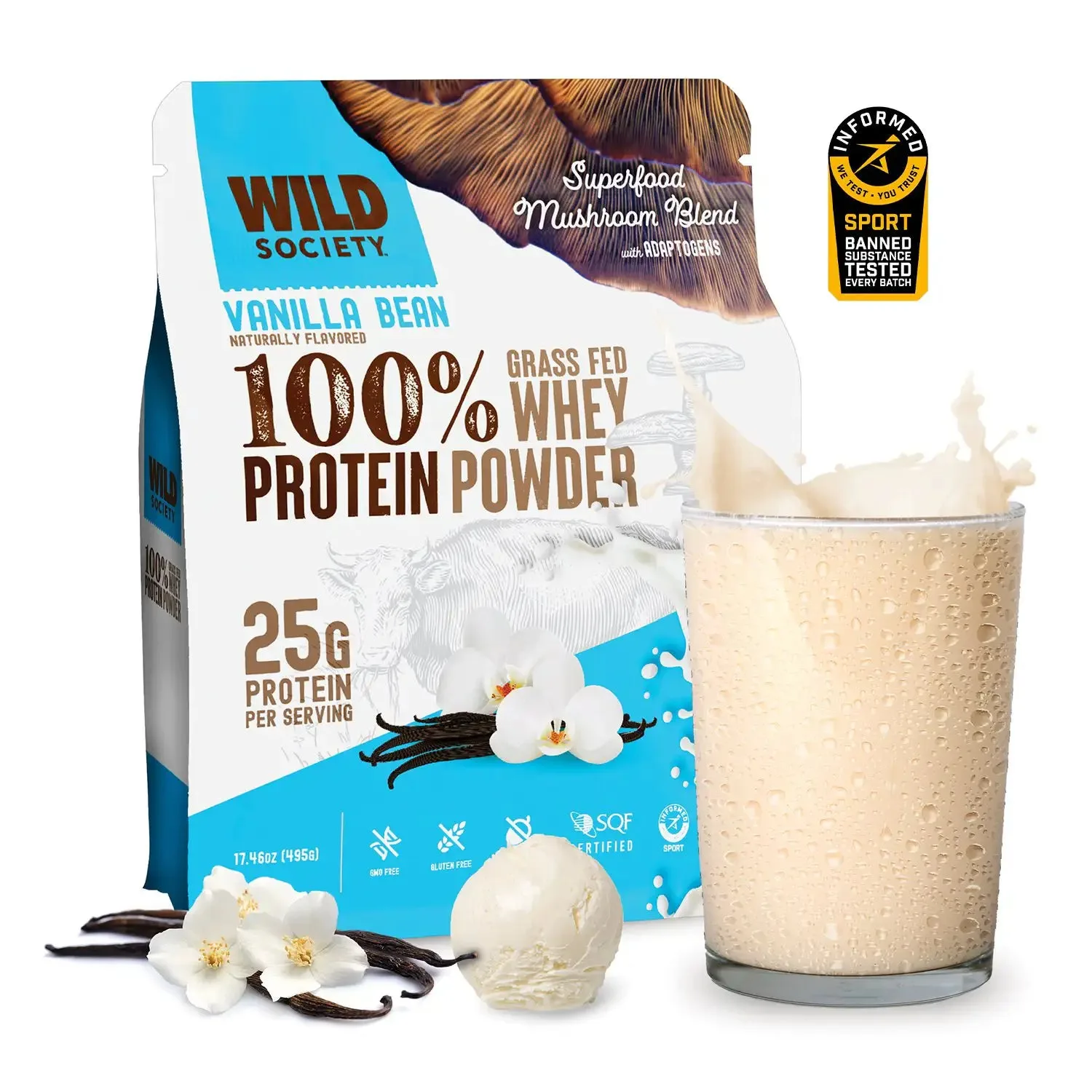
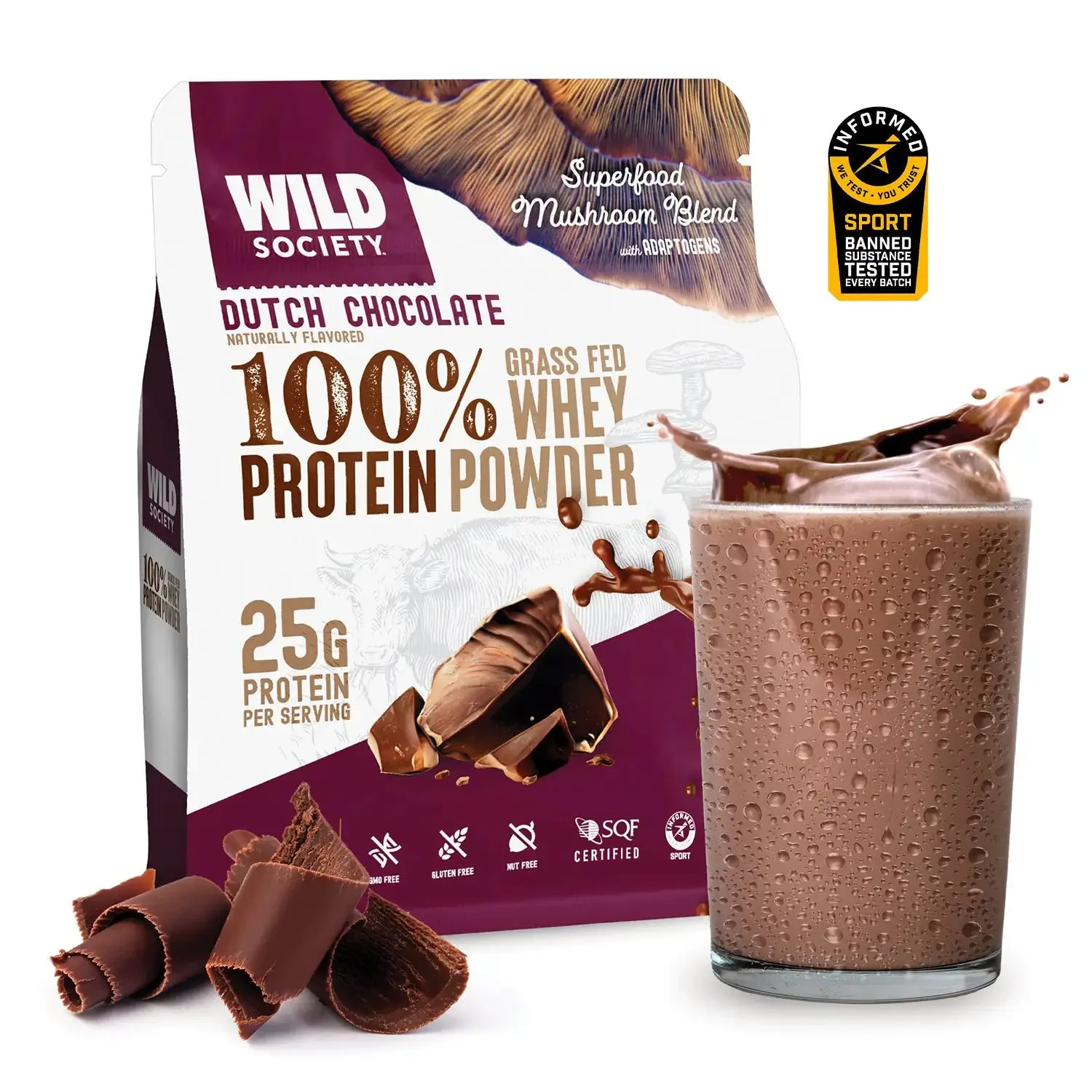
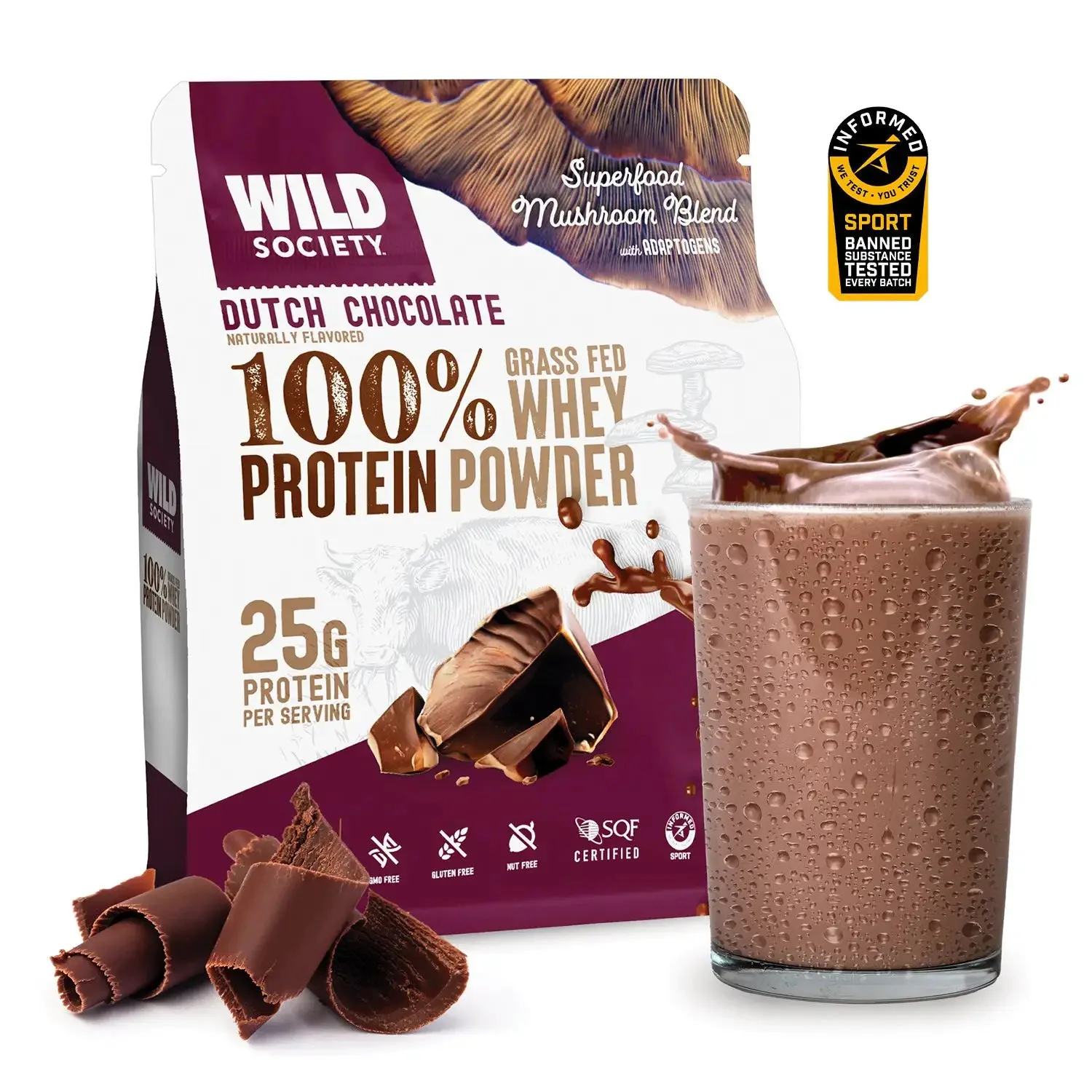
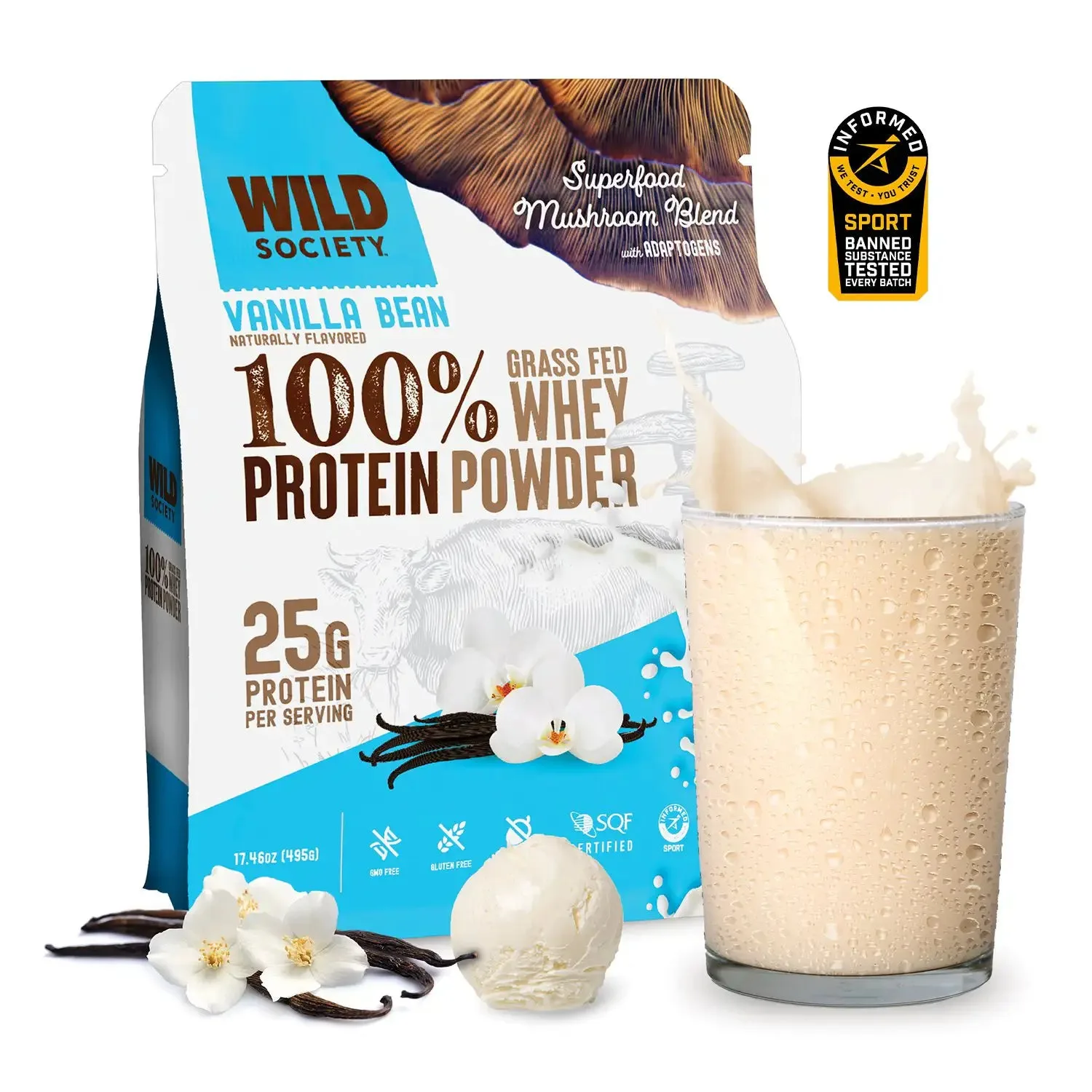
Look for a whey that discloses sourcing and hits a reasonable protein-per-serving benchmark. Wild Society's Grass-Fed Whey delivers 25g of protein and 5.4g of BCAAs per serving, in Vanilla Bean or Dutch Chocolate*, which is a straightforward fit for a once- or twice-daily shake.
If you train hard and sweat heavily
A protein with built-in electrolytes removes the need for a separate hydration product post-workout. The Clear Whey Isolate's 320mg sodium, 146mg potassium, and 52mg magnesium* is a relevant feature here, since sodium and potassium are the electrolytes most commonly lost through sweat during intense training.
If you are lactose intolerant or dairy-sensitive
Lactose malabsorption affects roughly two-thirds of the global adult population after childhood*, which is why isolate formats (filtered to remove most lactose) or plant-based proteins are common recommendations for sensitive stomachs. Wild Society's Clear Whey Isolate is filtered to greater than 90% protein by weight and is formulated zero-lactose*, but if you want a fully dairy-free option, see our protein powder without lactose guide and our clear whey isolate comparison for more formats to check against the same sourcing and testing criteria above.
Wild Society Grass-Fed Whey Protein
What We Like
- Grass-fed, pasture-raised USA milk sourcing disclosed on the label*
- Informed Choice certified, SQF-certified facility*
- Zero added sugar and gluten-free formulation*
What to Consider
- Only two flavor options for the whey line*
- Not lactose-free, since it is a whey concentrate-style protein, not an isolate
For buyers whose main priority is disclosed sourcing plus independent testing over a long ingredient panel, this is the more straightforward of the two core Wild Society products. Deeper details on this specific formula appear in our full Grass-Fed Whey Protein review.
Common mistakes when comparing "clean" protein labels
- Trusting the word "clean" without a certifier name. "Clean," "natural," and "premium" are marketing terms with no legal definition; a named third-party certifier (Informed Choice, NSF Certified for Sport) and a verification date are what actually confirm the claim.
- Assuming isolate always means lactose-free. Isolate formats remove most lactose through filtration, but "most" is not "all" unless the brand states zero-lactose explicitly, as Wild Society does for its Clear Whey Isolate*.
- Ignoring functional add-in dosing. A mushroom blend or electrolyte complex is only meaningful if the brand discloses actual milligram amounts, not just an ingredient name on the panel.
- Comparing protein-per-scoop without checking scoop size. Always compare protein grams per serving, not per scoop, since serving sizes vary between brands.
- Assuming plant-based automatically means lower quality. Pea protein isolate has shown Protein Digestibility Corrected Amino Acid Score (PDCAAS) values as high as 93% and Digestible Indispensable Amino Acid Score (DIAAS) results up to 87.6% in peer-reviewed analysis*, which is competitive with many animal-based proteins when total daily intake is adequate*.
Alternatives and adjacent options
If sourcing and testing check out but the format is not the right fit, for example you need a fully plant-based or beef-derived protein, the same checklist above (disclosed sourcing, named third-party certifier, transparent add-in dosing) still applies. See our roundup of the cleanest protein foods for whole-food comparisons, or our beef protein isolate guide if dairy and plant proteins both fall outside your goals. For a broad overview of how clean protein fits into an active training routine, also see our guide to clean protein for an active lifestyle. Whichever format you land on, run it through the same sourcing-and-testing checklist used above for Wild Society, rather than taking a "clean" claim at face value.
Verdict: does Wild Society hold up against other clean protein brands?
On the criteria that actually define "clean" protein, disclosed sourcing, independent third-party testing, and a short, functional ingredient list, Wild Society Nutrition's Grass-Fed Whey and Clear Whey Isolate meet the bar: grass-fed, pasture-raised USA milk, Informed Choice certification, and an SQF-certified facility*. If your priority is a two-product line built around those specific standards rather than a full supplement stack, it is worth comparing directly against whatever brand you currently use with the same checklist.
See Wild Society ProteinSources
- NSF International — Supplement and vitamin certification standards
- Informed Choice — Wild Society Nutrition brand directory listing
- ADPI Protein Quality Guide (2025) — Pea protein digestibility data
- Examine.com — Does protein source matter for muscle growth
- Wild Society Nutrition — Our Story
This article is for informational purposes only and is not medical or nutritional advice. Individual protein and supplement needs vary; consult a qualified healthcare provider or registered dietitian before making significant changes to your diet or supplement routine, especially if you have a medical condition, allergy, or are pregnant or nursing. We may earn a commission if you purchase through links in this article, at no extra cost to you.
Recommended for you
 Wild Society Protein Powder Review 2026: Best Whey Pick?
 Wild Society Superfoods: 6 Best Clean Picks (2026 Guide)
 Clean Protein for an Active Lifestyle: The Best 2026 Guide
 Iron Brothers Clean Amino Energy Review: Best Low-Stim Pick (2026)
 Iron Brothers Collagen Review 2026: Does It Really Work?
 Iron Brothers Vegan Protein: Best Plant Formula? (2026 Review)