Ube powder has gone from a niche Filipino specialty to a trending ingredient across coffee shops, health food stores, and home kitchens. But with that growth has come a flood of imitation products - taro-based fakes, artificially dyed powders, and low-quality imports with wildly inconsistent flavor.
Ube Superfood positions itself as the premium alternative: USDA Organic certified, built on a 90% ube and 10% vanilla formula, with a 4.9-star rating from over 422 buyers. Those are strong numbers. But ratings alone do not tell you whether a product will actually work in your kitchen.
This review breaks down the real-world performance of Ube Superfood organic powder across taste, texture, solubility, and practical baking and drink applications.
What You Are Getting
Before the performance breakdown, a quick summary of what Ube Superfood actually is:
- Ingredients: Organic ube (purple yam) powder (90%), organic vanilla powder (10%)
- Certifications: USDA Organic, Non-GMO, Vegan, Gluten-Free
- Price: $26-$27.99 per bag
- Serving size: 1-2 tablespoons
- Primary uses: Lattes, smoothies, baking, ice cream, yogurt bowls
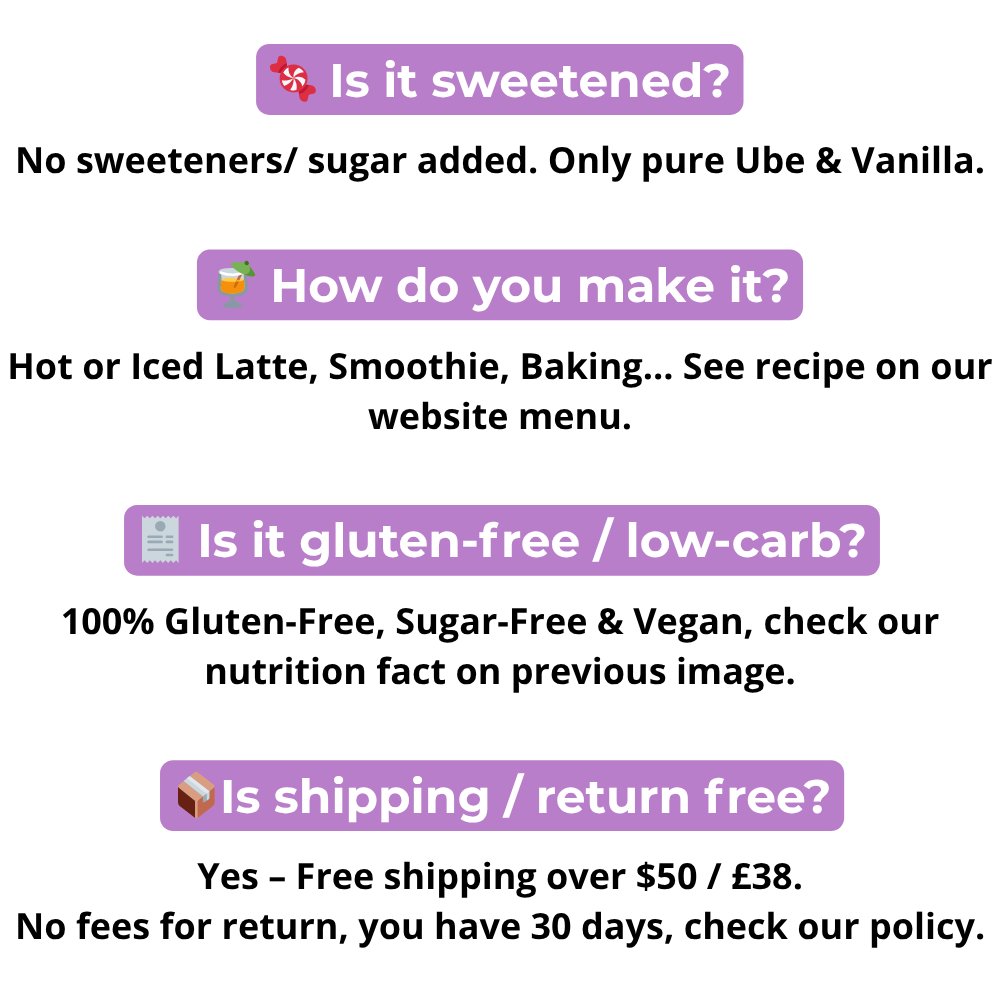
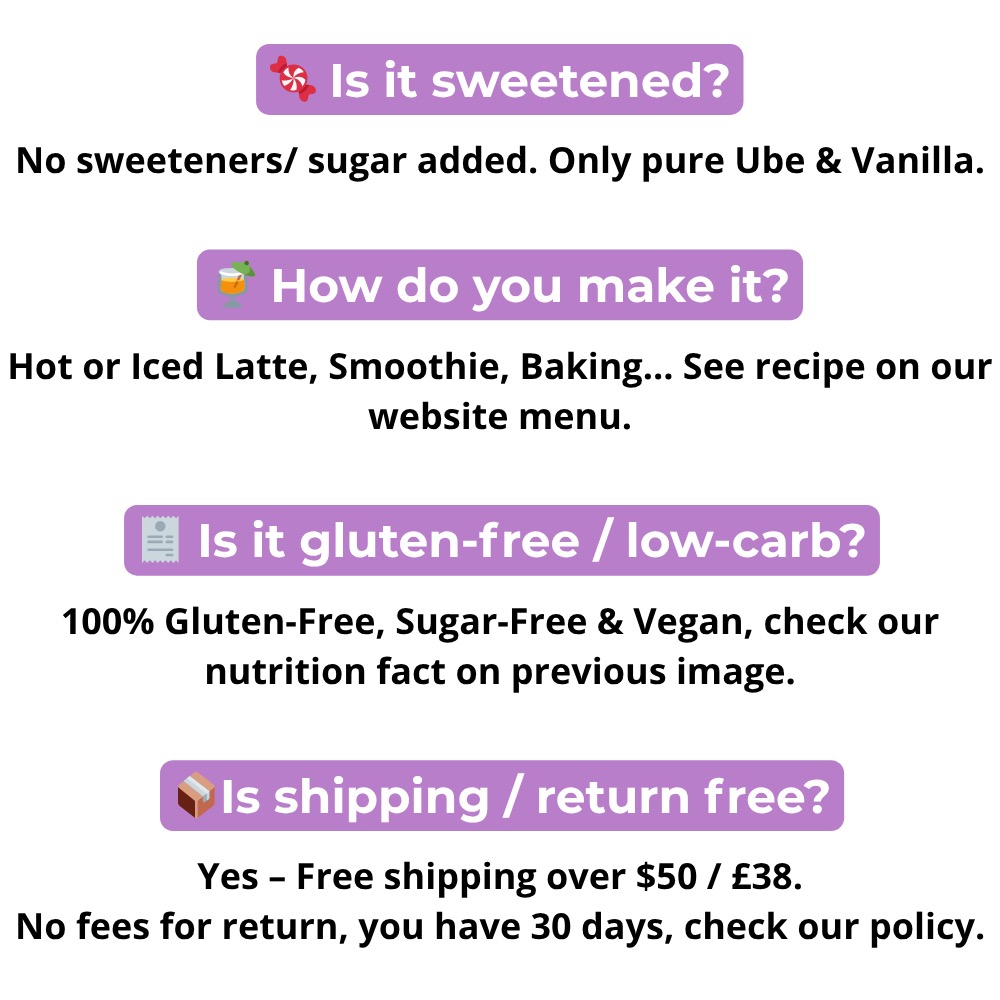
The formula is deliberately simple. No fillers, no artificial color, no maltodextrin, no added sugar. What you see on the label is what you get.
Ube Superfood Review: Taste, Texture, and Mix-In Test
Taste Profile
The flavor is the most important thing to get right with ube, and Ube Superfood delivers a taste profile that is unmistakably real.
The first note is mild sweetness - not sugar-sweet, but the natural sweetness of a well-cured yam. This is followed almost immediately by a soft vanilla warmth from the 10% vanilla addition in the formula, which rounds out what would otherwise be a more raw, earthy flavor in straight ube powder.
The earthiness is present but restrained. Ube has a slightly nutty, rooty quality that distinguishes it from sweet potato or taro, and you can taste that character clearly. It does not taste like grape, lavender, or any other flavor that marketers sometimes ascribe to ube - it tastes like ube, which is exactly the point.
The aftertaste is clean with no bitterness, no astringency, and no synthetic off-notes. For anyone who has tried cheap ube flavoring from an Asian grocery store and been disappointed by the chemical flatness, this is a notable difference.
Texture
The powder is finely milled and dry. It clumps slightly in humid conditions (common with most fine organic powders) but breaks apart immediately when pressed between fingers. There is no grittiness and no woody or fibrous texture when dissolved.
In applications that are stirred rather than blended, the fineness of the grind matters significantly. This powder performs well in that regard.
Mix-In Performance: Hot Latte
For a standard ube latte, 1 tablespoon was whisked into 8 oz of steamed oat milk at approximately 155-160°F (pre-froth temperature).
Results: The powder dissolved fully within 20-25 seconds of whisking. No visible clumps remained. The color shifted to a medium-deep purple-lavender, which is visually distinctive and photographically striking. The flavor in the latte was forward without being overwhelming - recognizable ube with a gentle vanilla backdrop that works well against oat milk’s natural sweetness.
This is the product’s best use case. The hot latte application showcases both the flavor and the color at their peak.
Mix-In Performance: Cold Smoothie
1.5 tablespoons blended with 1 frozen banana, 200ml coconut milk, and 100ml water.
Results: Full incorporation in the blender. The purple color was vibrant and consistent throughout. Flavor came through clearly - the ube character is present even against the banana, which is a common flavor-dominant ingredient that can mask subtle powders.
Note: Cold-stirring without a blender is less effective. The powder does not dissolve well in cold liquid when only shaken or stirred. A blender or milk frother is recommended for cold applications.
Mix-In Performance: Pancake Batter
2 tablespoons added to a standard 1-cup dry pancake mix (all-purpose flour, baking powder, salt, sugar) before adding wet ingredients.
Results: The powder incorporated evenly and the batter turned a consistent purple throughout. On the griddle, the pancakes cooked normally with no off-smells or unusual browning patterns. One observation: the color shifted slightly toward blue-purple rather than the warmer red-purple of the raw batter, which is normal anthocyanin behavior in alkaline baking environments. Flavor was pronounced and pleasant - ube clearly present without overpowering the base.
Mix-In Performance: Yogurt Bowl
1 tablespoon stirred into 150g plain Greek yogurt.
Results: Required 45-60 seconds of vigorous stirring for full incorporation due to the yogurt’s thick consistency. Color was slightly muted compared to milk applications (Greek yogurt’s protein matrix affects pigment intensity). Flavor was good - the tartness of Greek yogurt actually complemented the earthy sweetness of the ube in an unexpected way.
Pros and Cons
Pros:
- Authentic ube flavor that clearly distinguishes itself from artificial imitations
- Clean two-ingredient formula with no fillers or additives
- USDA Organic, Vegan, Non-GMO certifications verified
- Excellent hot beverage solubility
- Strong color payoff in drinks and light batters
- 4.9 stars across 422 reviews indicates strong batch consistency
- Versatile across sweet and savory applications
Cons:
- Does not dissolve well in cold liquid without a blender or frother
- Color can shift in alkaline baking applications (blue-green in high-baking-soda recipes)
- At $26-$27.99, it is a premium purchase that may not suit all budgets
- The vanilla blend makes it slightly sweet by default - not ideal if you want a neutral ube base for savory cooking that requires precise flavor control
Value Assessment: $26 vs. the Alternatives
At $26-$27.99, Ube Superfood is positioned firmly in the premium superfood powder tier. Here is how that compares:
| Product Type | Price Range | Organic Cert | Real Ube Content | Taste Quality |
|---|---|---|---|---|
| Ube Superfood | $26-$27.99 | USDA Organic | 90% | Excellent |
| Generic ube powder | $8-$18 | Rarely | 30-70% (varies) | Inconsistent |
| Artificial ube flavoring | $5-$12 | No | 0% | Poor/synthetic |
| Taro powder (mislabeled ube) | $6-$15 | Sometimes | 0% ube | Different flavor |
| Other premium superfood powders (matcha, acai) | $22-$40 | Often | N/A | Category standard |
Against premium superfood powders as a category, $26 is within the normal range. The key question is whether ube fits your cooking habits - if you make lattes, smoothies, or Filipino-inspired baking regularly, the per-serving cost at 1 tablespoon per use makes this a reasonable ongoing purchase.
Who Should Buy This
Buy it if:
– You enjoy ube-flavored drinks or baked goods and want a reliable, authentic powder at home
– You value USDA Organic certification and clean-label products
– You make specialty lattes or smoothies and want to add ube to your rotation
– You have tried cheap ube powder before and been disappointed by the flavor
Skip it if:
– You only want natural purple food coloring - there are cheaper natural alternatives
– Your budget for specialty powders is under $20
– You need a completely neutral ube base for savory applications requiring tight flavor control
Final Verdict
Ube Superfood delivers on its core promise: a real, USDA Organic ube powder that actually tastes like ube and performs well in drinks and baking. The 4.9-star rating reflects genuine product satisfaction rather than inflated metrics - the consistency of the formula and the quality of the raw ingredient are both apparent in use.
For anyone building out a specialty pantry or exploring Filipino-inspired cooking, this is the easiest way to access authentic ube flavor without sourcing or processing fresh purple yam.
For a full breakdown of the ingredients, certifications, and formula, see our Ube Superfood Organic Powder guide. Or if you are ready to start cooking, our 10-recipe how-to guide covers everything from lattes to pasta.