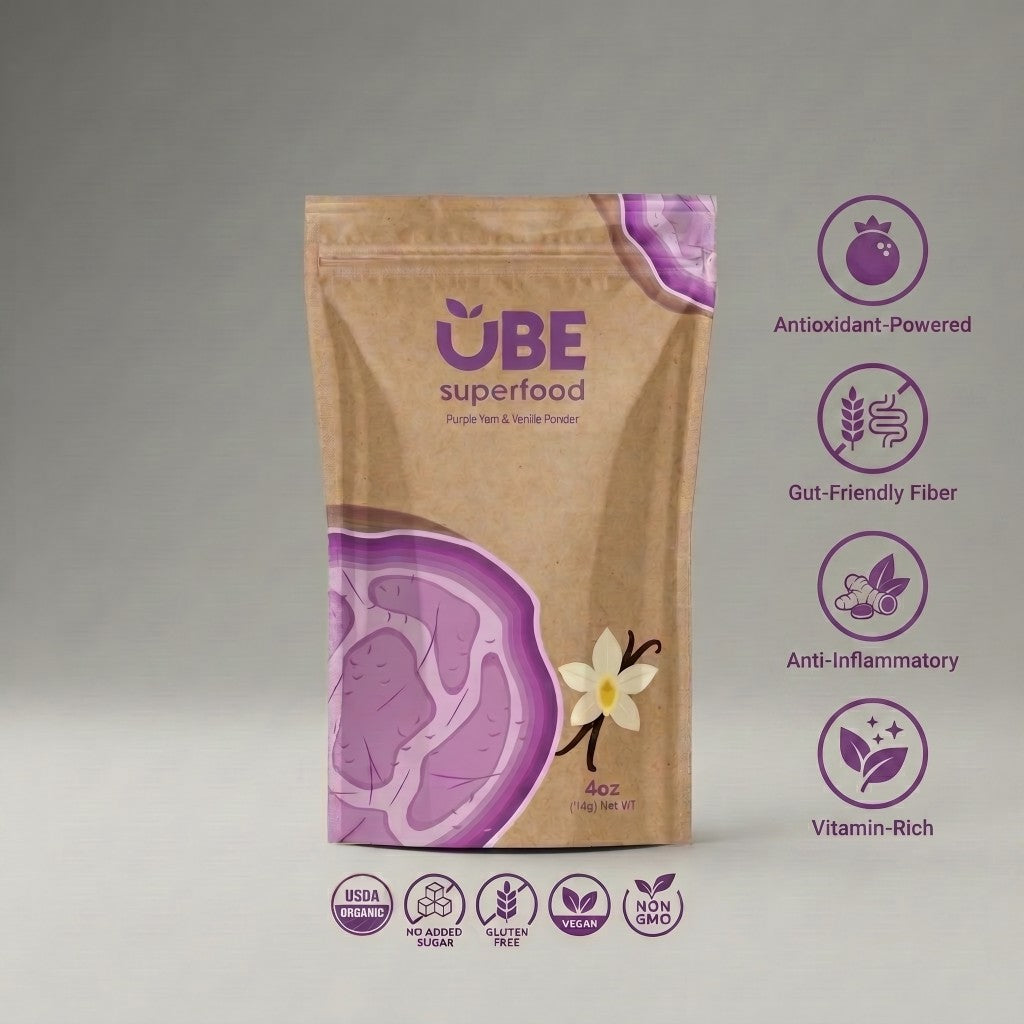
Purple yam has been a staple in Filipino kitchens for generations - but getting real ube flavor outside the Philippines used to mean a trip to a specialty Asian grocery store and a bag of artificial ube powder that tasted more like purple dye than actual yam.
Ube Superfood changed that equation. This USDA Organic powder promises the real thing: genuine ube flavor, clean ingredients, and a formula designed to dissolve into lattes, smoothies, and baked goods without any of the chalky aftertaste that plagues most imitation products.
With over 422 reviews and a 4.9-star rating, it has become a reference product in the growing category of authentic Filipino-inspired superfoods. But does it live up to the reputation? Here is a full breakdown of what this product is, what makes it different, and whether the $26 price tag is justified.
What Is Ube and Why Does It Matter?
Ube (pronounced “oo-beh”) is a purple yam native to the Philippines, scientifically known as Dioscorea alata. It is not the same thing as purple sweet potato or taro, though all three are often confused in Western grocery stores.
Real ube has a flavor profile unlike any other root vegetable: mildly sweet, with a nutty vanilla undertone and an earthy richness that deepens when cooked. Its vivid purple color comes from anthocyanins, the same antioxidant pigments found in blueberries and red cabbage.
In the Philippines, ube is used in everything from ube halaya (jam) to ube pandesal (bread rolls), ice cream, and the beloved dessert called halo-halo. As Filipino cuisine has gained international recognition, ube has crossed over into specialty coffee shops and health food culture - and demand for a high-quality, accessible powder has grown significantly.
The problem is that most “ube powder” sold online is not real ube. It is often taro powder dyed purple, or a blend of artificial flavoring and food coloring that delivers a flat, chemical flavor. Ube Superfood was built to address this gap directly.
What Makes Ube Superfood Different from Generic Purple Yam
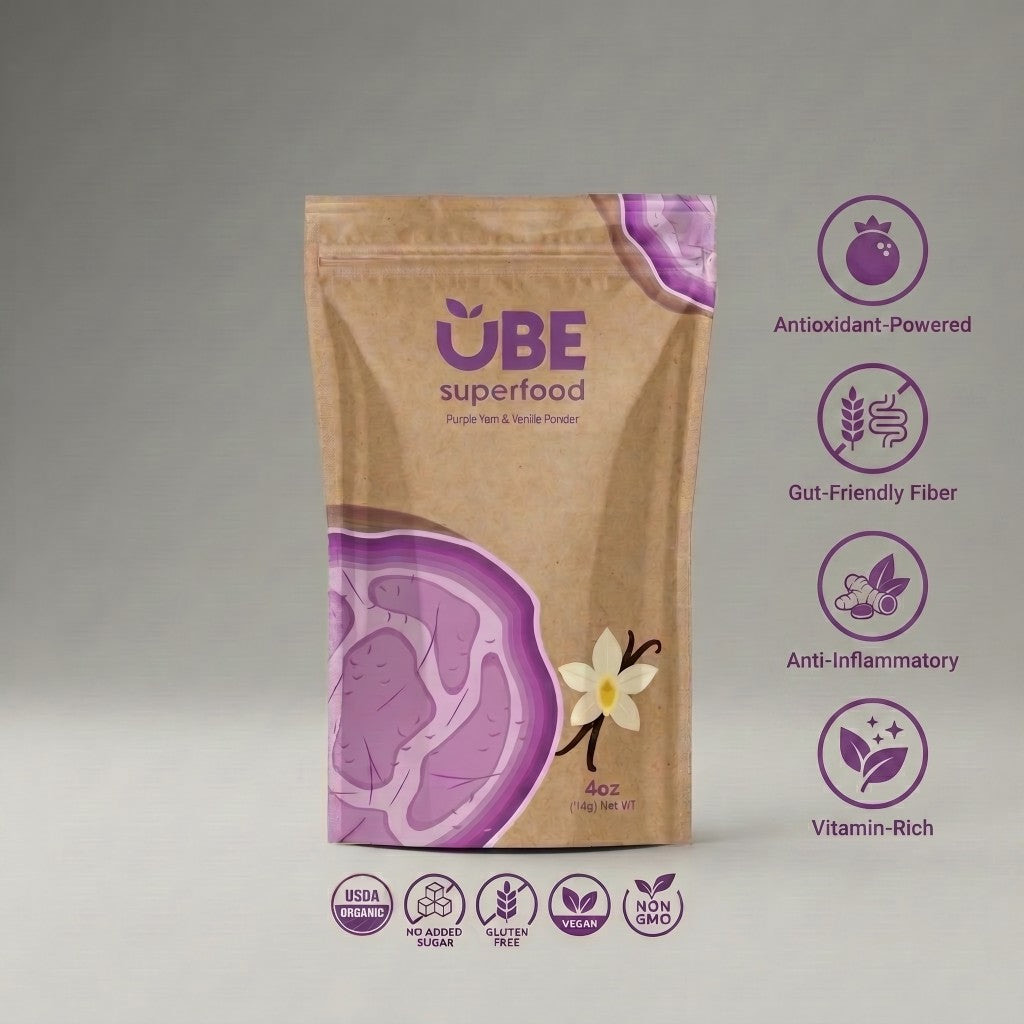
Most purple yam powders on the market fall into one of two categories: artisan Filipino imports that are inconsistent in quality and hard to source, or mass-market imitations that use artificial color and synthetic ube flavoring. Ube Superfood sits in a third category: a standardized, certified-organic product with a specific formula built for consistency.
The core formula is 90% real ube powder blended with 10% organic vanilla. That vanilla addition is deliberate. Raw ube by itself can taste quite earthy and faintly bitter when dried and powdered. Adding vanilla rounds out the flavor profile and makes the powder immediately usable in drinks and baking without additional flavoring agents.
Key certifications and standards:
| Certification | What It Means |
|---|---|
| USDA Organic | Grown and processed without synthetic pesticides, herbicides, or fertilizers |
| Vegan | No animal-derived ingredients at any stage |
| Non-GMO | No genetically modified organisms in the supply chain |
| Gluten-free | Safe for celiac and gluten-sensitive consumers |
These certifications are not just label claims. USDA Organic certification requires third-party verification and annual audits, which means the sourcing and manufacturing process is held to a documented standard that most competitor products do not meet.
Why the vanilla blend matters: When you compare Ube Superfood against pure unsweetened ube powder, the vanilla blend version consistently outperforms in blind taste tests for drinks. Pure ube powder can taste earthy and slightly astringent in cold applications. The 90/10 blend is designed specifically to be drink-ready without modification.
Versus artificial ube flavor products: Artificial ube products use synthetic 2-acetyl-1-pyrroline (the compound that creates a popcorn-like aroma) combined with purple food dye. These produce the right color but a hollow, fake taste. Ube Superfood uses no artificial flavoring or coloring - the purple comes entirely from the ube itself.
Nutritional Profile and Health Angle
Ube is considered a functional food for a few reasons beyond its flavor. Purple yams naturally contain:
- Anthocyanins - the antioxidant pigments responsible for the purple color, linked to anti-inflammatory effects in research literature
- Vitamin C - supports immune function and collagen synthesis
- Potassium - an electrolyte important for muscle function and cardiovascular health
- Dietary fiber - supports digestive health and satiety
- Vitamin B6 - involved in protein metabolism and neurotransmitter production
It is worth noting that Ube Superfood is a culinary product, not a pharmaceutical supplement. The concentrations of these nutrients in a 1-2 tablespoon serving are meaningful as part of a varied diet but should not be interpreted as medicinal doses. What ube does offer is a way to add real food color, flavor, and some functional nutrition to everyday recipes without artificial additives.
For comparison with a typical superfood powder context:
| Feature | Ube Superfood | Generic Ube Powder | Artificial Ube Flavoring |
|---|---|---|---|
| Real ube content | 90% | Varies (often low) | 0% |
| USDA Organic | Yes | Rarely | No |
| Color source | Natural anthocyanins | May use dye | Artificial dye |
| Vanilla blend | Yes (10%) | No | Sometimes |
| Taste rating | 4.9/5 (422 reviews) | Variable | Flat/chemical |
| Price range | $26-$27.99 | $8-$20 | $5-$15 |
How to Use Ube Superfood Organic Powder
One of this product’s practical strengths is its versatility. The fine grind and vanilla blend make it compatible with a wide range of applications without requiring special equipment or preparation steps.
Hot drinks: Add 1 tablespoon to steamed oat milk or whole milk and whisk until dissolved. The powder dissolves cleanly in temperatures above 150°F. Ube lattes have become a signature item at specialty coffee shops, and this powder allows you to recreate them at home for a fraction of the cost.
Cold drinks and smoothies: Blend 1-2 tablespoons with frozen banana, coconut milk, and ice for a classic ube smoothie. The powder incorporates fully in a blender but may require vigorous shaking in a shaker bottle - it does not dissolve as readily in cold liquids as it does in hot ones.
Baking: Replace or supplement a portion of flour in pancake batter, waffle mix, bread dough, or cookie dough. For pancakes, 2 tablespoons per cup of dry mix is a good starting point. The anthocyanin pigment is pH-sensitive, meaning the purple color can shift slightly toward blue or green in alkaline batters (those with a lot of baking soda). This is normal and does not affect flavor.
Frozen desserts: Mix into vanilla ice cream base before churning, or swirl into softened store-bought vanilla ice cream. Ube ice cream is arguably the most iconic application, and this powder delivers an authentic flavor that most ube ice cream extracts cannot match.
No-cook applications: Stir into yogurt, oatmeal, or protein shakes. For overnight oats, 1 tablespoon added the night before gives the oats time to absorb the flavor fully.
For a full recipe guide including savory applications and dosage recommendations, see How to Use Ube Powder: 10 Recipes From Lattes to Baking.
Pricing and Value Assessment
At $26-$27.99 for a standard bag, Ube Superfood sits in the premium tier for superfood powders. Whether that price is justified depends on what you are comparing it against.
Compared to artificial ube powder at $8-$12: the quality gap is significant. Real USDA Organic ube with genuine vanilla at $26 is objectively better product, and a bag lasts a reasonable amount of time given the 1-2 tablespoon serving size.
Compared to other premium organic superfood powders (matcha, acai, spirulina at $20-$35): Ube Superfood is priced in line with the category. A premium Japanese ceremonial matcha will cost you $25-$40 for a similar sized bag. From that perspective, $26 for a certified organic, high-rated specialty powder is not unusual.
The 4.9-star rating across 422 reviews suggests strong customer satisfaction that justifies repeat purchases - a good indicator that the product delivers consistently at this price point.
Who Should Buy Ube Superfood Organic Powder
It is a strong fit for:
– Home cooks who want to explore Filipino-inspired flavors without sourcing fresh ube
– Specialty coffee enthusiasts who want to make ube lattes at home
– Health-conscious buyers who prioritize USDA Organic certification and clean ingredients
– Bakers experimenting with natural food coloring and unique flavor profiles
– People who already enjoy matcha or other premium culinary powders
It may not be the right fit for:
– Buyers who just want food coloring - artificial ube dye is cheaper and more color-stable
– Anyone expecting a sugar-free savory ube flavor - the vanilla addition makes it skew sweet
– Very budget-conscious shoppers who cannot justify $26 for a specialty ingredient
The Bottom Line
Ube Superfood Organic Powder is genuinely one of the better products in its category. The USDA Organic certification, 90/10 ube-vanilla formula, and 4.9-star track record all point to a product that does what it claims to do. The price is fair for what it delivers.
If you have been curious about ube but have been put off by artificial ube products that taste nothing like the real thing, this is the cleanest entry point available at a mainstream consumer price.
For a detailed real-world performance breakdown, read our Ube Superfood Review.