Most people shopping for supplements focus on the active ingredient - melatonin for sleep, biotin for hair, caffeine for energy - without giving much thought to how those ingredients actually reach the bloodstream. The delivery format matters more than the industry typically communicates, and in some cases choosing the wrong format is the reason a supplement seems to “not work” at all.
This guide explains the pharmacokinetics behind supplement strips versus pills, when each format wins, and how to make an informed decision based on what you are actually trying to achieve.
How Oral Strip Absorption Works vs a Capsule
To understand why supplement strips can deliver meaningfully different results, you need a basic picture of what happens to a pill after you swallow it.
The Pill’s Journey Through Your Body
When you swallow a capsule or tablet, it travels through the esophagus to the stomach. In the stomach, digestive acids and enzymes begin breaking it down. The partially broken-down contents then move into the small intestine, where the primary absorption of most nutrients happens through the intestinal wall. From the intestinal wall, absorbed compounds travel through the portal vein to the liver before entering systemic circulation.
This last step - the liver stage - is called first-pass metabolism. It is a significant pharmacological event. The liver is the body’s primary detoxification organ, and it processes everything absorbed from the intestines before it reaches the rest of the body. For many compounds, first-pass metabolism degrades a substantial portion of what was absorbed, meaning less of the active ingredient ultimately reaches your brain, muscles, or other target tissues.
The entire process from swallowing to systemic circulation typically takes 30 to 45 minutes at minimum, and that assumes the supplement dissolved properly and was absorbed efficiently - both of which depend on factors including stomach pH, food intake, and the specific formulation of the pill.
How Dissolving Strips Work Differently
Oral dissolving strips - sometimes called sublingual or buccal strips depending on placement - work on an entirely different principle. When you place a strip on your tongue or inner cheek, the active ingredients do not need to travel to your stomach. Instead, they are absorbed directly through the oral mucosa: the highly vascularized tissue lining your mouth.
The oral mucosa has several properties that make it an efficient absorption site. It has a rich blood supply close to the surface, meaning absorbed compounds enter the bloodstream quickly without the distance absorption route of the gastrointestinal tract. The membrane is permeable to many small-molecule nutrients and compounds. And critically, absorption through the oral mucosa routes directly into systemic circulation, bypassing the portal vein and the liver’s first-pass processing.
The practical result is faster onset - typically around 15 minutes for strip-delivered compounds versus 30 to 45 minutes for capsules - and higher bioavailability for compounds that are significantly degraded by first-pass metabolism.
Bioavailability: The Number Pills Do Not Tell You
Bioavailability is the percentage of an administered dose that reaches the systemic circulation in active form. For oral pills, bioavailability varies dramatically by compound. Some vitamins and minerals have high oral bioavailability from pills. Others are significantly degraded.
For supplements where bioavailability from traditional oral routes is limited - such as melatonin, where hepatic first-pass metabolism is known to reduce bioavailable fraction substantially - a delivery format that bypasses the liver offers a genuine advantage. You may achieve effective blood levels with a smaller dose when using sublingual absorption versus needing a larger dose with a capsule to account for what the digestive process destroys.
This is not a universal rule. Compounds with high intrinsic oral bioavailability do not gain the same benefit from strip delivery. But for specific supplement types, the format difference is pharmacologically meaningful, not just a marketing distinction.
Convenience Comparison: When Format Changes Behavior
Beyond the pharmacokinetics, delivery format affects how consistently people actually take supplements. Compliance - actually taking a supplement as intended - is a real variable that does not get discussed enough.
Strips: Where Convenience Is a Genuine Advantage
No water required. This is more significant than it sounds. Many supplements are skipped because there is no glass of water nearby. On a flight, in a meeting, in bed - these are all situations where having water available is an inconvenience. A strip dissolves on its own and is taken anywhere.
No pill bottle. The social visibility of taking supplements matters to some people. A discreet strip placed on the tongue is less noticeable than pulling out a supplement bottle.
Speed of preparation is zero. With a strip, you tear open a packet and place it on your tongue. With a capsule, you open a bottle, pour out a capsule, ensure you have water, and swallow. This difference sounds trivial but it reduces friction for the forgetful or the tired.
Travel compliance. Liquid supplements are restricted on flights. Large bottles of capsules invite TSA questions. Strips in individual sachets are the most travel-friendly supplement format that exists.
Pills: Where the Format Still Works
Pills have cost advantages that are significant for long-term, daily supplementation of high-bioavailability compounds. Basic vitamin D, fish oil, zinc - these are categories where first-pass metabolism is not a major concern and the per-dose cost of a capsule is hard to match.
Pills are also the format with the longest safety and regulatory track record. Most major studies on supplement efficacy use capsule or tablet delivery, so when you see clinical evidence referenced, it is usually for the pill format rather than strips.
Capsules also allow for higher doses in cases where higher doses are clinically justified. A single capsule can contain 1000mg of a compound in a way that is not practical for a thin dissolving strip.
Side-by-Side Format Comparison
| Factor | Supplement Strips | Capsules / Tablets |
|---|---|---|
| Absorption route | Oral mucosa (sublingual/buccal) | Gastrointestinal tract |
| First-pass metabolism | Bypassed | Present |
| Typical onset time | ~15 minutes | ~30-45 minutes |
| Water required | No | Yes |
| Travel suitability | Excellent | Moderate |
| Discreet use | High | Moderate |
| Cost per dose | Higher | Lower |
| Dose flexibility | Limited by strip size | Higher doses possible |
| Compliance (daily habit) | Easier (lower friction) | Depends on routine |
| Clinical research base | Growing | Extensive |
Which Supplement Types Benefit Most From Strip Delivery?
Not all supplements benefit equally from the oral strip format. The biggest gains come when one or more of the following apply:
Fast onset is functionally important. Melatonin for sleep, caffeine or adaptogens for energy - these are time-sensitive. Taking them and having them work within 15 minutes rather than 45 is a material advantage.
First-pass metabolism is a limiting factor. Melatonin has documented first-pass effect. Some B vitamins, certain amino acids, and specific botanicals also have reduced bioavailability from traditional oral routes.
Compliance is a challenge. If you consistently forget to take a supplement because you need to find water or the process is inconvenient, switching to a strip reduces the barrier.
You travel frequently. The airport, hotel, and plane situation where you want sleep support, energy support, or beauty supplementation without packing a pharmacy bag is where strips genuinely outperform.
When Pills Are the Better Choice
Pills still make more sense for:
- High-volume nutrients like magnesium, vitamin C, or protein where dose requirements exceed what a strip can practically deliver
- Supplements where bioavailability through the GI tract is already high and first-pass effect is minimal
- Budget-sensitive daily supplementation where cost per dose is the primary concern
- Supplements with extensive clinical evidence in pill form that you want to replicate precisely
How NuStrips Applies This to Their Products
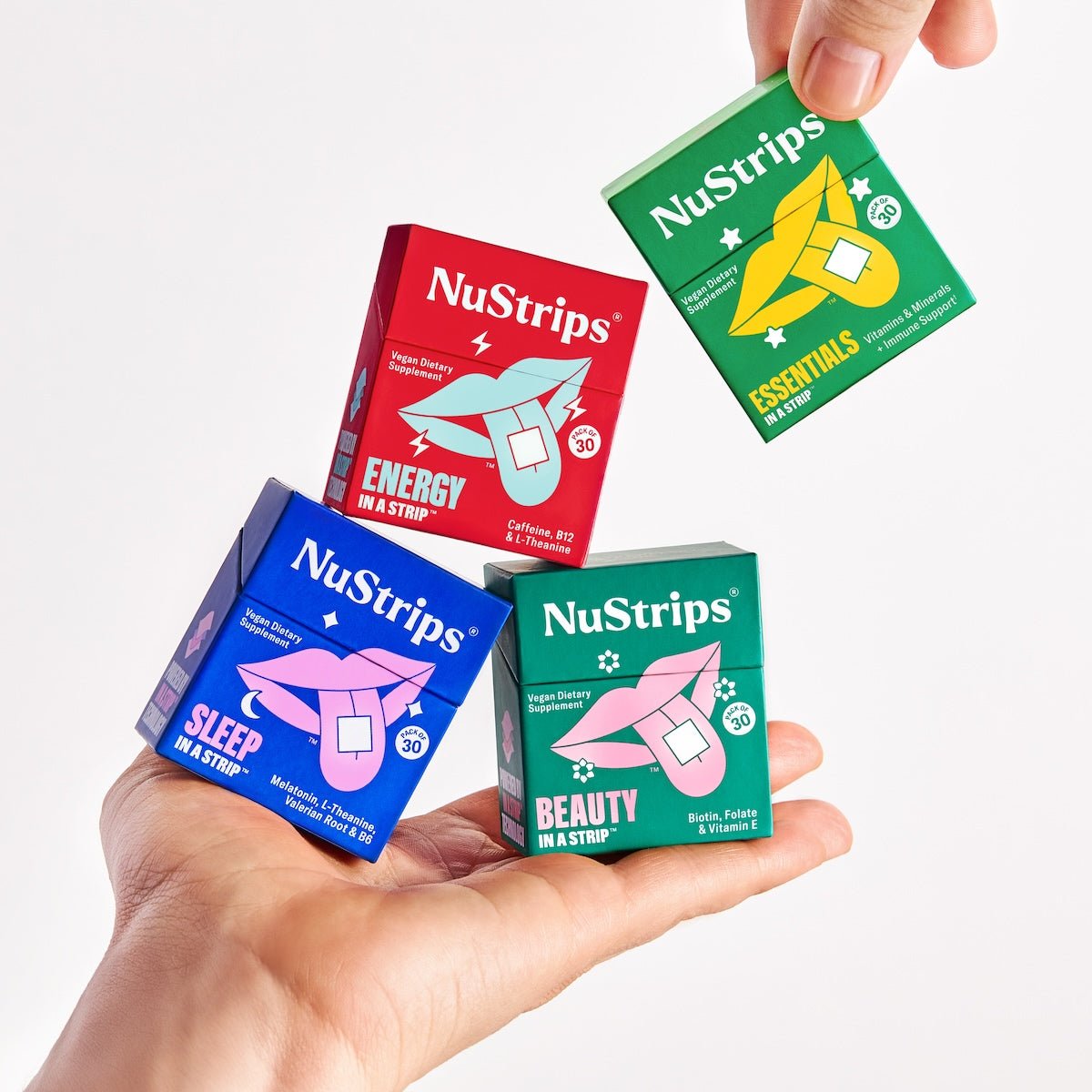
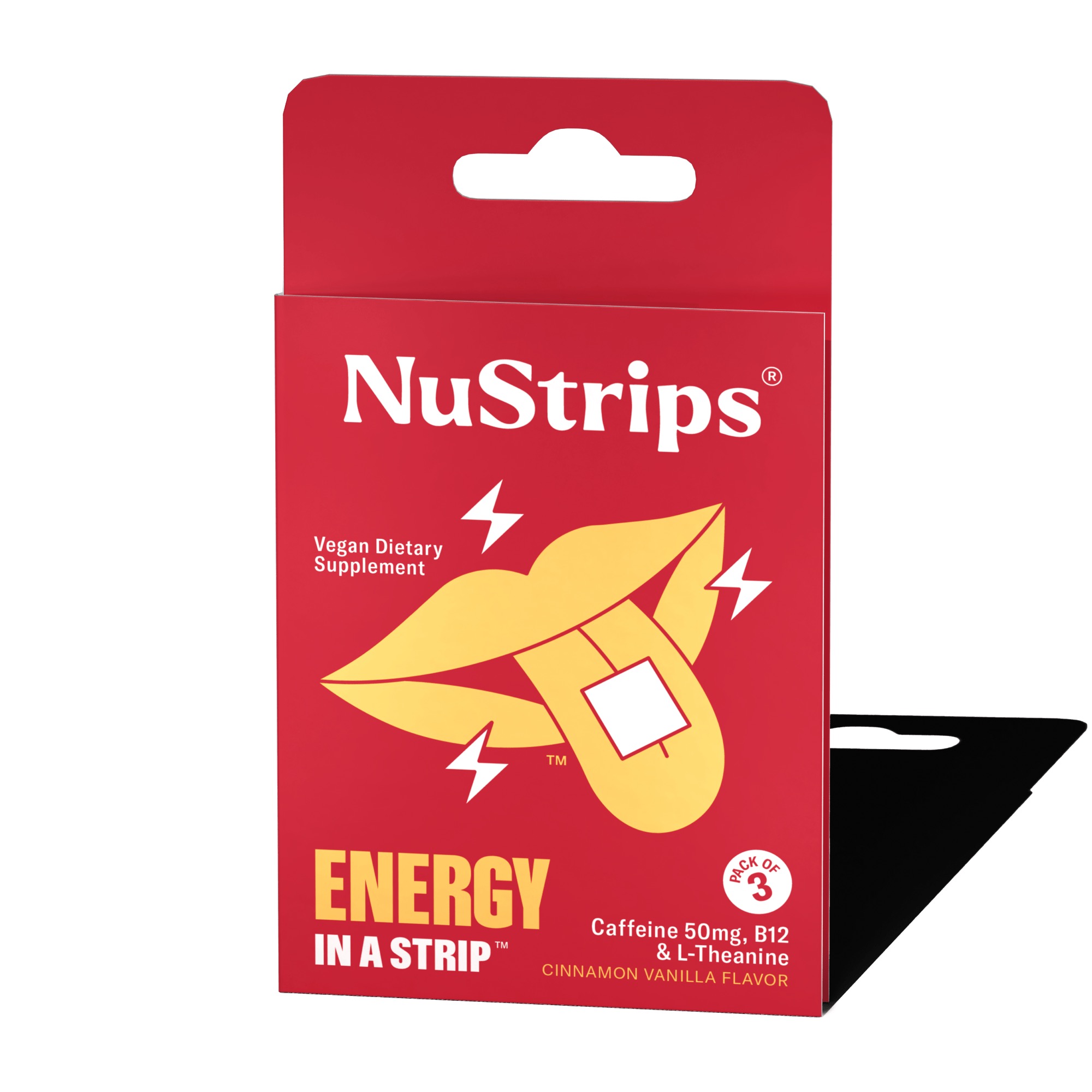
NuStrips built their product lineup specifically around supplement categories where the oral strip format’s advantages are most meaningful. Their Sleep strip uses melatonin - a compound with known first-pass limitations - combined with L-theanine and valerian root, where fast onset and calm onset are the desired experience. Their Energy and Beauty strips follow the same logic: compounds where speed of effect and bioavailability improvements are functionally relevant.
The brand has positioned itself explicitly around the 5x faster absorption claim versus traditional pills, reflecting the pharmacokinetic advantage of the oral mucosa route. For the specific product categories NuStrips covers, this is a defensible scientific claim rather than empty marketing.
A full review of their product lineup is available in our NuStrips review. For a specific look at how their sleep formulation performs in practice, see the NuStrips Sleep review.
The Bottom Line
Supplement strips versus pills is not a question with a single universal answer. The right format depends on what compound you are taking, why you are taking it, and what your daily habits and lifestyle look like.
For compounds where onset speed matters, where first-pass metabolism limits bioavailability, or where compliance is a consistent challenge, the oral strip format is a genuine improvement over capsules - not a gimmick. For high-dose, budget-sensitive, or long-established-efficacy supplements, the traditional pill format remains practical and cost-effective.
If your daily supplement routine involves sleep support, fast-acting energy, or nutrients that benefit from improved absorption routes, the strip format is worth understanding and potentially trying.