StarWalker Organic Farms Review 2026: Is Regenerative Organic Beef Worth It?
An evidence-led StarWalker Organic Farms review: what Regenerative Organic Certified actually means, how the Walker family raises cattle and pigs in Northern California, the product lineup, and who should order direct.
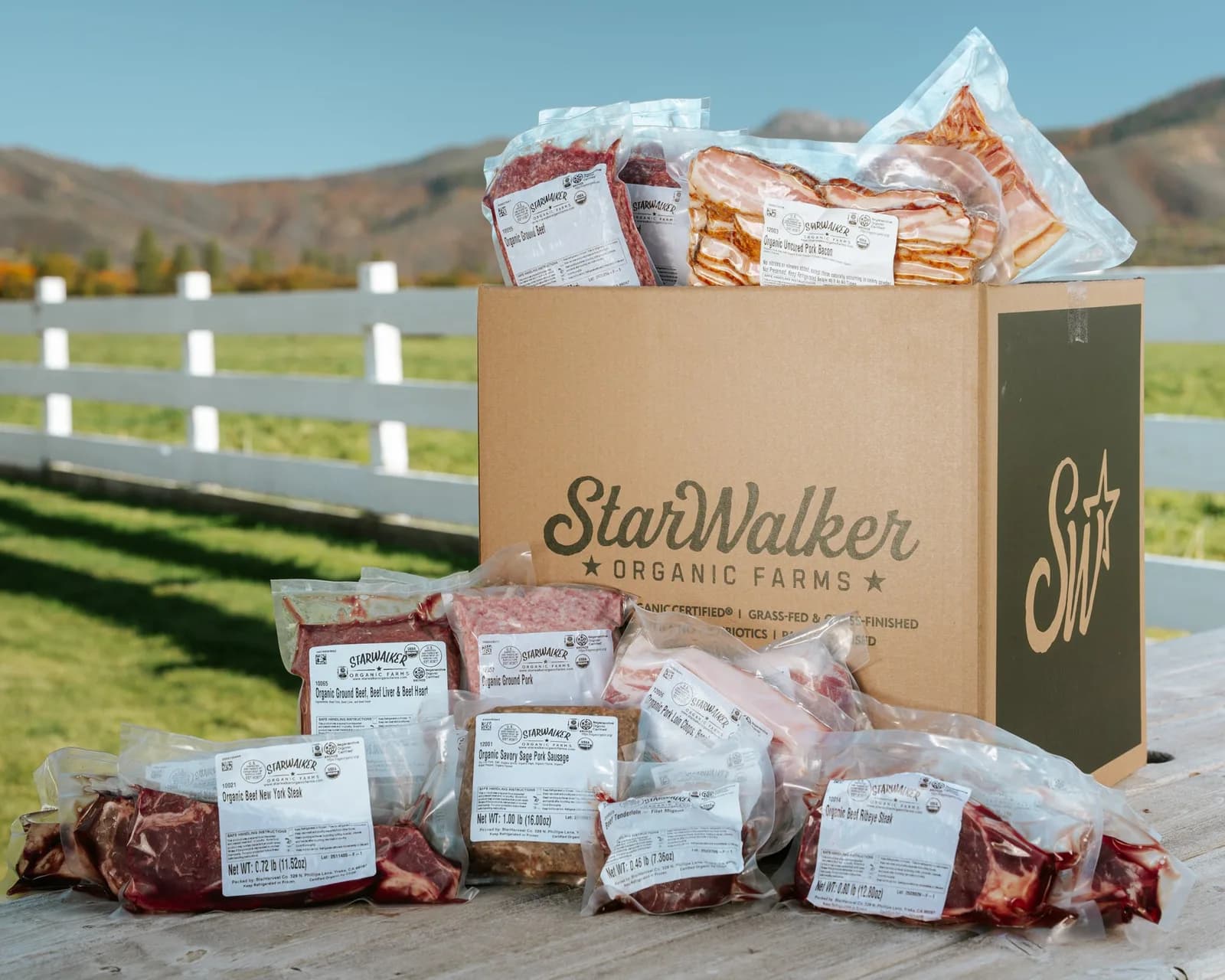
What Is StarWalker Organic Farms?
This StarWalker Organic Farms review breaks down what Regenerative Organic Certified actually means, how this third-generation Northern California family farm raises its cattle and pigs, and whether the beef, pork, and jerky lineup is worth ordering direct in 2026.
Key Highlights
- Third-generation family farm running 400+ head of cattle and roughly 4,000 organic pigs a year.
- Cattle stay on pasture about nine months a year (April through December) with 30-to-45 day rotational grazing rest periods.
- CCOF Certified Organic for nearly 40 years plus Real Organic Project and Regenerative Organic Certified (ROC) status.
- Third-party testing found seven times more omega-3 in StarWalker grass-finished beef than conventional grain-fed beef (Edacious lab, cited by Real Organic Project).
- Product range spans individual cuts, curated meat boxes, the Ancestral Grind organ blend, jerky and meat sticks, plus a 10% subscription discount.
A genuinely third-party-verified regenerative organic farm, best for shoppers who want documented sourcing over the cheapest cut.
StarWalker Organic Farms suits shoppers who want beef and pork backed by real third-party certification (CCOF, Real Organic Project, ROC) rather than vague "regenerative" marketing claims. Skip it if you need same-day retail pickup or the absolute lowest price per pound.
Shop StarWalker Organic FarmsWhat Is StarWalker Organic Farms?
StarWalker Organic Farms is a third-generation family farm located in far Northern California near the Oregon border, at the base of the Marble Mountains. The Walker family bought the land in 1970 and became one of the first certified organic farms in the United States during the 1980s. Current owners Kristina and Jason Walker took over in 2012 and expanded livestock production; the farm now runs more than 400 head of cattle and raises approximately 4,000 organic pigs per year, a scale that positions it among the largest regenerative organic pork producers in the country. A fourth generation, Cobi and Calii, is now learning the business.
That multi-generational continuity matters for a StarWalker Organic Farms review because regenerative practices, rotational grazing plans, and organic certification take years to build and are easy to lose through shortcuts. A farm that has held CCOF Organic status for decades has a longer track record than a newly launched direct-to-consumer meat brand.
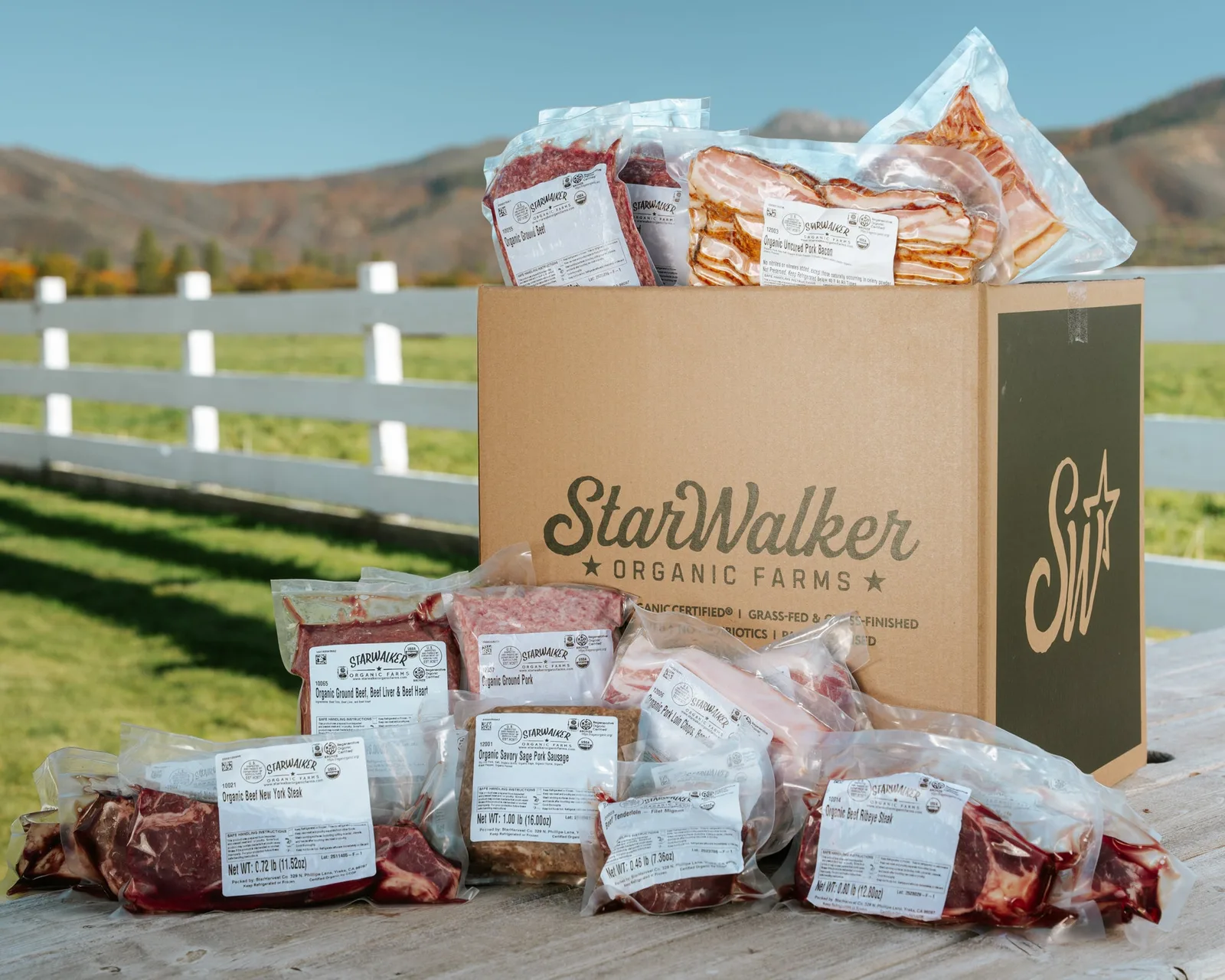
Curated Beef & Pork Box
Sourced from a farm with nearly 40 years of CCOF Certified Organic status.
How the Cattle and Pigs Are Raised
StarWalker's cattle management is pasture-based and grass-finished. Animals stay on pasture roughly nine months a year, from April through December, and shift to hay and silage grown on-farm over winter. The farm maintains about 100 breeding Highland and Angus cattle across seven properties, using permanent perimeter fencing and movable electric wire to run daily rotational grazing with 30-to-45 day rest periods so pasture can recover between grazing cycles.
Pigs graze on pasture seasonally and receive rotational grain rations, including peas, wheat, triticale, and barley grown on the same farm, as the operation works toward full self-sufficiency in livestock feed. This on-farm feed loop is part of why the farm can document its practices in detail rather than relying on generic "pasture-raised" language.
Worth clarifying: grass-finished is a stricter claim than grass-fed. USDA standards allow beef with up to 50% grain supplementation to still carry a "grass-fed" label, while grass-finished cattle eat nothing but grass and forage for their entire lives. Grass-finished beef can be marketed as grass-fed, but the reverse isn't true, so shoppers comparing brands should check which term a farm actually uses.
Certifications: What ROC Actually Verifies
StarWalker holds three separate, verifiable certifications: CCOF Certified Organic for nearly 40 years, Real Organic Project member status, and Regenerative Organic Certified (ROC) status. The farm was among the first in the beef industry, and the first producer in both the pork and jerky categories, to reach ROC status.
Regenerative Organic Certified builds on USDA Organic and adds three verified pillars: soil health and land management, animal welfare, and social fairness. Beyond banning synthetic inputs and GMOs, ROC requires rotational grazing, cover cropping, and compost; stricter animal welfare standards including outdoor pasture access and Five Freedoms compliance; and mandatory fair-wage and safe-working-condition verification. Certification comes in Bronze, Silver, and Gold tiers.
ROC was developed by the Regenerative Organic Alliance, founded by Patagonia, Rodale Institute, and Dr. Bronner's, and is verified through independent third-party auditors. That independent audit trail is what separates a trademarked ROC claim from an unregulated "regenerative" marketing label used elsewhere in the meat aisle.
Nutrition: The Omega-3 Evidence
StarWalker commissioned third-party nutrient testing through Edacious, and results showed seven times more omega-3 fatty acids in StarWalker grass-finished beef compared to conventional grain-fed beef. That figure is brand-specific lab testing rather than an independent peer-reviewed study, so treat it as directionally consistent with, not identical to, published research on grass-fed beef generally.
Independent science backs the general direction. A meta-analysis and systematic review of peer-reviewed literature found grass-fed beef contains two to six times more omega-3 fatty acids than grain-fed beef, with EPA levels almost 10 times higher and DHA roughly three times higher, plus 2-to-4 times more Conjugated Linoleic Acid. A separate observational study using untargeted metabolomics on grass-finished beef systems found grass-finishing significantly enhances phytochemicals and compounds with potential health benefits compared to grain-fed controls.
Read together, these sources support grass-finished beef as a nutrient-density category, while StarWalker's specific 7x figure remains a single company-commissioned test rather than a third-party academic study of its exact herd.
The Product Lineup
StarWalker sells individual beef cuts including ribeye and flank steak plus organ meats such as beef cheeks, curated meat boxes in small and large sizes across beef, pork, steak, and mixed-meat categories, the Ancestral Grind organic organ-meat blend, specialty bundles like a Bulk Ground Beef Bundle and BBQ Summer Boxes, and prepared jerky and meat sticks. A subscription option applies a 10% discount to any recurring order, and the farm also offers whole and half animal purchases plus wholesale and private-label options.
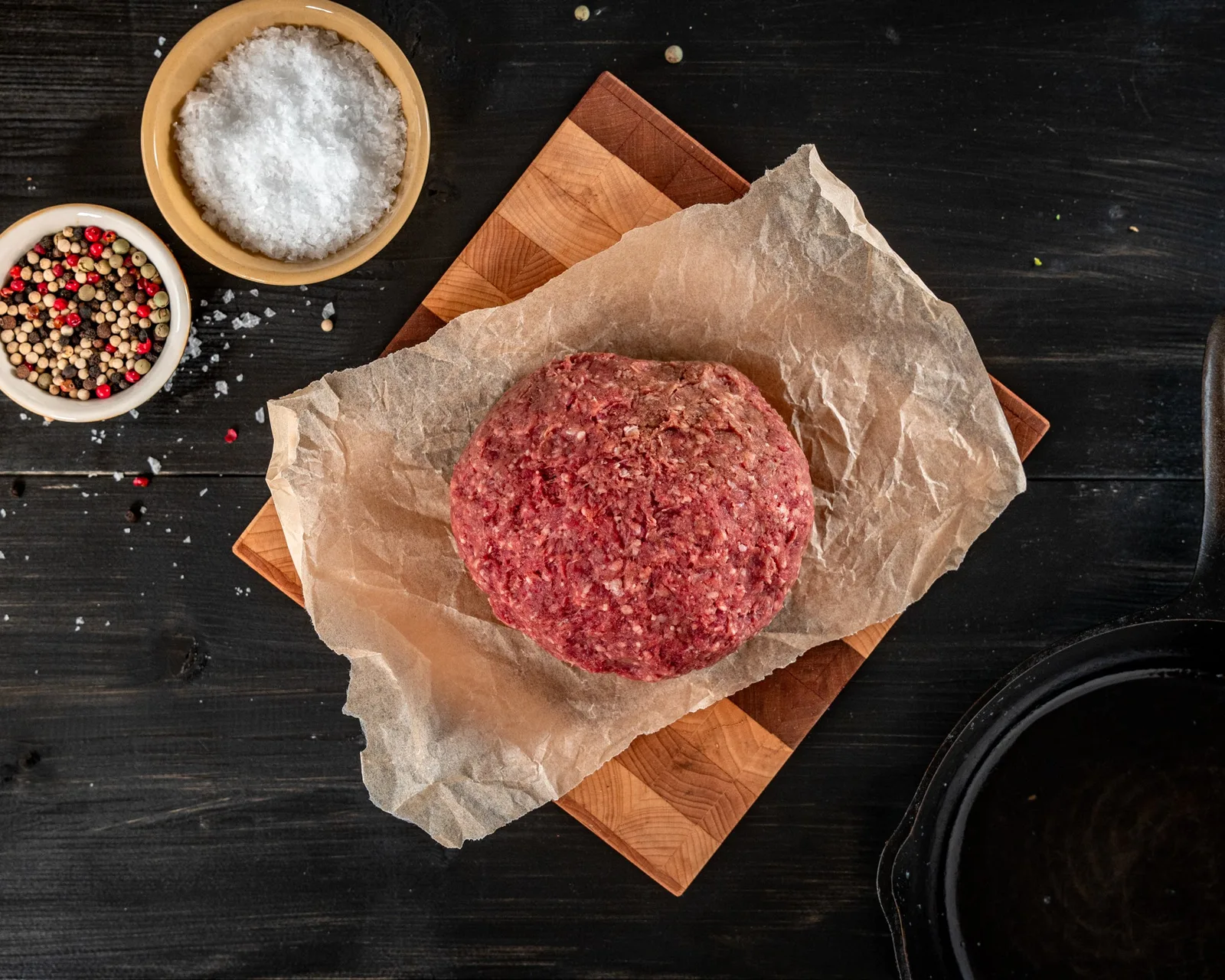
Ancestral Grind Organ Blend
What We Like
- Sourced from a herd with documented ROC and CCOF certification
- Convenient way to add organ-meat nutrients to everyday meals
- Traceable to a single, transparently audited farm
What to Consider
- Organ-forward flavor is not for every palate
- Ships direct from one farm, so delivery windows apply
Ancestral Grind is StarWalker's answer to the well-known nutrient gap between muscle meat and organ meat. Rather than selling liver and heart as separate, harder-to-cook cuts, the farm blends them into a ground product that works in everyday recipes like chili, meatballs, or tacos. Because it comes from the same ROC and CCOF-certified herd as the rest of the lineup, buyers get the sourcing transparency without needing to source organs separately.
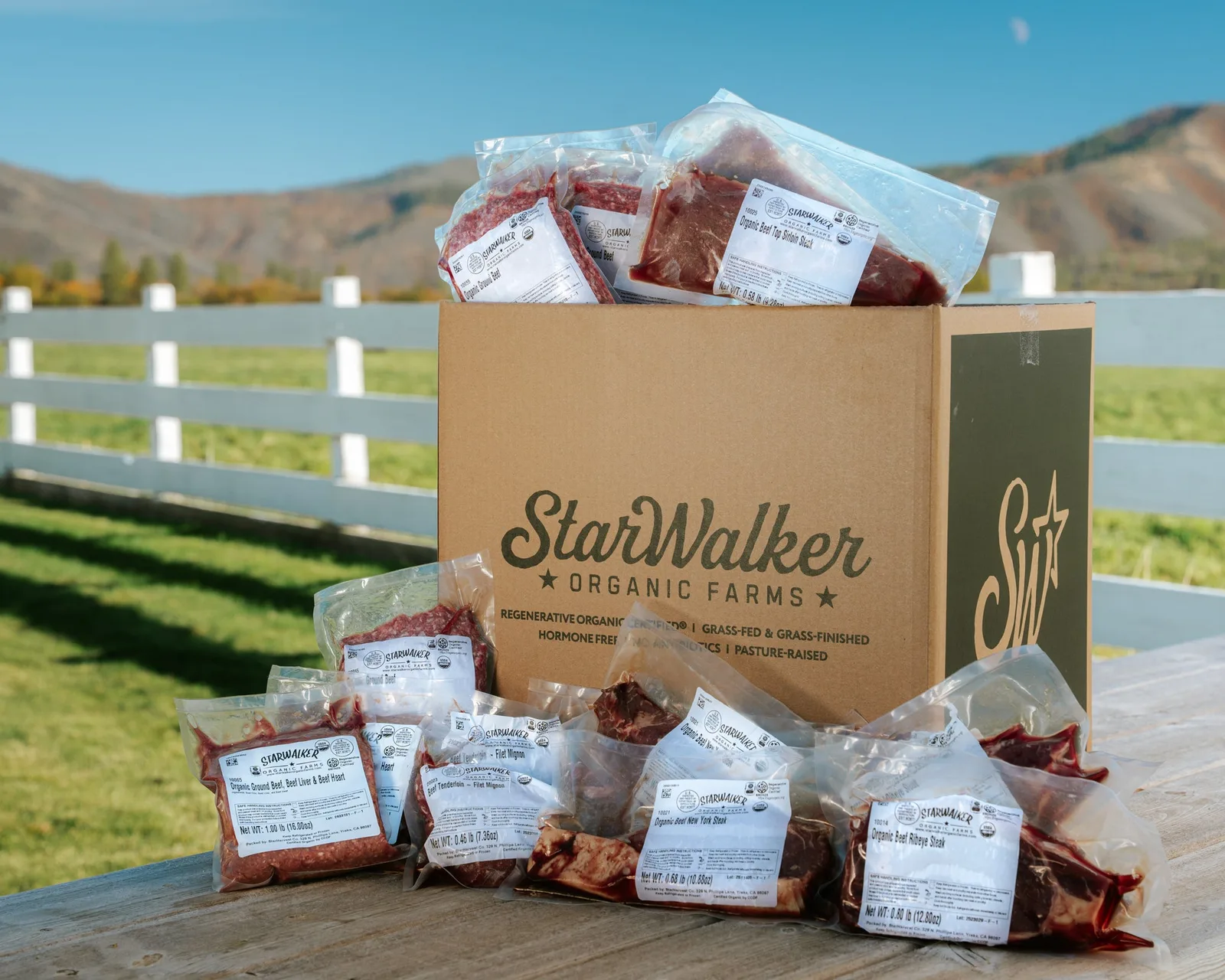
Curated Beef & Pork Meat Box
What We Like
- Lets new customers sample both beef and pork from the same certified herd
- 10% subscription discount available on recurring orders
- Simple entry point compared to picking individual cuts
What to Consider
- Less control over exact cuts than ordering a la carte
- Direct-to-consumer shipping only, no in-store pickup
The curated box is the most efficient way to evaluate whether StarWalker's beef and pork fit a household's cooking habits before committing to bulk bundles or a subscription. Because pricing and box composition change with availability, check the current lineup directly on the farm's site rather than relying on older screenshots of past boxes.
StarWalker vs the Alternatives
StarWalker competes with other direct-to-consumer regenerative and grass-fed meat brands. The table below compares verified certification status and sourcing model rather than price, since figures change often and should be checked at the vendor.
| Brand | Certification | Sourcing Model |
|---|---|---|
| StarWalker Organic Farms | CCOF Organic (~40 yrs), Real Organic Project, ROC | Single family farm, direct-to-consumer |
| Generic "grass-fed" supermarket beef | USDA grass-fed label only; may include up to 50% grain finishing | Mixed/aggregated supply chain |
| Grazly | Grass-fed sourcing, brand-stated (verify current claims) | Packaged snack-format beef, not whole cuts |
If your priority is documented, third-party-audited sourcing on whole cuts and boxes, StarWalker's certification stack is more thorough than a generic grass-fed label at the supermarket. If you want a grab-and-go snack format instead of cooking cuts at home, our Grazly review and Grazly Beef Brisket Slabs review cover that use case, and our carnivore snack guide compares snack-format options more broadly.
Common Mistakes When Buying Regenerative Beef
The most common mistake is treating "grass-fed" and "grass-finished" as interchangeable. As noted above, USDA grass-fed labeling allows up to 50% grain supplementation, so a grass-fed label alone does not guarantee a lifetime grass-only diet. Always check whether a brand specifically states "grass-finished."
A second mistake is assuming any farm using the word "regenerative" has third-party verification. Regenerative Organic Certified is a legally trademarked standard audited by independent third parties, but "regenerative" alone is an unregulated marketing term any brand can use without audit. Look for the actual ROC, CCOF, or Real Organic Project certification marks rather than the word alone.
A third mistake is ordering a large bulk bundle before trying a smaller box or individual cut, especially for a new direct-to-consumer brand relationship. Starting smaller lets you evaluate cut quality and shipping condition before committing to a larger order.
What to Look For: Buying Guide
Verified certification marks
Confirm the specific certifications a farm holds rather than relying on marketing copy. StarWalker's combination of CCOF Organic, Real Organic Project, and ROC status is unusually well-documented for a direct-to-consumer meat brand; not every competitor discloses this level of detail.
Grazing and feed transparency
A farm that can describe its specific rotational grazing schedule, like StarWalker's 30-to-45 day rest periods and nine-month pasture season, is giving you more than a generic "pasture-raised" claim. Vague language without numbers or a described process is a weaker signal.
Processing and traceability
StarWalker acquired a USDA-certified organic processing facility about 20 miles from the farm in 2024, which keeps harvesting, processing, and packaging under the farm's own control rather than outsourced to a third-party plant. That kind of vertical integration supports full traceability from pasture to package.
How We Chose
We evaluated StarWalker against its own published certification records, farm history, and third-party sources (Real Organic Project, Regenerative Organic Alliance) rather than in-house taste testing, since no independent testing panel was supplied for this review.
The Bottom Line
StarWalker Organic Farms is a strong pick for shoppers who want documented, third-party-audited regenerative organic sourcing on beef, pork, and organ-meat products, best purchased through a smaller box or individual cut on a first order. Skip it if you need in-store pickup or fast, unpredictable-schedule delivery.
Shop StarWalker Organic FarmsReferences
Recommended for you
 Carnivore Snack Guide 2026: What to Actually Eat Between Meals
 Grazly Review 2026: Honest Take on the 2-Ingredient Beef Brand
 Grazly Beef Brisket Slabs: Best Grass-Fed Carnivore Snack?
 How to Meal Prep High Protein Chicken the Clean Way (2026)
 Impeccable Chicken Review: Is Im’peccable Really the Cleanest Protein?
 What Singapore Customers Really Say: The Meat Club vs. Butchers