If you have been building your nutrition around protein shakes for any length of time, you have probably noticed protein water appearing more often — on gym shelves, in health food stores and in the hands of people who definitely do not look like they need to carry a shaker bottle everywhere.
The protein water vs protein shake question is one that comes up constantly, and the honest answer is: it depends entirely on your goals, your lifestyle and how you are already hitting your daily protein targets.
This guide breaks down every relevant dimension — absorption, calories, convenience, protein type, cost and use cases — so you can make a clear decision about which format belongs in your routine, and whether one should replace the other or they should coexist.
What Is Protein Water?
Protein water is a clear, water-based drink enriched with protein — typically hydrolysed collagen peptides or whey protein isolate. It looks like water (sometimes lightly tinted by fruit flavouring), it drinks like water and it is sold in ready-to-drink bottles.
The defining features of protein water:
– Usually 10-20g protein per 500ml serving
– Zero or very low sugar
– Low calorie (typically 60-120 kcal)
– Ready to drink with no preparation
– Clear liquid, not thick or creamy
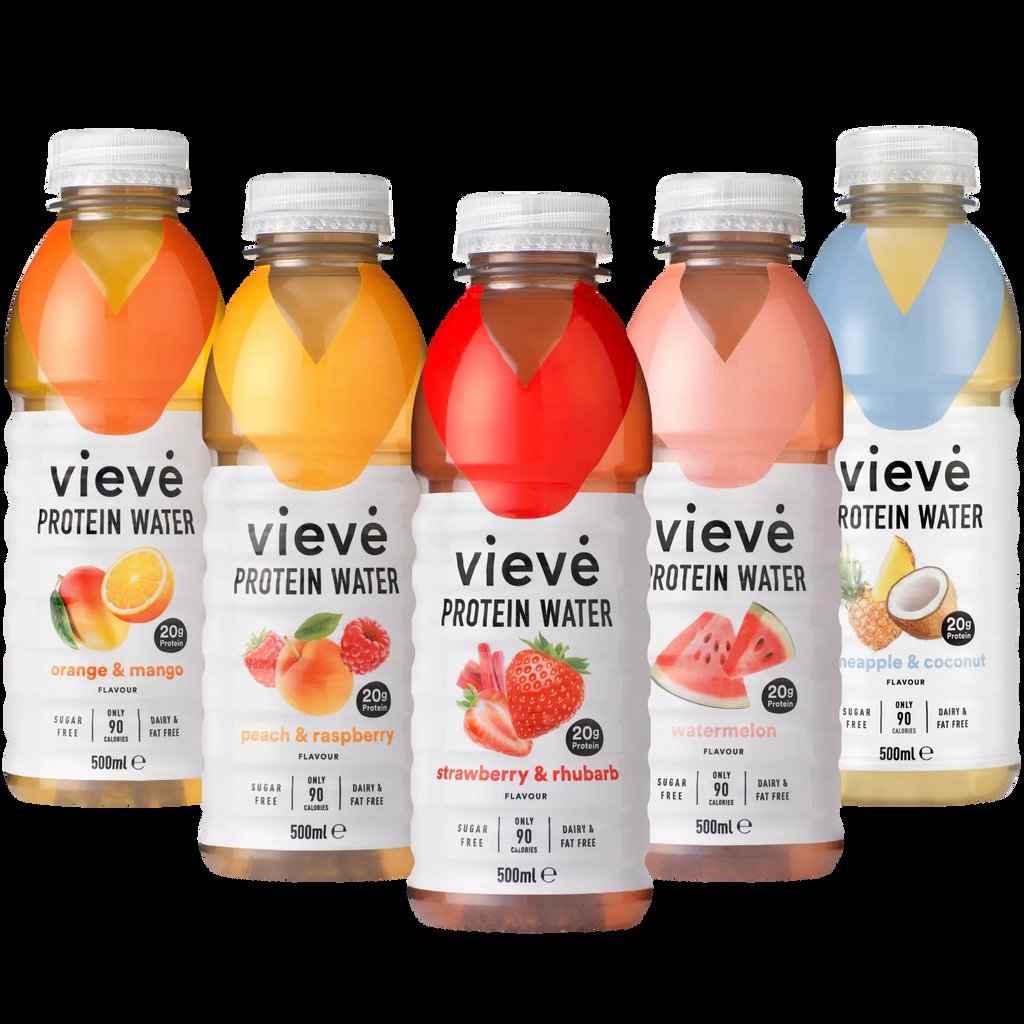
Vieve Protein Water is the leading UK example, delivering 20g protein, zero sugar, zero carbs, zero fat in a 500ml bottle using hydrolysed collagen peptides.
What Is a Protein Shake?
A protein shake typically refers to a drink made by mixing protein powder (most commonly whey, casein, pea or soy) with water or milk in a shaker bottle. Ready-to-drink (RTD) protein shakes from brands like Grenade, Optimum Nutrition and Huel also fall into this category.
The defining features of a protein shake:
– Usually 20-40g protein per serving
– May contain carbohydrates, fats and added ingredients (vitamins, creatine, etc.)
– Calorie range varies widely: 120 kcal (isolate + water) to 400+ kcal (mass gainer or milk-based)
– Thick, creamy texture (varies with formula)
– Requires preparation (powder + liquid + blending or shaking)
Protein Water vs Protein Shake: Key Differences
Calories
This is often the deciding factor. Protein water is almost always the lower-calorie option.
| Format | Typical Calories per Serving |
|---|---|
| Protein water (e.g. Vieve 500ml) | ~100 kcal |
| Whey isolate shake (30g powder + 300ml water) | ~120-130 kcal |
| Whey concentrate shake (with milk) | ~250-300 kcal |
| Mass gainer shake | 400-600+ kcal |
| Ready-to-drink protein shake | 200-350 kcal |
If you are in a caloric deficit, managing weight or just trying to get protein in without adding much to your daily calorie budget, protein water wins on this dimension. Vieve at 100 kcal for 20g of protein is one of the most calorie-efficient protein sources available in ready-to-consume format.
If you are trying to build muscle mass, are in a caloric surplus or need a protein shake to replace a meal, a traditional shake — especially with milk — delivers more total calories that support growth, recovery and satiety.
Protein Content
| Format | Typical Protein per Serving |
|---|---|
| Vieve Protein Water (500ml) | 20g |
| Standard whey isolate shake (30g scoop) | 24-27g |
| Standard whey concentrate shake (30g scoop) | 20-24g |
| RTD protein shake | 20-40g |
Protein content is broadly similar at standard serving sizes. Vieve’s 20g per 500ml is competitive with a single scoop of most whey protein powders. If you need more protein per serving (e.g. 40g+ post-workout), a double-scoop shake wins — there is no equivalent in protein water format that delivers 40g without drinking two bottles.
Protein Type and Absorption
This is where the comparison gets more nuanced.
Whey protein (the most common shake ingredient) is a complete protein containing all essential amino acids including tryptophan, leucine, isoleucine and valine (the BCAAs). Whey isolate is very quickly absorbed — typically 1-2 hours for a significant portion to reach the muscles. Whey concentrate is absorbed at a moderate rate.
Hydrolysed collagen peptides (used in Vieve) are also rapidly absorbed due to pre-hydrolysis — the protein chains are shorter and require less digestive work. However, collagen is an incomplete protein: it lacks tryptophan and has a different amino acid profile from whey, being particularly rich in glycine, proline and hydroxyproline.
| Protein Type | Complete? | Absorption Speed | Key Aminos | Best For |
|---|---|---|---|---|
| Whey Isolate | Yes | Fast (1-2 hrs) | BCAAs, leucine | Muscle building, post-workout |
| Whey Concentrate | Yes | Moderate | BCAAs, leucine | General use |
| Hydrolysed Collagen | No (lacks tryptophan) | Fast | Glycine, proline | Top-up, skin/joint/gut, convenience |
| Casein | Yes | Slow (6-8 hrs) | Full amino profile | Before sleep, sustained release |
| Pea Protein | Nearly complete | Moderate | Arginine, lysine | Plant-based users |
For pure muscle protein synthesis, whey edges out collagen due to its complete amino acid profile and higher leucine content. For overall wellness goals that include skin, joint and gut health alongside protein intake, collagen-based protein water like Vieve offers added benefits beyond muscle support.
When to Choose Protein Water Over a Shake
Protein water wins in specific situations where its format advantages are the deciding factor.
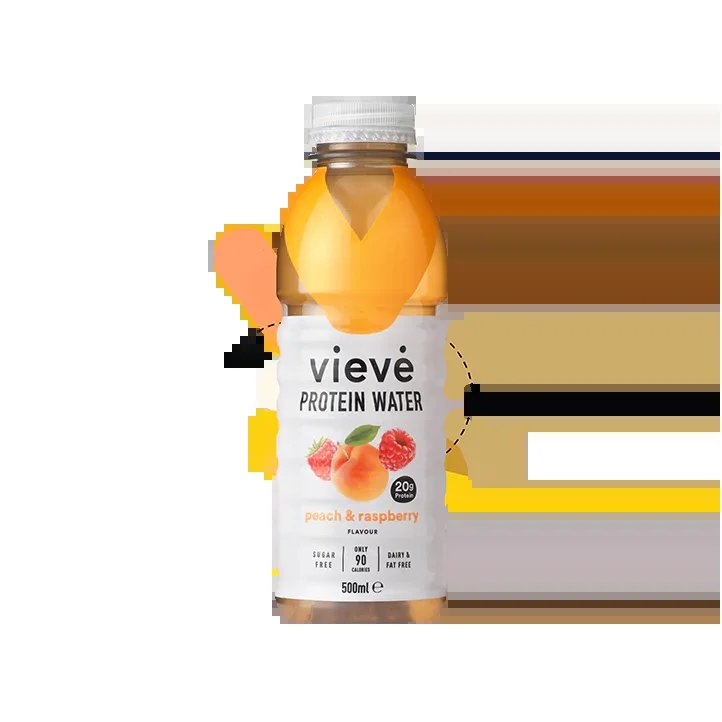
At the office or working remotely: A Vieve bottle looks identical to a flavoured water drink. You can sip it at your desk without drawing attention, without needing a blender or shaker, without leaving a protein-powder-smelling cup in the office kitchen. This frictionless use case is one of protein water’s greatest practical advantages.
Immediately post-workout (when shakes feel heavy): After an intense session, many people find thick shakes sit uncomfortably in the stomach. Protein water provides protein and rehydration without the digestive burden of a milk-based or high-carb shake. The lighter format is easier to consume when appetite is suppressed post-training.
When you are in a strict caloric deficit: At around 100 calories, Vieve allows you to absorb 20g of protein with a minimal calorie footprint. If every calorie counts, protein water is more efficient per gram of protein than most RTD shakes.
Travelling, commuting or on the go: No powder, no shaker, no milk, no refrigeration. Protein water is the only form of protein supplementation you can carry in a bag and consume anywhere at any time without preparation of any kind.
As a collagen supplement substitute: If you are already planning to take a collagen supplement separately (for skin, hair, joint or gut reasons), switching to Vieve means you get your daily collagen peptide intake through your protein water — eliminating a separate supplement cost and step.
When dairy is an issue: Collagen peptides are entirely dairy-free. Whey is a dairy derivative. For lactose-intolerant individuals or those on dairy-free diets, protein water is the cleaner choice.
When to Choose a Protein Shake Over Protein Water
There are situations where a traditional shake is the better tool.
If muscle building is your primary goal: Whey protein’s complete amino acid profile, high leucine content and established research base makes it the gold standard for post-workout protein for muscle protein synthesis. If adding lean mass is your priority, whey is the better choice.
If you need more than 20g protein per serving: A double scoop of whey powder gives you 40-50g in one serving. There is no easy equivalent in protein water without buying and drinking multiple bottles.
If you need a meal replacement: A shake made with milk, oats and fruit can deliver 500+ calories with a full macronutrient profile. That is a meal. Protein water at 100 calories is a snack or supplement — it is not designed to replace meals.
If your budget is tight: A 1kg bag of whey isolate provides roughly 33 servings of 20g protein at a per-serving cost of approximately £0.70-£1.00. Protein water at £2.30-£2.49 per 20g serving is meaningfully more expensive. Budget matters for daily supplementation.
If you prefer a filling, satisfying drink: The thickness and calorie density of a milk-based shake creates a sense of fullness. If you want your post-workout drink to also serve as a meal to hold you through to your next eating window, shakes do that better.
Can You Use Both?
Yes, and many people find this is the optimal approach. Protein water and protein shakes serve different purposes at different times of day or different points in a training cycle.
A common hybrid approach:
- Morning: Vieve Protein Water with breakfast, adding 20g to the start of the day effortlessly
- Post-workout (heavy session): Whey shake for muscle protein synthesis and recovery
- Afternoon desk snack: Another Vieve instead of a protein bar — similar protein, fewer calories, better hydration
- Before bed (optional): Casein shake for slow-release overnight protein
In a weight management phase, some people replace their afternoon shake entirely with protein water to reduce overall calorie intake while maintaining protein targets.
Cost Comparison
| Format | Cost per 20g protein (approx) |
|---|---|
| Vieve Protein Water (10-pack) | £2.30 |
| Whey Isolate (own brand, UK) | £0.70-£1.00 |
| RTD protein shake | £2.00-£3.00 |
| Protein bar | £1.80-£2.50 |
On pure cost-per-gram-of-protein, whey powder wins. But cost-per-gram-of-protein is not the only variable. The premium of protein water over DIY powder buys you: zero preparation time, zero equipment, zero mess, portability, rehydration alongside protein, and collagen peptide benefits that are not present in whey.
Whether that premium is worth it depends on your lifestyle. For someone who has time to prepare shakes and stores powder at a fixed base, powder is the more economical choice. For someone frequently on the go, at work, or who finds shake preparation a barrier to consistent protein intake, protein water’s convenience premium is justified.
Summary: Protein Water vs Protein Shake
| Factor | Protein Water | Protein Shake |
|---|---|---|
| Calories | Lower (~100 kcal) | Varies (120-400+ kcal) |
| Protein per serving | 15-20g | 20-50g |
| Complete protein | No (collagen lacks tryptophan) | Yes (whey) |
| Preparation needed | None | Yes (powder + liquid) |
| Portability | Excellent | Moderate (needs shaker) |
| Best for muscle building | Supplement only | Primary tool |
| Dairy-free | Yes (collagen) | Depends on type |
| Cost per serving | Higher | Lower (powder) |
| Collagen benefits | Yes | No |
| Hydration factor | Built-in | Minimal |
The Bottom Line
Protein water is not here to replace your protein shake. It is here to fill the gaps where shakes are inconvenient, too calorie-dense or simply impractical. The best approach for most active people is to use both tools for what they each do best.
If you have been missing protein targets because shakes are too much effort mid-afternoon at the office, or because you cannot drink something thick and heavy after a summer run, protein water solves that problem. If you are doing heavy resistance training and need maximum muscle protein synthesis support, your post-workout window still belongs to whey.
Vieve Protein Water is the most accessible and well-formulated protein water currently available in the UK, with 20g protein per bottle, zero sugar and strong retail availability. It is a practical addition to any protein strategy, not a wholesale replacement for it.
Read our Vieve protein water review for a detailed breakdown of the flavours and experience, or check our guide to the best sugar-free protein water UK if you want to compare all available options before deciding.