The protein bar aisle has been a graveyard of broken promises for decades. Bars that taste like chocolate-covered chalk. Labels full of soy isolate and sucralose dressed up in clean-sounding packaging. Dozens of “natural” bars that rely on “natural flavors” — an industry loophole that can mask hundreds of synthetic compounds under a single ingredient.
Prima is a brand that decided to walk away from all of it. Their ancestral protein bars use grass-fed bovine collagen peptides, grass-fed whey protein concentrate, and grass-fed beef tallow as the protein and fat backbone — plus a short list of organic, recognizable ingredients. No seed oils. No artificial anything. No natural flavors.
This review covers the full Prima lineup: what we know about taste and texture based on the ingredient profiles, how each flavor compares, what the pricing actually means for your budget, and who these bars are genuinely built for.
What Prima Is (And What It Isn’t)
Prima describes itself as “real food for real people” and positions its bars as part of a fight against “fake food.” That framing is pointed: the conventional protein bar industry leans heavily on ingredients like soy protein isolate, rice protein, pea protein, canola oil, maltitol, sucralose, and an assortment of additives that require chemistry labs to produce.
Prima’s alternative is an approach sometimes called “ancestral eating” — building nutrition around the foods that human beings consumed before industrialization changed our food supply. That means:
- Animal-sourced protein over plant-derived isolates
- Traditional fats (beef tallow) over industrially processed seed oils
- Raw honey as sweetener rather than synthetic substitutes
- Whole food ingredients short enough to read on a label without a biochemistry degree
This philosophy has a growing following in 2026, driven by increased awareness around ultra-processed foods and renewed interest in traditional diets.
Prima Protein Bar Lineup: All Five Flavors
All Prima bars carry the same core protein blend and retail at $27.93 per pack, with each bar delivering 21g of animal protein per 57g serving. Here’s what the full lineup looks like:
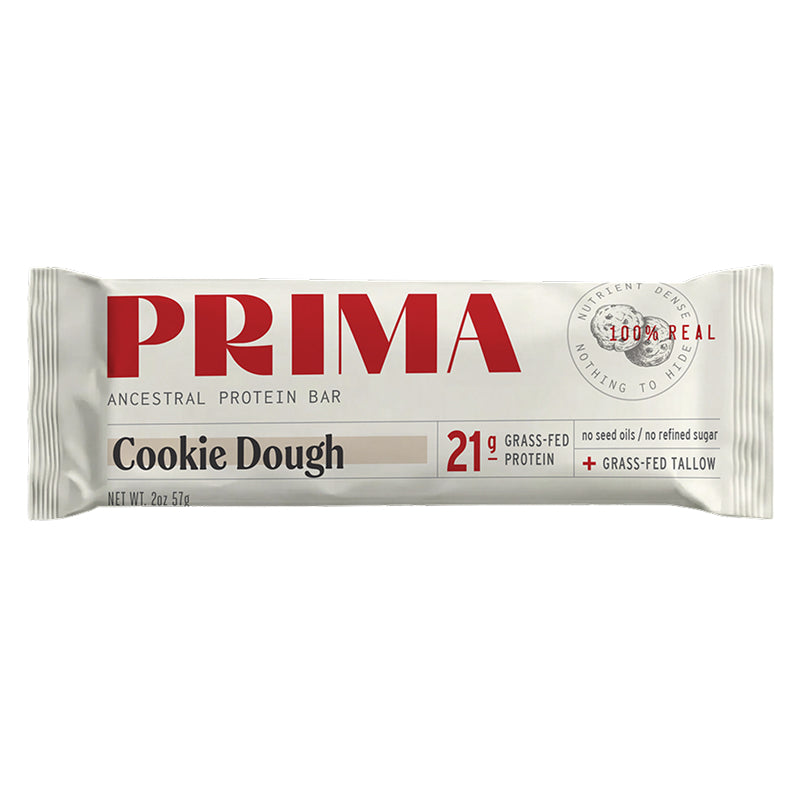
Cookie Dough — The Flagship
Calories: 240 | Protein: 21g | Fat: 12g | Carbs: 14g
The Cookie Dough bar is Prima’s anchor product, taglined “Straight From The Bowl.” The ingredient list reads: PRIMA Protein Blend (Grass-fed Bovine Collagen Peptides, Grass-fed Whey Protein Concentrate), Organic Raw Honey, Grass-fed Beef Tallow, Organic Coconut, Organic Cacao Nibs, Organic Coffee Extract, Egg Yolk, Organic Vanilla Extract, Salt.
What makes this ingredient list remarkable is what’s absent: no soy, no seed oils, no artificial sweeteners, no “natural flavors,” no preservatives. The sweetness comes entirely from raw honey. The fat comes from grass-fed tallow and coconut. The chocolate note comes from actual cacao nibs. This is the kind of formulation that “clean ingredient” bar companies claim to make but rarely execute with this level of commitment.
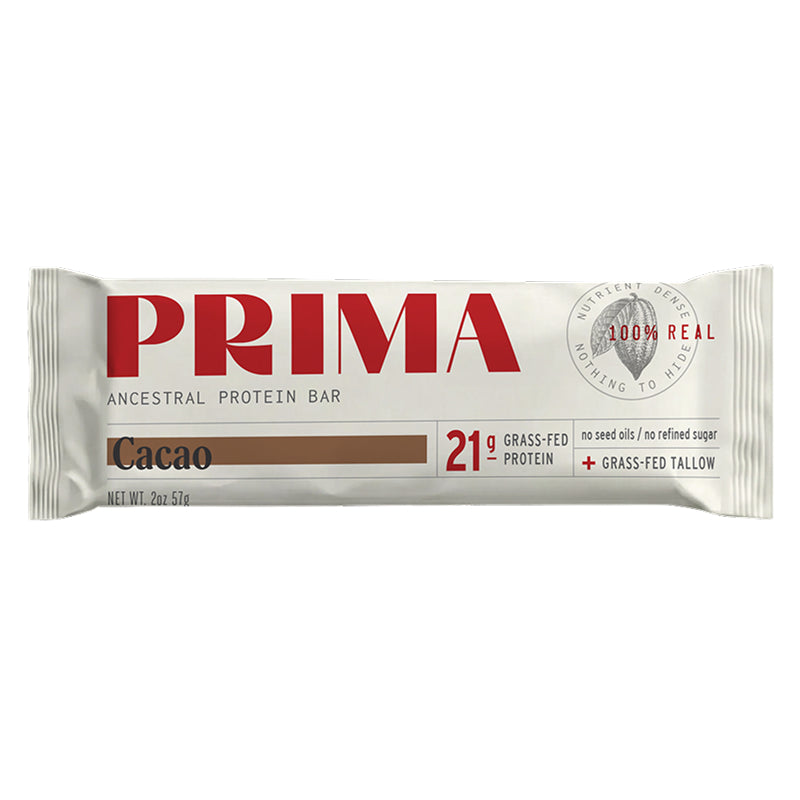
Cacao — Pure Chocolate Expression
Calories: 240 | Protein: 21g
If Cookie Dough is the gateway flavor, Cacao is for people who want unambiguous chocolate without vanilla or coffee undertones. Based on the shared protein blend and Prima’s ingredient philosophy, this bar likely relies on a higher proportion of cacao nibs for its flavor profile. For dark chocolate lovers, this is probably the purest Prima experience.
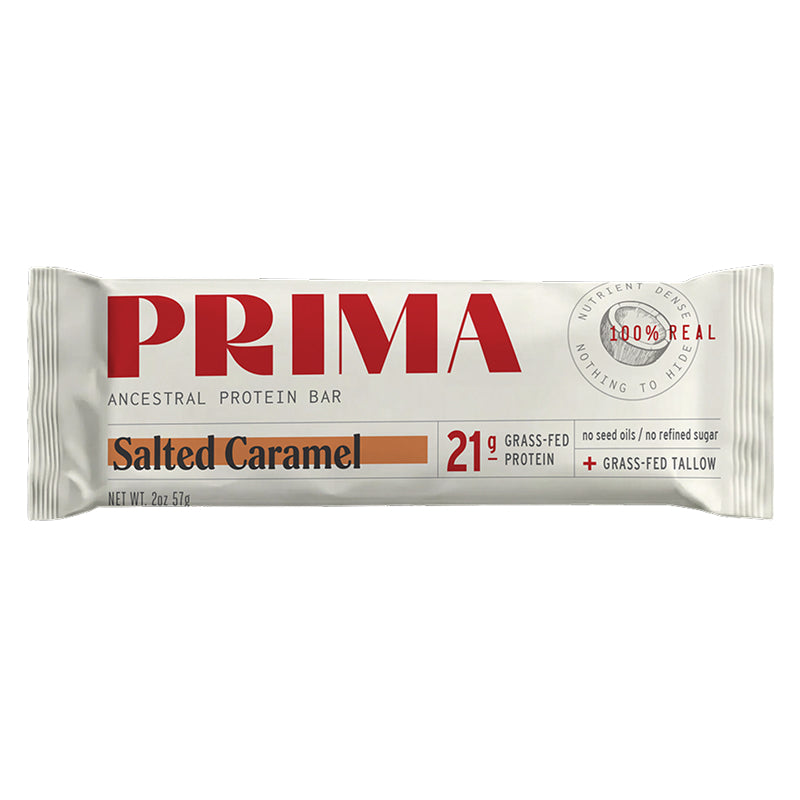
Salted Caramel — The Outlier
Calories: 250 | Protein: 21g
The Salted Caramel is the only Prima flavor with a slightly elevated calorie count (250 vs. 240), suggesting a small adjustment in fat or carbohydrate content. The combination of raw honey’s natural caramel notes with salt creates a profile that should feel more rounded and buttery than the chocolate-forward flavors. This is likely the most accessible starting point for people new to ancestral-style bars who want something familiar.
Mocha — For Coffee Lovers
Calories: 240 | Protein: 21g
Prima’s Mocha bar takes the coffee extract from the Cookie Dough formula and makes it the lead note. For people who want their mid-morning protein to echo their morning espresso, this is the obvious choice. The combination of coffee, cacao, and the slightly savory grassiness of collagen peptides is a sophisticated flavor profile built entirely from real ingredients.
Mint Chip — The Newest Arrival
Calories: 240 | Protein: 21g
The most recent addition to the Prima family brings a mint-cacao combination — a flavor pairing that has deep roots in both confectionery and clean-eating bars. Based on Prima’s approach to every other flavor, expect peppermint from actual plant extract rather than “mint flavor,” and cacao nibs providing the chip component.
Taste Test: Cookie Dough vs. Other Flavors
Without a synthetic flavoring system, Prima bars will taste different from what most protein bar consumers are accustomed to. This isn’t a bug — it’s a design decision. Here’s what the ingredient profiles suggest about the taste experience:
Texture: Collagen peptides create a different protein matrix than soy or whey isolate. Combined with coconut and tallow, expect a denser, chewier texture with more substance than most bars. This is not a puffed, airy product.
Sweetness level: Raw honey provides sweetness, but it’s a more complex, slightly floral sweetness compared to the sharp, clean-sweet punch of sucralose or monk fruit. The overall sweetness level is moderate — these bars don’t attempt to mimic candy.
Savory undercurrent: Collagen, tallow, and egg yolk all carry subtle savory, umami-adjacent notes. These are not unpleasant, but they create a grounding quality that distinguishes Prima from dessert-flavored bars.
Cookie Dough vs. Cacao: Cookie Dough has more layered complexity from vanilla, coffee extract, and coconut; Cacao is more direct and bittersweet.
Cookie Dough vs. Salted Caramel: Salted Caramel is likely the sweeter of the two, given that caramel notes in honey intensify with salt. Cookie Dough has more textural interest from cacao nibs.
Cookie Dough vs. Mocha: Mocha leans into the coffee component that’s a background note in Cookie Dough, making it more bitter and stimulant-forward.
The Variety Pack at $27.93 is the recommended entry point if you want to sample the range before committing to a single flavor.
Nutritional Deep Dive: What 21g of Animal Protein Actually Means
Not all protein is nutritionally equivalent, and the Prima formula makes a specific case for animal-source protein diversity.
Collagen peptides provide glycine, proline, and hydroxyproline in ratios that animal bodies evolved to use. These amino acids aren’t abundant in muscle meat (chicken breast, etc.) and aren’t present in plant proteins. They support the extracellular matrix: tendons, ligaments, cartilage, skin, gut lining.
Whey protein concentrate delivers the full spectrum of branched-chain amino acids (BCAAs) — particularly leucine — which directly trigger muscle protein synthesis. The “concentrate” form (vs. isolate) retains naturally occurring growth factors and immunoglobulins that isolate processing removes.
Beef tallow contributes fat-soluble vitamins (A, D, E, K2) and a favorable saturated/monounsaturated fat ratio. It does not contribute to the protein count directly but is an integral part of the ancestral eating rationale.
Combined, the 21g protein number reflects a multi-source animal protein blend with functional benefits beyond simple muscle protein synthesis. For people following protocols emphasizing collagen alongside whey (for joint support, skin health, and gut function), this is a notably convenient format.
Price vs. Value: Is Prima Worth $27.93 a Pack?
At $3.99 per bar, Prima is more expensive than Quest ($2.00-$2.50) or RXBar ($2.50-$3.00), but competes directly with the upper tier of clean-ingredient bars. Here’s the value breakdown:
The cost of the raw ingredients helps explain the price:
– Grass-fed whey protein concentrate costs significantly more per pound than conventional whey isolate
– Grass-fed bovine collagen peptides command a premium over conventional collagen (which often comes from undisclosed sources)
– Grass-fed beef tallow from quality sources is priced above commodity cooking fats
– Organic raw honey costs more than corn syrup or glucose-fructose syrup
– Organic cacao nibs, coconut, coffee extract, vanilla all add to the ingredient cost
Every ingredient in a Prima bar is sourced with a specific quality specification. When you compare $3.99/bar to a collagen supplement ($20-$30 for a similar serving of grass-fed collagen), a grass-fed whey protein shake ($2-$3 per serving), and a clean fat source, Prima’s all-in-one bar format starts to look reasonably priced.
The $27.93 pack price also makes Prima accessible without requiring a subscription, which many competing brands make effectively mandatory for reasonable pricing.
What We Like About Prima
The ingredient list is genuinely clean. Not “cleaner than most” — actually clean. The absence of natural flavors, seed oils, and synthetic sweeteners is rare in packaged protein products.
The protein source diversity is intentional. Collagen + whey + tallow is not a random combination. It reflects a considered view about what a nutritionally complete animal-based snack should contain.
The Non-GMO and gluten-free certifications make Prima accessible to a wide range of dietary restrictions.
No sucralose, no erythritol, no stevia. For people sensitive to sugar alcohols or synthetic sweeteners (which can cause digestive issues), raw honey is a more gut-friendly alternative.
What to Keep in Mind
The added sugar content (11g per bar) comes from raw honey. For people tracking sugar precisely — whether for blood sugar management or low-carb goals — this matters. Raw honey is higher quality than refined sugar, but it is still sugar.
The saturated fat is high (7g, 35% DV) relative to conventional bars. From an ancestral eating perspective, saturated fat from grass-fed animal sources is viewed differently than from grain-fed animals. From a conventional nutrition standpoint, this may give some consumers pause.
The texture and flavor profile is distinct from conventional protein bars. People expecting something sweet and candy-like may need to recalibrate expectations.
Final Assessment
Prima earns a genuine recommendation in this space. The brand has built a product line that stands on actual ingredient quality rather than label claims, delivers a meaningful nutritional profile through animal-source proteins, and prices the product fairly given the raw material costs involved.
If the ancestral eating philosophy resonates with you — or if you’re simply exhausted by fake food masquerading as health food — the Prima protein bar is worth a pack trial.
Start with the Variety Pack to find your preferred flavor, then settle into whichever one fits your taste and routine.
Related reads: Prima Cookie Dough Bar Review: Best Ancestral Protein Bar? | Best Ancestral Protein Bars 2026