If you want to know how to meal prep high protein chicken without spending your Sunday cooking batches of plain breast meat that all taste the same by Thursday, this guide is the practical answer for 2026. The system below works whether you’re deep into structured fitness nutrition or simply trying to hit 120-150g of protein daily without cooking every meal from scratch.
The central framework is built around Im’peccable Chicken’s Variety Bundle — a ready-to-eat, microplastics-free, third-party tested clean protein source that removes the cooking bottleneck entirely. But the principles apply to any clean chicken prep strategy: flavor rotation, container planning, target days, and macro stacking across the week.
Why High-Protein Chicken Meal Prep Still Wins in 2026
Chicken remains the most efficient whole-food protein for meal prep because of three factors that haven’t changed: macronutrient density, culinary versatility, and cost-per-gram of protein relative to other animal proteins.
When you add the clean protein standard — sourcing, testing, and minimal processing — into the equation, the category narrows significantly. Most commercially available ready-to-eat chicken options prioritize shelf life, flavor intensity, and cost over purity. The result is protein that is technically convenient but requires accepting a quality compromise.
The question of how to meal prep high protein chicken in 2026 has two answers:
- Cook it yourself from a verified clean source, applying the five-step prep system in this guide
- Use a tested ready-to-eat product like Im’peccable Chicken to remove the cooking step while maintaining clean protein standards
This guide covers both approaches, with a focus on how to integrate them for a practical seven-day system.
How to Meal Prep High Protein Chicken: The 5-Step System
This five-step framework is designed to produce seven days of clean, high-protein chicken meals with two to three hours of Sunday prep, or significantly less time if you’re integrating a ready-to-eat option.

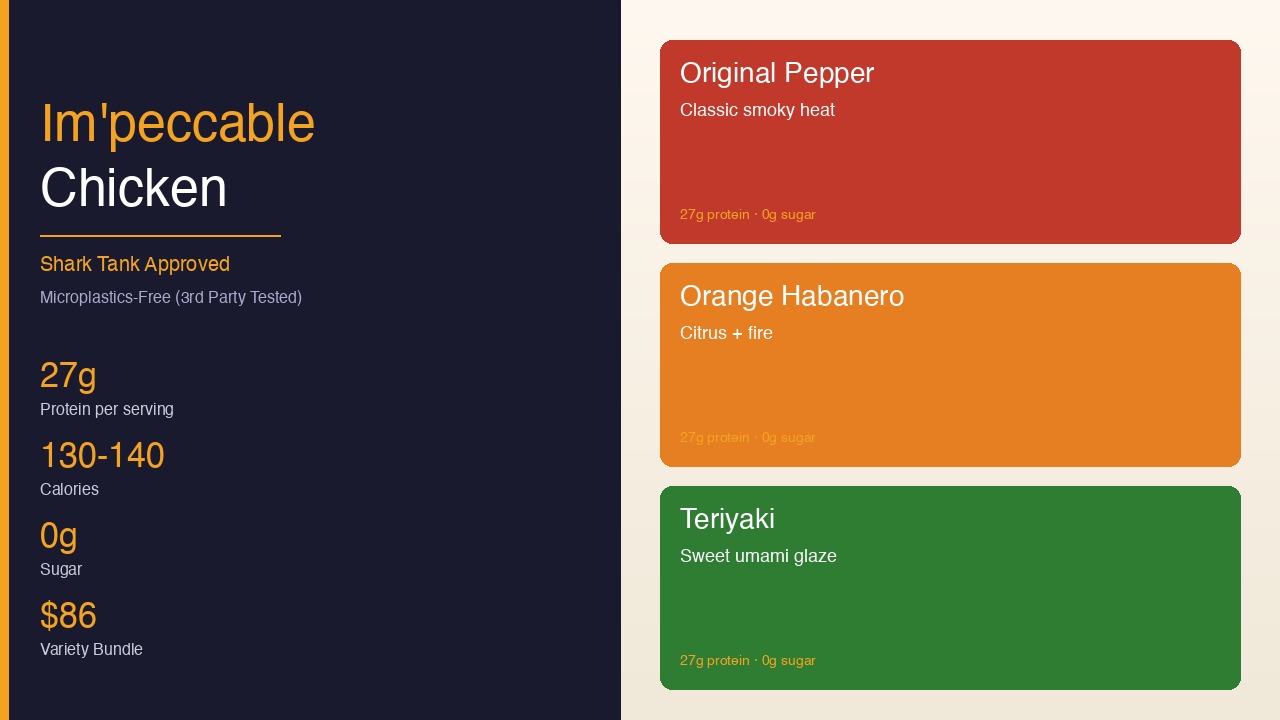
Im’peccable Chicken Variety Bundle makes high-protein meal prep cleaner – pre-cooked, microplastics-free, 27g protein per serving.
Step 1: Set Your Protein Target and Serving Count
Before opening a container or preheating an oven, calculate your daily protein target and how many chicken-based protein servings you need per week.
A practical framework for active adults:
- 0.7-1.0g protein per pound of body weight per day is the research-supported range for muscle maintenance and growth
- Chicken serves as 1-2 of those protein hits per day for most meal prep strategies
- 27g per serving (Im’peccable Chicken’s profile) means a 150lb person targeting 130g protein daily needs approximately 5 protein-equivalent servings total — chicken can cover 2-3 of those
For a typical week: target 10-14 high-protein chicken servings total. That gives you two servings per day across six days with one flex day, or two meals per day for five days plus weekend flexibility.
Step 2: Choose Your Chicken Format
Format A: Self-cooked from raw
Best for: budget-conscious meal preppers, people with specific seasoning preferences, and those who want full control over the cooking process.
Protocol:
– Purchase 3-4 lbs boneless skinless chicken breast from a verified clean source
– Season in bulk (avoid seasoning packets with long ingredient lists)
– Bake at 400°F (205°C) for 22-25 minutes depending on thickness
– Rest, slice, and cool before containerizing
– Storage: refrigerator 4 days, freezer 3 months
Format B: Ready-to-eat clean protein
Best for: people who want to meal prep high protein chicken without cooking, those who can’t guarantee consistent Sunday prep time, and buyers for whom food purity testing matters.
Im’peccable Chicken’s Variety Bundle works directly in this format: no cooking, no prep, open and portion. The three flavors prevent the flavor fatigue that’s the main reason meal prep routines fail.
Format C: Hybrid
Self-cooked protein for meals where you control the full recipe, plus Im’peccable Chicken for standalone snacks, desk lunches, and emergency high-protein meals.
This is the most practical approach for most people — it maximizes cost efficiency without sacrificing the clean, no-prep option when time runs short.
Step 3: Plan Your Container Strategy
Container selection has a direct bearing on food safety, macro consistency, and whether your prep actually gets eaten. Poor container choices are one of the main reasons meal prep fails.
For cooked chicken:
– Glass containers with locking lids for anything stored more than two days
– BPA-free hard plastic containers for shorter storage
– Avoid storing warm protein directly in thin plastic containers — this is a primary microplastics transfer vector
For ready-to-eat chicken:
– Im’peccable Chicken is packaged in its own storage-optimized format, making this a non-issue
– For portioning into weekly trays: portion directly into glass or hard container without re-using thin plastic
Labeling: Date every container. Protein safety is not negotiable — four days maximum for cooked chicken in the refrigerator, regardless of how it smells.
Step 4: Pair Proteins with Base Carbohydrates and Vegetables
Chicken at 27g protein per serving is a protein anchor. A complete meal requires base carbohydrates and vegetables to hit full nutritional range.
Recommended base combinations:
| Chicken Flavor | Base | Vegetable |
|---|---|---|
| Original Pepper | Brown rice or quinoa | Roasted broccoli or green beans |
| Orange Habanero | Corn tortillas or grain bowl base | Shredded cabbage, avocado |
| Teriyaki | White or brown rice | Edamame, snap peas, cucumber |
Prep these bases in parallel with chicken to keep Sunday prep time concentrated. Rice cooker handling 3 cups of grain while the oven runs is a straightforward parallel workflow.
Macro stacking strategy: For hitting 130-160g protein daily, stack two chicken servings (54g combined), plus eggs at breakfast (18-21g) and a Greek yogurt or cottage cheese component (15-20g). That covers 87-95g from three clean food sources without any supplements.
Step 5: Build Your Retrieval System
The final step is the one most meal prep guides skip: making your prepped food easy to grab.
Protein that’s buried in the back of the refrigerator behind other containers doesn’t get eaten. Protein that requires assembly at 7am when you’re rushing out the door doesn’t get eaten. The retrieval system is what determines whether your Sunday prep translates into weekday compliance.
Practical retrieval system:
- Place prepped chicken at eye level in the refrigerator, front row
- Pre-assemble two complete meals per day the night before (chicken + base + vegetable in one container)
- Designate a “grab shelf” — everything on this shelf is pre-assembled and ready to take
- Keep one Im’peccable Chicken serving on the counter (or a dedicated pantry spot) for days when refrigerator prep runs out
Flavor Strategy: Building a Week Without Repetition
The most common failure mode in chicken meal prep is flavor fatigue. Eating the same-tasting protein for five days in a row is the fastest way to abandon a system that was working nutritionally.
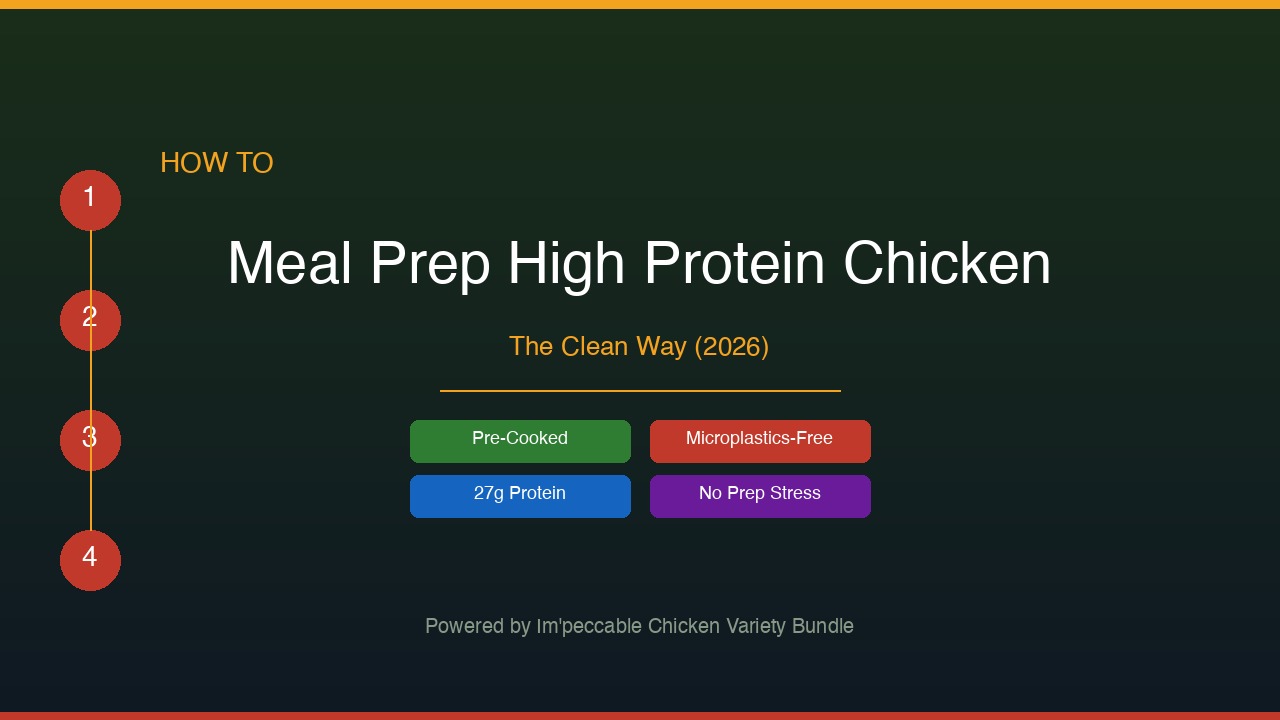
Rotating Original Pepper, Orange Habanero, and Teriyaki keeps meal prep interesting across the week.
Im’peccable Chicken’s three-flavor Variety Bundle is designed explicitly to solve this problem. A practical seven-day rotation:
| Day | Flavor | Meal Context |
|---|---|---|
| Monday | Original Pepper | Grain bowl with roasted vegetables |
| Tuesday | Teriyaki | Rice and edamame, work lunch |
| Wednesday | Orange Habanero | Taco bowl with corn tortillas |
| Thursday | Original Pepper | Salad protein topper |
| Friday | Teriyaki | Noodle bowl |
| Saturday | Orange Habanero | Standalone snack, high-activity day |
| Sunday | Flex / prep day | Use remaining stock, plan next week |
This rotation means you eat each flavor 2-3 times per week, which is below the repetition threshold that triggers flavor fatigue for most people.
Flavor pairing intelligence:
Original Pepper is the most neutral and pairs with the widest range of base foods. If you’re building a meal prep system for someone else or for a household with varied preferences, Original Pepper is the safest anchor.
Orange Habanero demands pairing attention — its heat and citrus profile can clash with some bases. It works best with cooling, creamy, or neutral elements: avocado, Greek yogurt sauce, corn, fresh cucumber.
Teriyaki is the most universally familiar and the easiest to integrate into existing meal prep habits. If someone in your household is skeptical about clean protein swaps, Teriyaki is the on-ramp.
Clean Meal Prep in 2026: The Food Purity Layer
Learning how to meal prep high protein chicken in 2026 means thinking about more than macros and containers. The food purity dimension — specifically microplastics exposure — is now a legitimate variable in meal prep planning.
The primary microplastics risks in a standard chicken meal prep workflow:
- Plastic cutting boards shed microplastics during use, especially when worn or scratched. Replacing with glass, bamboo, or ceramic cutting boards eliminates this vector.
- Thin plastic storage containers when exposed to acidic or fatty foods, or when heated in the microwave, can transfer plastic particles. Glass containers with silicone seals are the clean standard.
- Packaged seasoning mixes — many come in flexible plastic bags with powder residue that contacts the plastic. Fresh herbs and whole spices in glass jars are the clean alternative.
- Ready-to-eat chicken packaging — conventional ready-to-eat chicken products are often packaged in flexible plastic pouches. Im’peccable Chicken’s packaging format is designed with this risk in mind, and the brand has third-party tested the final product for microplastics.
Addressing these four vectors comprehensively is what “clean meal prep” means beyond just ingredient quality in 2026.
Common Meal Prep Mistakes That Undermine the Protein Goal
Even a well-designed system fails when execution misses on key details. The most common mistakes in high-protein chicken meal prep:
Under-seasoning from scratch. Bland protein gets abandoned. If you’re cooking from raw, season aggressively — salt is your primary lever, and chicken breast requires more than most people use.
Over-prepping raw chicken. Four days is the safe window in the refrigerator. Prepping seven days of raw-cooked chicken means days five through seven are a food safety question. Either freeze days five to seven immediately, or supplement with a ready-to-eat option for later in the week.
Skipping the base prep. Protein alone does not make a complete meal. Prepping chicken without simultaneously prepping grains and vegetables means you’ll still need to cook at 7pm on a Wednesday — which defeats the purpose.
Ignoring portion weight drift. If you’re tracking protein intake, weigh servings rather than estimating by eye. Chicken density varies, and a “serving” by eye can easily be 50% above or below the target.
No fallback option. The best meal prep system still has days when it breaks down — travel, meetings that run long, refrigerator running out by Thursday. Keeping Im’peccable Chicken as a pantry fallback means protein hits don’t get missed when the prep system has a gap.
Integrating Im’peccable Chicken into an Existing Meal Prep Routine
If you already have a chicken meal prep system and want to layer in Im’peccable Chicken, the integration is straightforward:
Replace two self-cooked servings per week with Im’peccable Chicken servings. Use the Variety Bundle for the two days when flavor fatigue is most likely (typically Wednesday and Friday after Monday prep), and continue self-cooking for Monday, Tuesday, and Thursday.
Use Im’peccable Chicken as the portable option. Self-cooked chicken requires refrigeration and reheating. Im’peccable Chicken works at room temperature (check specific storage guidance on packaging), which makes it the superior option for travel days, office days, and any day when reheating isn’t practical.
Evaluate your testing exposure. If food purity is important to you, identify which parts of your current meal prep workflow introduce the most risk (cutting boards, containers, seasoning packets, ready-to-eat alternatives). Im’peccable Chicken eliminates the ready-to-eat risk category by providing a tested option.
For a deeper look at why Im’peccable Chicken’s microplastics-free claim matters in the context of clean protein generally, see the cleanest protein foods 2026 guide. For a full breakdown of all three flavors and whether the price point is justified, read the Im’peccable Chicken review.
Weekly Protein Budget: Making the Numbers Work
A concern for some buyers is whether Im’peccable Chicken fits a realistic weekly food budget. Let’s run the math:
- Variety Bundle: $86 for an initial multi-serving introduction to all three flavors
- Free shipping on orders over $100 (add a second order item or use the threshold strategically)
- Per-serving protein cost: 27g protein per serving, competitive with clean alternatives at comparable quality levels
For someone integrating Im’peccable Chicken as 3-4 servings per week within a broader meal prep system, the weekly cost is meaningful but sits within the range of a single healthy restaurant meal. For buyers who have previously been spending $15-20 per meal at clean/healthy lunch spots, replacing 2-3 of those meals per week with Im’peccable Chicken actually reduces weekly food spend while improving food purity and macro consistency.
Frequently Asked Questions
How to meal prep high protein chicken for a whole week?
Prep 10-14 servings on Sunday: 7-10 self-cooked (fridge 4 days, freeze the rest) plus 3-4 Im’peccable Chicken servings as a tested ready-to-eat supplement for later in the week. Pair each protein with pre-prepped grains and vegetables for complete meals.
How much protein can I get from chicken meal prep per day?
Two servings of Im’peccable Chicken at 27g each = 54g. Combined with eggs, dairy, or other protein sources, hitting 120-150g daily from whole-food sources is achievable.
Is ready-to-eat chicken safe for meal prep?
Yes — properly packaged ready-to-eat chicken designed for storage is food-safe. For clean protein specifically, Im’peccable Chicken’s third-party microplastics testing adds a verification layer beyond standard food safety.
How do I avoid flavor fatigue in chicken meal prep?
Rotate flavors across the week. Im’peccable Chicken’s three-flavor Variety Bundle (Original Pepper, Orange Habanero, Teriyaki) is designed specifically to prevent repetition fatigue across a seven-day cycle.
Does Im’peccable Chicken need to be cooked?
It is sold as a ready-to-eat product — no cooking required. Check the packaging for specific storage and handling instructions.
How many servings are in the Im’peccable Chicken Variety Bundle?
The Variety Bundle at $86 includes multiple servings across three flavors. Visit impeccablechicken.shop for current serving count and bundle details. Free shipping on orders over $100.
What containers should I use for clean chicken meal prep?
Glass containers with locking lids for any storage over two days. Avoid thin flexible plastics, especially when storing warm or acidic foods. Im’peccable Chicken’s packaging eliminates the storage container question for the ready-to-eat component.
Knowing how to meal prep high protein chicken is not complicated — the execution is straightforward. What separates a system that works from one that gets abandoned is flavor variety, food purity standards that don’t require constant compromise, and a fallback option for days when the prep runs short. Im’peccable Chicken’s Variety Bundle solves all three.
Build your clean protein week. The Variety Bundle is available at impeccablechicken.shop — three flavors, 27g protein per serving, 0g sugar, microplastics-free. Free shipping over $100.