Activating nuts is one of those food practices that sounds more complicated than it is, but it’s also more time-consuming than most people anticipate. The concept comes from traditional food preparation methods that have been around for centuries — many indigenous cultures soaked or fermented seeds and legumes before eating them — and has been revived in contemporary health food circles under the “activated” label. This guide covers the practical process of how to activate nuts at home: what soaking does, how long it takes, what you need, and when it’s worth the effort versus when buying pre-activated organic nuts makes more sense.
What Activation Actually Does to a Nut
Raw nuts and seeds contain compounds that evolved to protect the plant: phytic acid (a phosphorus storage compound), enzyme inhibitors, and in some cases tannins. These aren’t harmful in moderate amounts, but phytic acid in particular can bind to minerals like zinc, iron, calcium, and magnesium in the digestive tract, forming complexes that the body can’t absorb efficiently.
Enzyme inhibitors, as the name suggests, inhibit digestive enzymes — which can slow the breakdown of the nut and, for some people, cause bloating or digestive discomfort after eating raw nuts.
Soaking nuts in water — especially slightly acidic water — initiates the germination response in the seed. The seed interprets the moisture as the beginning of the growing season and starts converting stored compounds into more bioavailable forms. Phytic acid levels drop. Enzyme inhibitors are neutralised. The nut becomes easier to digest and its nutrients more accessible.
The dehydration step after soaking is what makes the final product dry and crunchy rather than soft and waterlogged. Done at low temperature (typically below 65-70°C to preserve natural enzymes and oils), it restores the texture without using high heat that would alter the fat profile.
What You’ll Need
The equipment list for activating nuts at home is minimal:
- A large bowl
- Filtered water (preferred, though tap water works)
- Fine sea salt or rock salt
- A colander for rinsing
- A dehydrator or oven with a low-temperature setting
- Baking trays or dehydrator trays
- Time — this is the limiting factor
The salt serves two purposes: it adds flavour and it creates the slightly alkaline brine environment that helps deactivate enzyme inhibitors. Use roughly 1 tablespoon of fine sea salt per 4 cups of water.
Soaking Times by Nut Type
Different nuts have different cell structures, fat contents, and levels of enzyme inhibitors, which is why soaking times vary. Here’s a reliable guide:
Almonds: 8-12 hours. Almonds have a relatively firm structure and benefit from longer soaking. The skin will become slightly loosened and some will slip off during rinsing.
Cashews: 2-4 hours only. Cashews are softer and already heat-processed during shelling (the cashew shell contains urushiol, related to poison ivy, which is why cashews are always sold shelled and partially heated). Over-soaking cashews makes them mushy and difficult to dry properly.
Walnuts: 4-8 hours. Walnuts contain tannins in their papery skin that contribute to bitterness; soaking reduces these noticeably. The water will turn dark brown from the tannins — this is normal.
Pecans: 4-8 hours. Similar to walnuts. The soaking water will darken.
Macadamias: 2-4 hours. High fat content means longer soaking can cause them to become rancid faster. Keep soaking time shorter.
Brazil Nuts: 4-8 hours. These benefit from soaking both for digestibility and because they can have high selenium levels — soaking doesn’t reduce selenium but it does improve the nut’s overall digestibility.
Hazelnuts: 8-12 hours. Similar to almonds.
Pumpkin Seeds (Pepitas) and Sunflower Seeds: 4-8 hours. Seeds generally activate well and dry relatively quickly.
The Soaking Step: What It Does and How Long It Takes
Set up is simple. Place your nuts in a bowl large enough to allow them to swell — activated nuts absorb water and expand slightly. Cover completely with filtered water and add the salt. Place a cloth or lid over the bowl and leave at room temperature.
During soaking, you’re primarily aiming to reduce phytic acid and enzyme inhibitors. Some practitioners add a small amount of apple cider vinegar or whey to the soaking water to introduce acid and begin a mild fermentation — this goes a step further than plain water soaking. Some commercial producers, including Mindful Foods from Byron Bay, use a kombucha culture in the soaking medium, which provides both acidity and live fermentation cultures for additional digestibility benefits.
After soaking, rinse the nuts thoroughly under cold running water. The rinse water will carry away the dissolved phytic acid and other compounds, so rinse until the water runs clear. This step is important — you want to remove what the soaking process drew out.
At this point you have what are sometimes called “wet-activated” or “sprouted” nuts. They’re edible but perishable and must be refrigerated if not dried immediately. They’ll keep for 2-3 days in the fridge.
The Drying Step: Low and Slow
The drying step is where most home activators encounter their biggest constraint: time.
If using a food dehydrator, spread the rinsed nuts in a single layer on the trays and dry at 65-70°C (150°F) for 12-24 hours depending on the nut. Almonds and hazelnuts typically take 18-24 hours to reach a proper crunch. Cashews and macadamias may be done in 12-16 hours. You want the nuts to be completely dry with no residual moisture — moisture remaining inside the nut will allow mould to develop during storage.
If using an oven, set it to the lowest possible temperature — many domestic ovens go down to 50-70°C on the lowest “warm” setting. Prop the door slightly open with a wooden spoon to allow moisture to escape. This method is less precise than a dehydrator and uses more energy, but it works.
The low temperature requirement is what separates proper activation drying from simply roasting. Above about 70-75°C, the oils in nuts begin to change in character, and some of the enzyme activity preserved through low-temperature drying is lost. The goal is a dry, crunchy nut that still has its natural cold-pressed oil quality intact.
Storing Home-Activated Nuts
Once fully dried, home-activated nuts should be stored in an airtight container in a cool, dry place. Because the soaking and drying process removes some of the natural enzyme inhibitors that can also act as preservatives, activated nuts can go rancid slightly faster than raw nuts if not stored properly.
For most nuts, airtight storage at room temperature works for 4-6 weeks. For longer storage, the refrigerator or freezer extends shelf life significantly. Glass jars are ideal — they don’t absorb odours and allow you to see the contents easily.
The Real Cost: Time and Energy
Here’s the honest calculation that most guides skip: activating nuts at home is inexpensive in materials but expensive in time and attention.
A batch of almonds requires setup time, 8-12 hours of soaking, a thorough rinse, and then 18-24 hours in the dehydrator. That’s potentially 36 hours from start to finish — most of it passive, but requiring you to be present at the start and end of each phase. You also need a dehydrator (good ones start at $80-150 AUD for home models) or the patience to monitor a low-temperature oven for many hours.
For someone who has a dehydrator and enjoys the process — people who also make dried fruit, jerky, or raw food preparations — adding nut activation to the rotation makes sense. The per-100g cost of home-activated organic nuts will be lower than buying pre-made, assuming you’re already buying organic raw nuts and already own a dehydrator.
For most other people, the time and equipment cost of home activation changes the economics significantly.
Why Pre-Activated Beats DIY for Most People
The commercial advantage that brands like Mindful Foods have is scale and process optimization. They can soak large batches efficiently, control the fermentation environment precisely, and run industrial dehydrators that achieve consistent results at the right temperature without the energy costs of a domestic oven running for 18 hours.
The result is that their prices — walnuts from $9.95 AUD, cashews from $10.95 AUD, almonds from $11.95 AUD — are not dramatically higher than the raw organic nuts you’d need to buy to make your own. And because their process uses kombucha culture rather than plain water, the fermentation step goes further than a typical home soak.
There’s also the consistency question. Commercial activation at scale with controlled temperature dehydration produces a consistent result every time. Home dehydrators and ovens vary, and a batch that’s dried for slightly too long or at slightly too high a temperature will have different characteristics from a well-executed batch.
For people who want activated nuts without the process overhead, the Mindful Foods range of organic activated nuts covers most of the nut and seed varieties you’d want to activate. The small sizes (from $9.95 for walnuts, $10.95 for cashews) make it easy to try one variety before committing to a larger purchase.
When Home Activation Makes the Most Sense
There are genuine situations where making your own is the right call:
You already own a dehydrator and use it regularly. If activation is just one more use case for a machine you already run, the incremental cost is very low.
You need very large quantities. At scale, the per-100g cost advantage of DIY becomes more significant. Families who go through kilograms of nuts per week may find the economics work out.
You want to experiment with different activation times and fermentation media. Home activation lets you control every variable — soaking time, salt concentration, whether to add acid or fermentation cultures, drying temperature and duration. If you’re interested in the process itself, there’s real value in working through it yourself.
You have access to locally grown nuts or can buy raw nuts in bulk at low cost. The closer you can get the raw material cost to zero (or very low), the better the economics of home activation look.
What Mindful Foods Does That’s Hard to Replicate at Home
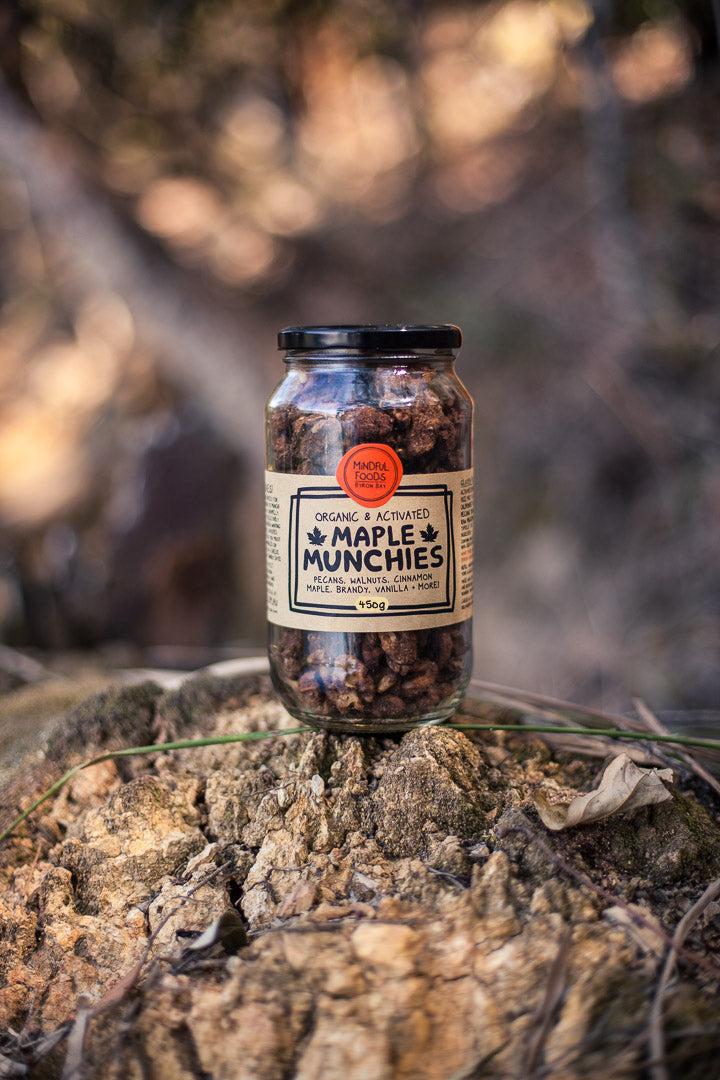
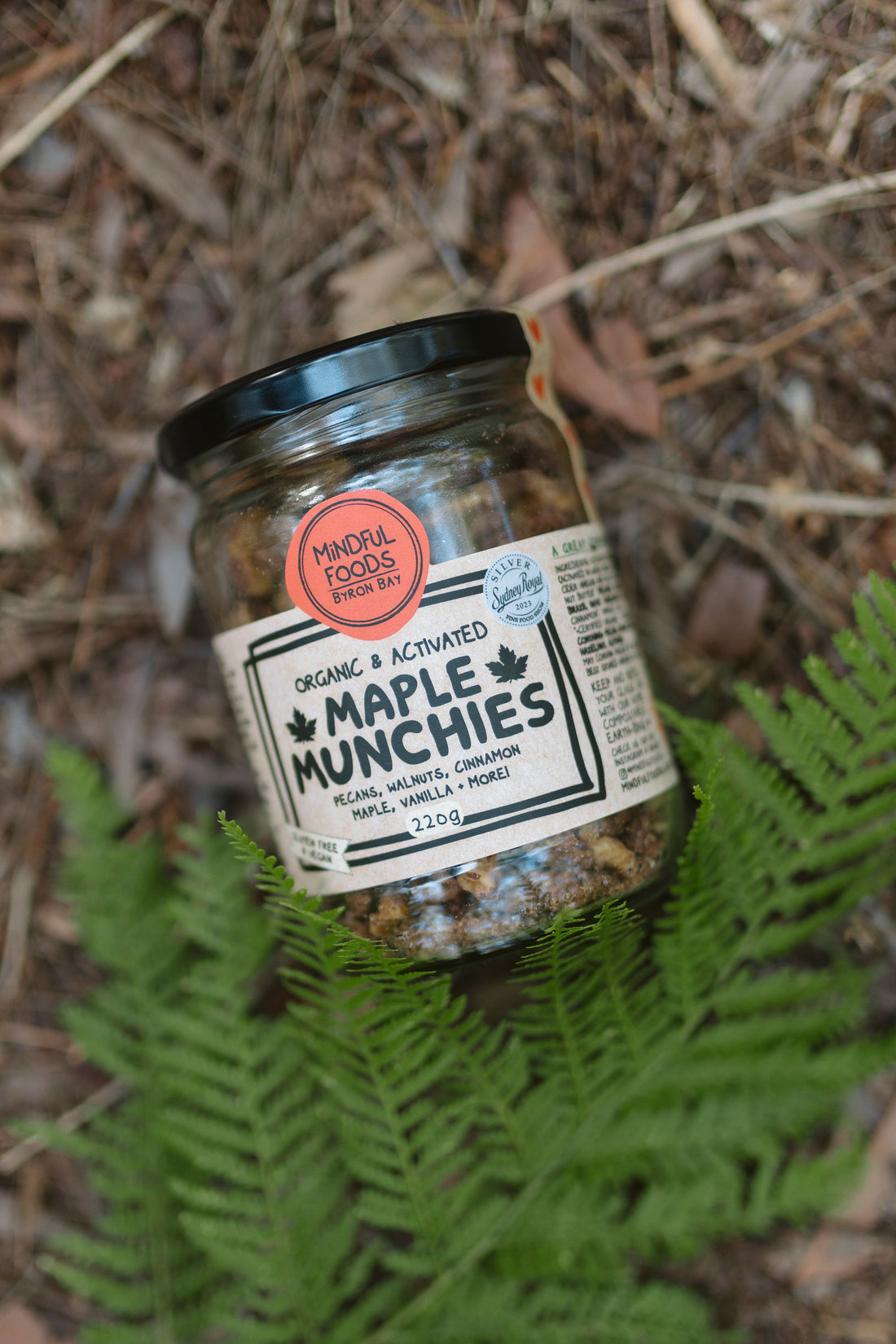
The Maple Munchies snack — Silver Award winner at the 2023 Fine Food Show — is a good example of something that’s genuinely difficult to replicate in a home kitchen. The kombucha-activated pecans and walnuts are coated in a multi-nut butter blend (pecans, walnuts, cashews, Brazil nuts, hazelnuts, almonds) with Ceylon cinnamon, creating a product that requires both nut activation and a separate manufacturing step to achieve the cinnamon crust.
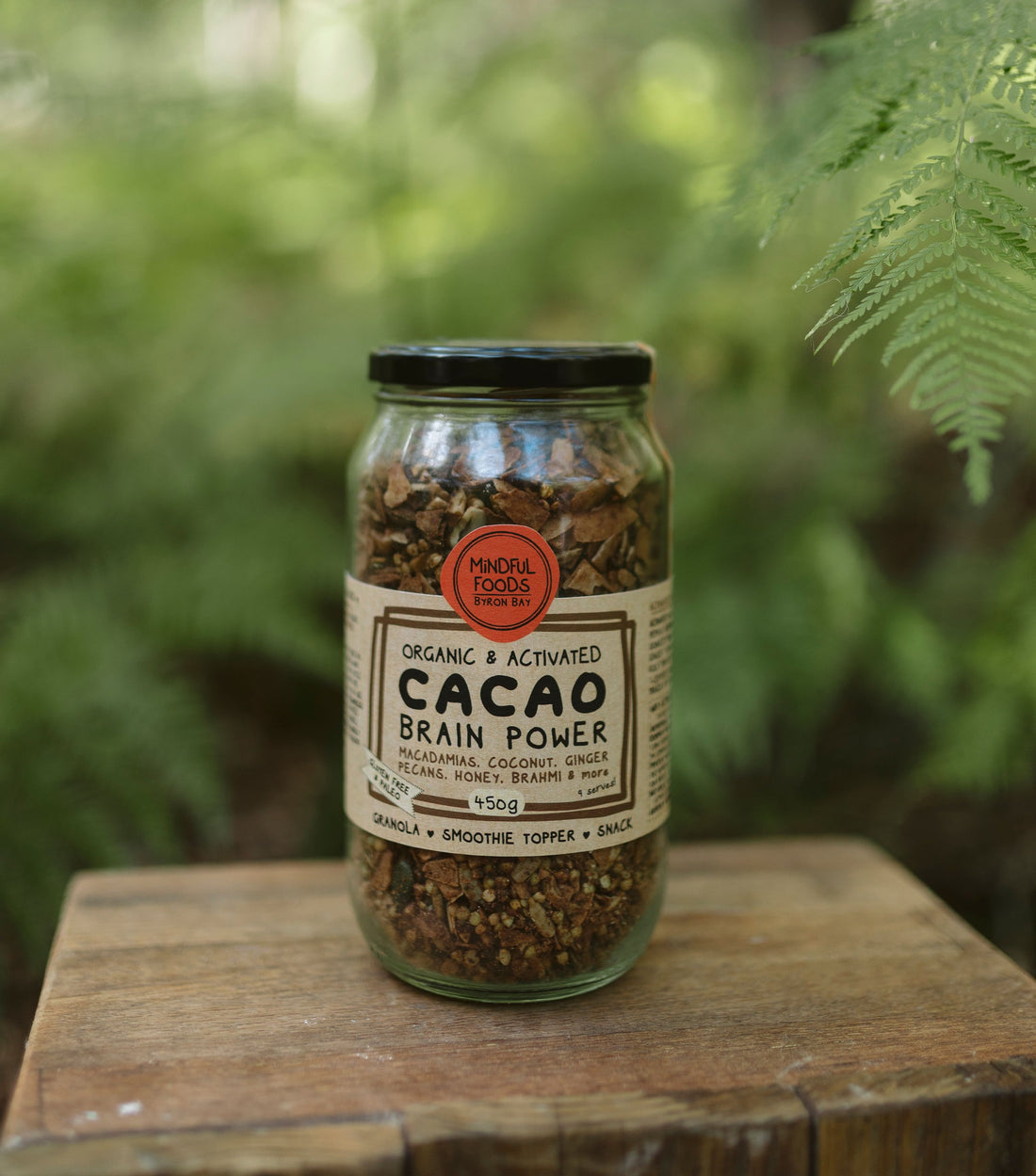
The Cacao Brain Power granola blend combines activated buckwheat, sunflower seeds, pepitas, almonds, and pecans with coconut chips, cacao nibs, cacao powder, ayurvedic herbs (gotu kola, brahmi, tulsi), honey, coconut oil, and spices — all certified organic, with the nuts and seeds activated via kombucha. Producing this at home would require sourcing certified organic versions of 15+ ingredients, activating the nuts and seeds separately, and then combining and baking the granola. It’s possible, but it’s a significant project.
For these kinds of value-added activated products, buying from a specialist producer is simply more practical than DIY. The Mindful Foods Byron Bay review and the Mindful Foods review cover how these specific products perform in more detail, including the award-winning Maple Munchies and the Cacao Brain Power functional granola.
A Practical Starting Point
If you want to try nut activation before committing to a process, start with cashews — they have the shortest soaking time (2-4 hours), dry relatively quickly (12-16 hours), and the improvement in texture and digestibility is usually quite noticeable compared to raw cashews. Use 1 tablespoon of fine sea salt per 4 cups of filtered water, rinse thoroughly, and dry at 65°C until completely crunchy.
If that experience convinces you, you can build out to longer-soaking nuts like almonds and walnuts. If it doesn’t — or if the time investment feels like a poor trade against the cost of buying pre-activated — the specialist producers have solved this problem for you.
Either way, the goal is the same: nuts that are easier to digest, with better mineral bioavailability, and without the bitterness that can come from raw phytic acid. Whether you get there through your own kitchen process or through Mindful Foods’ range of organic activated nuts and seeds depends on what works for your time, kitchen setup, and budget.