If you’ve been googling “why does protein powder make me bloated,” the answer is almost certainly lactose. Protein powder without lactose exists across multiple source types – beef isolate, plant blends, egg white, and lactose-removed whey – and in 2026, the quality gap between dairy-free protein and whey has essentially closed. This guide breaks down every major option, what the research says, and how to pick the right one for your goals and budget.
Why Protein Powder Without Lactose Matters for Most People
The statistic is startling until you sit with it: approximately 70% of the global adult population has some degree of lactose maldigestion. That’s not a minority condition – it’s the majority experience for humans after childhood. Lactose tolerance is actually the genetic mutation; lactose intolerance is the ancestral default.
What this means practically is that the majority of people consuming whey protein – which is derived from cow’s milk and retains varying amounts of lactose depending on the processing method – are feeding a substance to a digestive system that lacks sufficient lactase enzyme to break it down efficiently.
The result ranges from mildly annoying to genuinely disruptive: bloating, excessive gas, stomach cramps, loose stools, and nausea. The severity depends on the individual’s lactase production level and the lactose content of the protein they’re consuming.
For regular gym-goers consuming one to two protein shakes per day, the cumulative lactose exposure is significant. If you’re taking a whey concentrate (which retains the most lactose) twice daily, you could be consuming 6-10g of lactose per day from your supplements alone – enough to cause consistent symptoms in anyone with moderate intolerance.
The solution is protein powder without lactose – which covers a wider range of options than most people realize.
What Causes the Bloating: Lactose vs. Other Culprits
Before switching protein sources, it’s worth confirming lactose is actually your problem. Several other components of protein powders can cause GI distress:
Artificial sweeteners: Sucralose, acesulfame potassium, and sorbitol can cause bloating and digestive discomfort in sensitive individuals, independent of lactose.
High fiber additions: Some protein powders add significant fiber (inulin, chicory root) that ferments in the gut and causes gas. This happens even with lactose-free products.
Fructose/fruit powders: Some flavored proteins add fructose-based sweeteners that can cause problems in people with fructose malabsorption.
True food allergy: A small percentage of people have a dairy allergy (immune response to milk proteins like casein) rather than lactose intolerance (enzyme deficiency). These people react even to lactose-free dairy products.
If you’ve switched to lactose-free whey and still experience symptoms, the problem may be dairy protein allergy rather than lactose. In that case, you need a fully non-dairy protein source.
Protein Powder Without Lactose: Your Main Options Compared
Here’s the comprehensive breakdown of every significant lactose-free protein category available in 2026.
1. Beef Protein Isolate
The strongest challenger to whey on performance metrics. Made from hydrolyzed USDA beef, processed to remove all fat, water, and non-protein compounds, leaving a highly concentrated protein isolate with zero dairy content.
Profile:
– 23-25g protein per 30g serving (at top tier products)
– 0g lactose (no dairy at any point in production)
– Complete amino acid profile – all 9 essential amino acids
– High BCAA content
– Rapid absorption due to hydrolysis
Best for: Athletes who want the performance of whey without any dairy exposure. Particularly strong for strength and muscle building due to the complete amino acid profile.
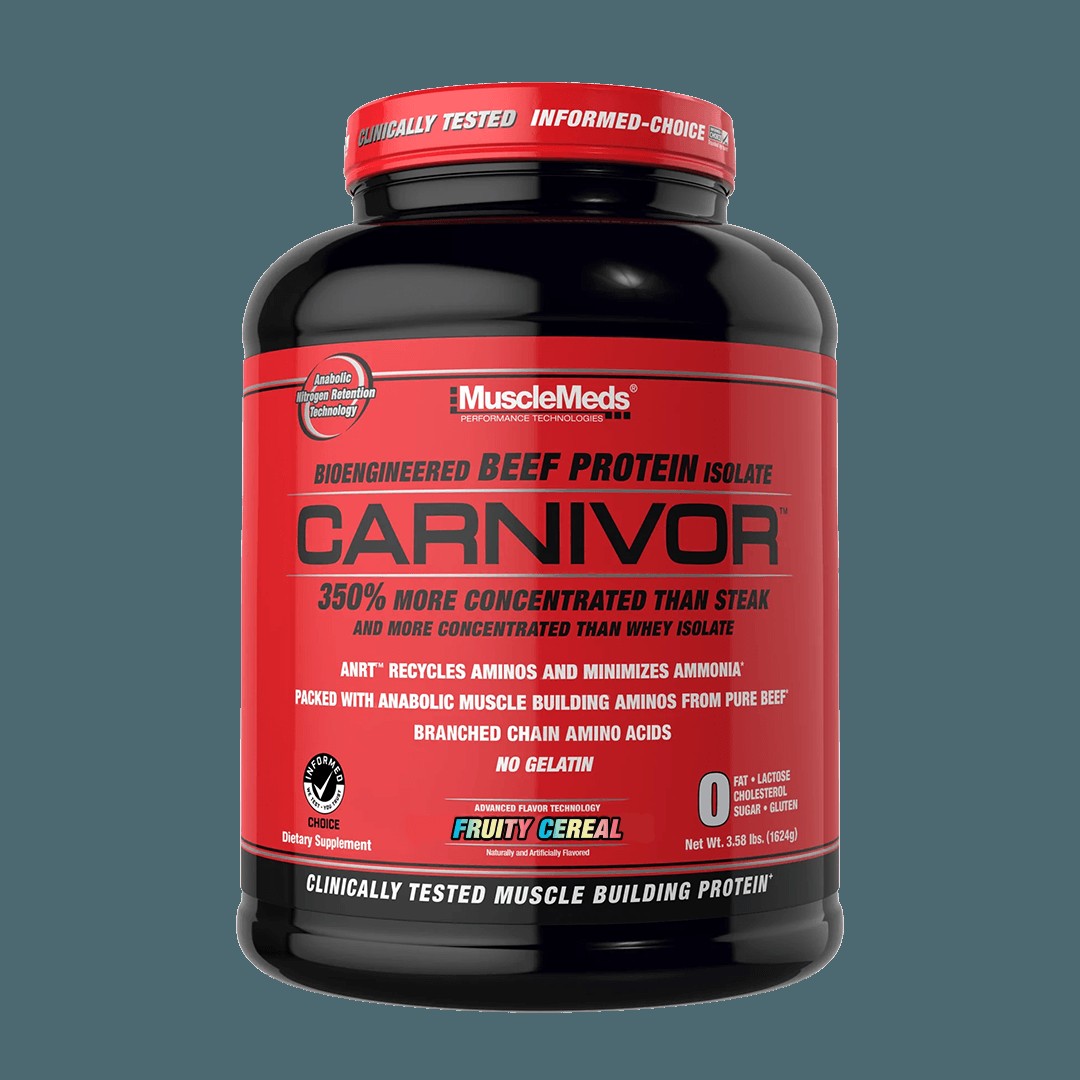
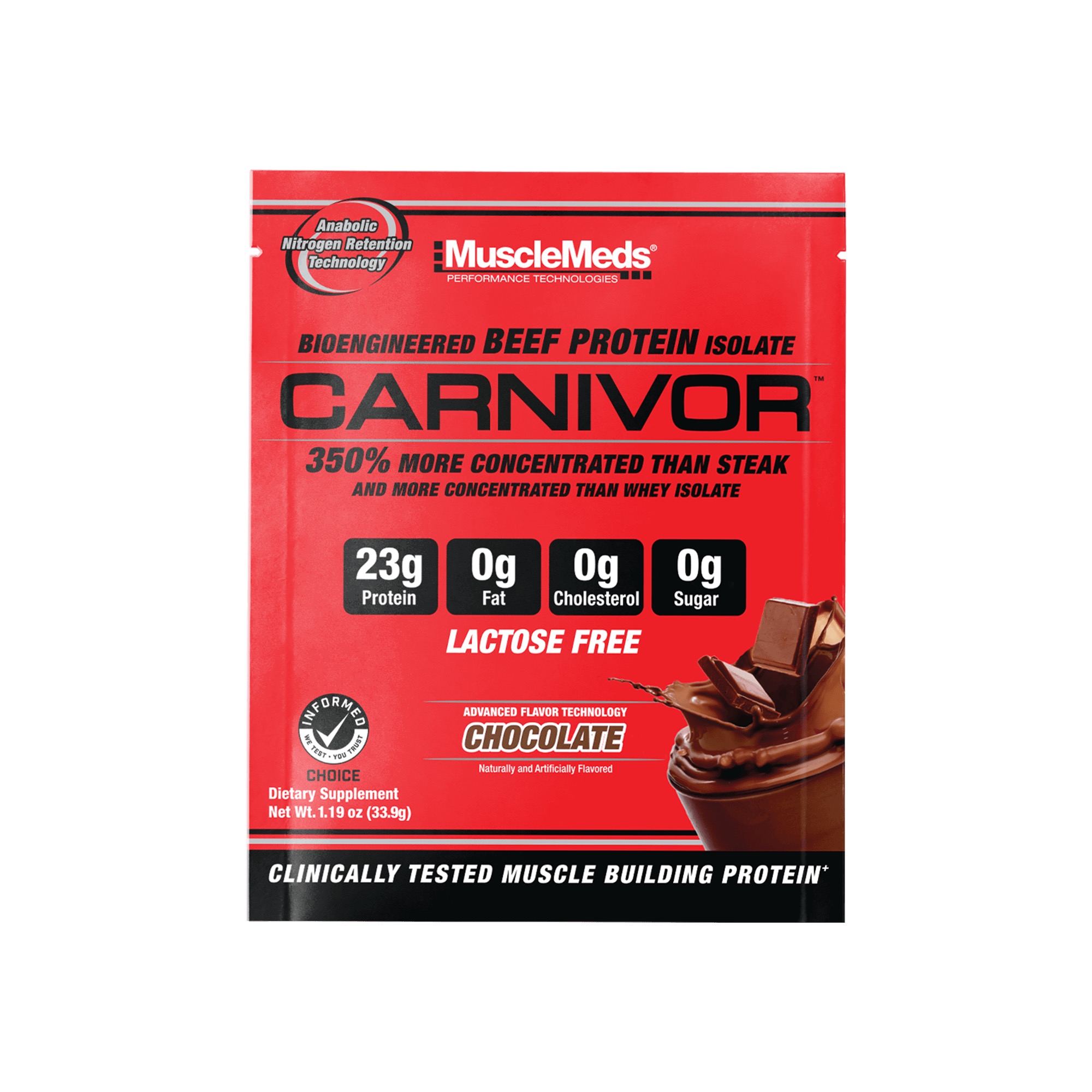
Top pick: MuscleMeds Carnivor – 99% beef protein isolate, USDA Inspected Beef, Informed Choice certified, 23g protein, 9 flavors. From $45.99 for 2lb (currently 25% off select items). Full review.
Limitations: Premium pricing. Slightly thinner texture than whey. Narrower market than whey means fewer price-competitive alternatives.
2. Whey Protein Isolate (Lactose-Reduced)
Whey isolate undergoes additional filtration compared to whey concentrate, removing most of the lactose. A high-quality whey isolate typically contains less than 1g of lactose per serving.
Profile:
– 25-27g protein per 30g serving
– <1g lactose (reduced, not zero)
– Complete amino acid profile, very high BCAA content
– Familiar creamy texture
Best for: People with mild lactose sensitivity who want to stay close to the familiar whey experience with minimal investment in change.
Limitations: Still derived from dairy, so not appropriate for dairy allergies. Residual lactose still triggers symptoms in highly sensitive individuals. Higher price than whey concentrate.
3. Pea Protein Isolate
The most popular plant-based protein option. Derived from yellow split peas, processed into a high-purity isolate.
Profile:
– 20-25g protein per 30g serving
– 0g lactose (plant-derived)
– Good BCAA content, particularly leucine
– Rich in arginine
– Low in methionine (plant protein limitation)
Best for: Vegans, vegetarians, and anyone who wants a plant-based option with legitimate muscle-building credentials. Pea protein has the strongest research base of any plant protein source for resistance training outcomes.
Limitations: Not a complete protein on its own (low methionine). Slightly earthy, chalky taste base. Often blended with rice protein to complete the amino acid profile.
4. Brown Rice Protein
Often paired with pea protein to create a more complete amino acid profile. Less commonly used on its own.
Profile:
– 20-22g protein per 30g serving
– 0g lactose
– Good source of cysteine and methionine (complements pea)
– Lower leucine than pea or whey
Best for: As part of a pea+rice blend rather than a standalone. The combination creates an amino acid profile comparable to whey.
Limitations: Low leucine content limits its solo muscle-protein-synthesis stimulus. Gritty texture if not well processed.
5. Egg White Protein
One of the oldest protein supplement sources, largely displaced by whey but still a legitimate choice for dairy-free athletes.
Profile:
– 24-26g protein per 30g serving
– 0g lactose (no dairy)
– Complete amino acid profile
– High cysteine content
– Slower digesting than whey or hydrolyzed beef
Best for: Paleo dieters, people who want animal protein without dairy or beef. Good baking applications.
Limitations: Distinctly “eggy” flavor base that many people find challenging. Higher cost than most alternatives. Some people are allergic to egg.
6. Hemp Protein
A whole-food plant protein with a different nutritional profile than isolated proteins.
Profile:
– 10-15g protein per 30g serving (lower protein ratio)
– 0g lactose
– Complete amino acid profile (one of few plant proteins that is)
– High in omega-3 and omega-6 fatty acids
– Significant fiber content
Best for: People who want a whole-food supplement with added nutritional benefits beyond protein. Not for pure protein density goals.
Limitations: Much lower protein per gram than isolates. Higher fat and fiber content can cause bloating in sensitive individuals even without lactose.
7. Casein (Micellar)
Slow-digesting dairy protein, traditionally used before bed. Also contains lactose.
Profile:
– 24-26g protein per 30g serving
– 4-6g lactose (higher than whey isolate)
– Very slow digestion rate (7-8 hours)
– Not appropriate for lactose-sensitive individuals
Not recommended for this guide’s audience – casein retains significant lactose and is fully dairy-derived.
Comparing Macros Side by Side
| Source | Protein/30g | Lactose | Complete AA | Absorption | Price/lb |
|---|---|---|---|---|---|
| Beef protein isolate | 23-25g | 0g | Yes | Fast | $20-26 |
| Whey isolate | 25-27g | <1g | Yes | Fast | $18-30 |
| Pea protein | 20-24g | 0g | No (low met) | Medium | $12-18 |
| Pea+rice blend | 22-25g | 0g | Yes | Medium | $14-20 |
| Egg white | 24-26g | 0g | Yes | Medium-slow | $18-28 |
| Hemp protein | 10-15g | 0g | Yes | Slow | $12-18 |
For pure muscle-building performance, beef protein isolate and whey isolate sit at the top. For those who need zero dairy exposure (allergy, preference, or lifestyle), beef protein isolate is the clear choice.
How to Switch From Whey to a Lactose-Free Alternative
Making the transition doesn’t require dramatic changes – but a few adjustments help you get the most from your new protein source.
Week 1 – Testing: Start with one serving per day and monitor your GI response over 3-5 days. For beef protein isolate, most former whey users report zero digestive issues from day one. If you’ve been experiencing chronic whey-related symptoms, the improvement is typically immediate and noticeable.
Week 2 – Full integration: Once you’ve confirmed tolerance, integrate your new protein into your regular routine. For muscle building, target 1-2 servings per day as part of meeting your total daily protein goal (1.6-2.2g per kg bodyweight).
Taste adjustment: If you’re coming from whey, beef protein isolate shakes taste slightly different – thinner texture, less dairy creaminess. This is easily compensated by mixing with almond, oat, or soy milk instead of water. Within a week, most users prefer the cleaner taste profile.
Stacking: Beef protein isolate, particularly Carnivor, includes creatine in the formula. If you’ve been supplementing creatine separately, check whether your new protein already covers this to avoid doubling up.
Practical Recipes for Lactose-Free Protein Shakes
Classic Post-Workout Shake:
– 1 scoop Carnivor Beef Protein Isolate (Chocolate Fudge)
– 10oz cold water
– 5 ice cubes
– Shake 20 seconds → done
Creamy Meal Replacement:
– 1 scoop Carnivor (Vanilla Caramel)
– 8oz unsweetened almond milk
– 1 tbsp almond butter
– 1 medium banana
– Blend 30 seconds
– Adds: ~350 calories, ~35g protein, balanced macros
Pre-Workout Energy Shake:
– 1 scoop Carnivor (Cinnamon Toast Cereal)
– 8oz oat milk
– 1 tsp honey
– 1 cup ice
– Blend or shake → naturally sweet energy
Recovery Shake:
– 1 scoop Carnivor (Fruit Punch)
– 12oz coconut water (for electrolytes)
– Shake with ice
– Works well post-cardio for hydration + protein together
Reading Labels: How to Spot Hidden Lactose
Protein powder manufacturers don’t always make it obvious whether their product contains lactose. Here’s what to look for:
Obvious dairy indicators: Whey (any form), casein, milk protein isolate, milk protein concentrate, skim milk powder, buttermilk powder.
Less obvious indicators: “Creaminess blend,” “dairy blend,” “protein matrix” – these often contain whey or casein as components. Read the full ingredients list.
Certified lactose-free: Some products carry explicit “lactose-free” certification. This is more reliable than inferring from the ingredients list.
Non-dairy sources that are genuinely lactose-free: Pea, rice, hemp, soy, egg white, beef hydrolysate – all inherently contain zero lactose.
The Research on Lactose-Free Protein for Muscle Building
The concern some athletes have when switching from whey is whether they’ll sacrifice gains. The research is reassuring.
Multiple randomized controlled trials comparing beef protein isolate to whey protein at matched protein doses show equivalent or superior outcomes on lean mass and strength gains over 8-12 week training periods. The amino acid profile of high-quality beef protein isolate – particularly its BCAA and leucine content, which drives the muscle protein synthesis response – is sufficient to match whey’s anabolic stimulus.
For plant-based proteins, pea protein isolate has the strongest research base. Multiple studies show comparable muscle gains to whey when doses are matched and the protein is taken consistently around workouts. The limitation is the incomplete amino acid profile, which is addressed by using a pea+rice blend or ensuring methionine is covered by other dietary sources.
The bottom line: choosing protein powder without lactose does not mean sacrificing performance. The right product, taken consistently at appropriate doses, produces the same results as whey.
Best Protein Powder Without Lactose in 2026: Final Recommendations
Best overall: MuscleMeds Carnivor Beef Protein Isolate – Complete amino acid profile, clinically tested, Informed Choice certified, creatine included, 9 well-developed flavors, zero lactose. Available from $45.99 for 2lb with 25% off currently on select items. See full review.
Best plant-based: A quality pea+rice protein blend with full amino acid profile – look for brands that are transparent about ratios and carry third-party testing.
Best budget option: A certified whey isolate with <1g lactose per serving – appropriate for mild sensitivity where cost is the primary constraint and full dairy elimination isn’t required.
Best for baking/cooking: Egg white protein or unflavored pea protein isolate – both hold up better to heat than beef hydrolysate.
For the complete breakdown of how beef protein isolate is made and why the amino acid concentration matters, read the full guide to beef protein isolate in 2026.
Among the lactose-free options, MuscleMeds Carnivor is our top pick for athletes who want zero bloat without sacrificing protein quality — 23g of 99% beef protein isolate per serving, zero lactose, no added sugar, and creatine built in. It’s currently 25% off. Shop MuscleMeds Carnivor
Frequently Asked Questions
What protein powder has no lactose?
Beef protein isolate, egg white protein, pea protein, rice protein, hemp protein, and soy protein all contain zero lactose because they’re made from non-dairy sources. The best-performing non-dairy option for muscle building is beef protein isolate (like MuscleMeds Carnivor) due to its complete amino acid profile and clinical research backing.
Is whey isolate lactose-free?
Whey isolate is low-lactose (typically <1g per serving) but not fully lactose-free. It’s still derived from dairy and retains trace amounts of lactose. For people with severe lactose intolerance or dairy allergy, whey isolate is not a safe option – a fully non-dairy source like beef protein isolate is needed.
Can you build muscle on plant protein?
Yes – pea protein isolate has strong evidence for supporting equivalent muscle gains to whey when taken at matched doses. The key is ensuring a complete amino acid profile, either through a pea+rice blend or from dietary sources covering the gaps. Consistency and total daily protein intake matter more than source.
What’s the best lactose-free protein for weight loss?
Beef protein isolate is an excellent choice – zero sugar, near-zero fat, zero lactose, 23g protein per serving. MuscleMeds Carnivor Shred ($47.50) adds thermogenic compounds specifically for fat loss. For plant-based approaches, pea protein isolate with minimal added carbohydrates works well.
Why does protein powder make me bloated even if I’m not lactose intolerant?
Bloating from protein powder can come from artificial sweeteners (sucralose, sorbitol), added fiber ingredients (inulin, chicory), fructose-based sweeteners, or a dairy allergy (immune response to milk proteins rather than lactose deficiency). If you’ve tried lactose-free whey isolate and still experience symptoms, try a fully non-dairy source like beef or pea protein with a minimal ingredient list.
How much protein powder without lactose should I take per day?
Most research supports 1.6-2.2g of protein per kg of body weight per day for muscle building. One to two scoops (23-46g) of a quality lactose-free protein like Carnivor can contribute significantly to this target while being easy on digestion.
Is beef protein isolate suitable for vegetarians or vegans?
No – beef protein isolate is an animal-derived product. Vegetarians and vegans should choose pea protein, rice protein, hemp protein, or blends of these options for lactose-free protein powder.
Does cooking with protein powder destroy the protein?
Heating protein denatures it (changes its shape) but does not eliminate its nutritional value. Cooked protein is still digested and used for muscle protein synthesis. Baking with protein powder works well and doesn’t meaningfully reduce its effectiveness as a protein source.