Knowing how to make protein crepes that actually taste good — not just passable, not just “healthy enough” — is a skill that transforms your breakfast game. The problem with most high-protein crepe guides is that they’re written by people who’ve accepted that healthy food has to taste inferior. This guide takes a different approach: we’re going for crepes that are genuinely delicious first, and macro-friendly second. Spoiler: you don’t have to choose. When you start with a quality protein crepe mix like ProDough’s Original Protein Crepe Mix, the foundation is already solid.
Why Protein Crepes Beat Other High-Protein Breakfasts
Before we get into the how, let’s establish the why. If you know how to make protein crepes, you have a breakfast option that’s:
- More versatile than protein pancakes — crepes work sweet or savory, hot or cold, as a full meal or a snack-size portion
- Faster than protein bowls — once you’ve batch-prepped a stack of crepes, assembly takes under 2 minutes
- Lower calorie than protein waffles — the thin format means less batter per serving, so you can fit more protein into fewer calories
- Better for meal prep — crepes stack flat, travel well, and reheat without becoming rubbery
The catch: most people who try to make protein crepes without the right mix end up with something thick, gummy, and unmistakably “healthy” in the worst sense of that word. The protein powder doesn’t integrate properly, the batter is too dense, and the crepe tears when you try to roll it.
The solution is starting with a purpose-built protein crepe mix rather than attempting to hack conventional crepe batter with protein powder.
Equipment You Need
You don’t need specialist equipment. Here’s the honest list:
- A good nonstick pan — 8-10 inches is the sweet spot. Crepes are unforgiving of sticking, so quality matters here. A well-seasoned carbon steel pan or a dedicated crepe pan also works.
- A whisk or immersion blender — for lump-free batter
- A flexible spatula — the thinner the better for flipping
- A ladle or measuring cup — for consistent batter amounts
- Optional: a crepe spreader — a wooden T-shaped tool for spreading batter evenly. Useful but not necessary if you use the pan-tilt method.
How to Make Protein Crepes: The Base Recipe
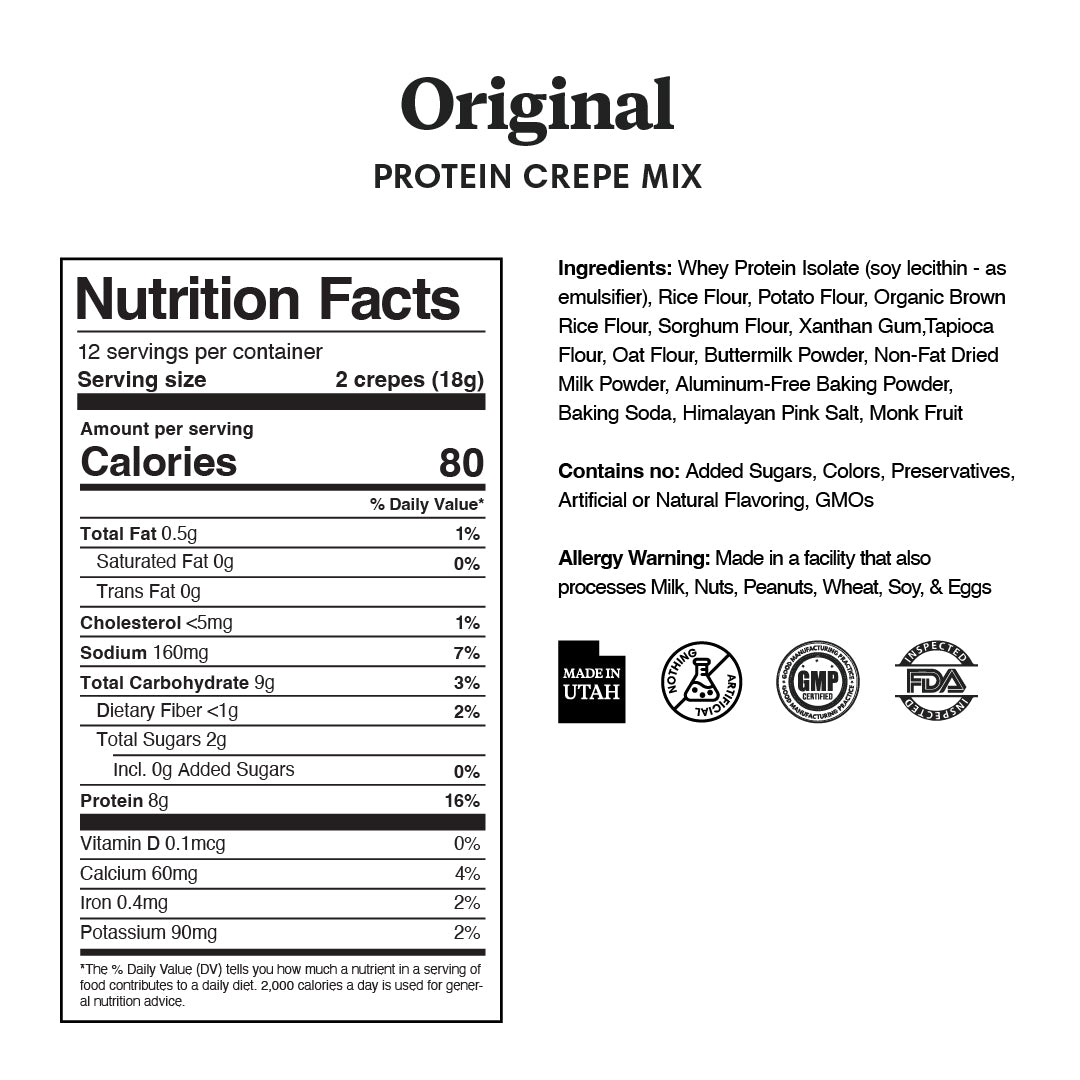
This is the core technique using ProDough Original Protein Crepe Mix.
Ingredients (per batch, 4-6 crepes):
– ProDough Original Protein Crepe Mix — per package directions
– Liquid: water, milk, or unsweetened almond milk
– 1 egg (optional, adds richness and helps with binding)
– Pinch of salt
– Light cooking spray or a small amount of butter
Step 1: Prepare the Batter
Combine the ProDough Protein Crepe Mix with your liquid of choice. Whisk until smooth. The batter should be significantly thinner than pancake batter — closer to the consistency of heavy cream. If it looks too thick, add liquid a tablespoon at a time. Lumps are the enemy: whisk thoroughly or blend with an immersion blender for 20 seconds.
If time allows, let the batter rest for 10-15 minutes at room temperature. This allows the ingredients to hydrate fully and produces a more tender crepe. It also helps the gluten (if present) relax, which reduces the chance of tearing.
Step 2: Heat the Pan
Place your nonstick pan over medium-low heat. This is where most beginners go wrong — too high a temperature produces brown, brittle crepes that crack when folded. You want the pan warm enough that a drop of water sizzles and evaporates immediately, but not so hot that the batter seizes on contact.
Apply a light coat of cooking spray or a thin smear of butter. The less the better — too much fat makes the crepe greasy and prevents the characteristic thin, lacy texture.
Step 3: Pour and Swirl
Pour approximately 3 tablespoons of batter into the center of the pan. Immediately lift the pan and tilt it in a circular motion to spread the batter into a thin, even circle. Work quickly — you have about 3-5 seconds before the batter sets. This technique takes one or two practice runs to feel natural.
Alternatively, use a crepe spreader: pour the batter in the center, then quickly spread it in concentric circles with the spreader. This method produces more consistent results but requires the tool.
Step 4: Cook and Flip
The first side takes 60-90 seconds. You’ll know it’s ready to flip when: the edges start to lift slightly from the pan, the surface looks matte rather than shiny and wet, and the bottom is lightly golden. Slip the spatula under one edge, loosen around the circumference, and flip in one confident motion. The second side takes 30-45 seconds.
Step 5: Stack and Store
Transfer the finished crepe to a plate. Stack subsequent crepes on top — they won’t stick together. If making ahead, place a small piece of parchment paper between crepes before refrigerating.
Common Mistakes and How to Fix Them
Crepes are tearing
Cause: pan too hot, batter too thick, or trying to flip too early. Fix: lower the heat, add more liquid to thin the batter, and wait until the top surface is fully matte before flipping.
Crepes have a rubbery texture
Cause: too much protein powder relative to flour, or overworking the batter. Fix: use a purpose-built protein crepe mix (like ProDough) rather than DIY protein powder additions. ProDough’s formula is engineered for the right texture.
Batter sticks to the pan
Cause: insufficient coating or pan not hot enough before adding batter. Fix: ensure the pan is properly heated and lightly coated before each crepe.
Crepes taste too “protein-y”
Cause: low-quality protein source or too high a protein content. Fix: start with ProDough’s mix, which is specifically formulated to minimize the protein powder flavor.
Uneven thickness
Cause: pouring too much batter or not swirling fast enough. Fix: use less batter (start with 2.5 tablespoons) and practice the swirl motion.
How to Make Protein Crepes with Sweet Fillings
The sweet crepe is the most intuitive application and the best starting point for beginners.
Classic High-Protein Sweet Filling:
– Greek yogurt (high-protein base) — 3 tablespoons
– Fresh berries — a small handful
– Drizzle of honey or sugar-free maple syrup
– Optional: a sprinkle of granola for crunch
Layout: spread the yogurt down the center of the crepe, add berries, fold or roll, drizzle with syrup. Macros are excellent: high protein from both the crepe and yogurt, moderate carbs from berries, minimal added sugar.
Peanut Butter Banana:
– Natural peanut butter — 1.5 tablespoons
– Sliced banana — half a banana
– Optional: mini dark chocolate chips or cacao nibs
The peanut butter adds healthy fat and additional protein. Banana provides natural sweetness and potassium. This filling is substantial enough to count as a complete breakfast.
Ricotta and Lemon:
– Part-skim ricotta — 3 tablespoons
– Lemon zest — from half a lemon
– Honey — 1 teaspoon
– Optional: fresh mint
Light and refreshing. The ricotta adds protein and creaminess without heaviness. This is the filling that converts skeptics — it tastes like something from a brunch restaurant.
How to Make Protein Crepes with Savory Fillings

The underrated application of protein crepes is savory — and it’s where the macro potential really shines.
Eggs and Vegetables:
Scramble 2 eggs with spinach, diced peppers, and a pinch of cumin. Spread the scrambled egg mixture across the crepe and fold. This filling stacks significant protein from both the crepe and eggs, making it one of the highest-protein breakfast options in the guide.
Smoked Salmon and Cream Cheese:
Spread 2 tablespoons of cream cheese on the crepe, add 1-2 slices of smoked salmon, thin cucumber slices, and a squeeze of lemon. This is the most elegant application of a protein crepe — brunch-level presentation with serious nutritional credentials.
Turkey and Avocado:
Sliced turkey breast, avocado, roasted peppers, and a small amount of hummus. Fold into a wrap format. The protein crepe serves as a higher-protein alternative to a flour tortilla, with better texture than most protein wraps on the market.
Meal Prep and Storage: Making Protein Crepes Ahead
For batch prep: make 8-10 crepes at a time. Let them cool completely before stacking with parchment. Refrigerate up to 4 days. Reheat one at a time in a dry pan (30 seconds per side) or microwave under a damp paper towel (20-30 seconds).
For freezing: freeze individual crepes between parchment sheets in a zip-lock bag. Defrost at room temperature for 15 minutes or microwave directly from frozen (40-50 seconds).
For meal prep containers: roll filled crepes and store them in meal prep containers. Sweet options like Greek yogurt and berry tend to make the crepe slightly soft after a few hours, so pack filling separately if making more than 24 hours ahead. Savory crepe wraps hold up better since the fillings don’t release liquid.
Scaling Up: The 4-Pack Advantage
If you’re serious about integrating protein crepes into your weekly routine, the ProDough 4-pack offers the best per-unit pricing. At a typical rate of 1-2 batches per week, a 4-pack covers a full month of crepe mornings.
ProDough Protein Bakeshop ships free on orders over $100 — easy to hit if you combine the 4-pack crepe mix with the Buttermilk Protein Pancake & Waffle Mix for variety. Their Protein Oatmeal Quick Cups are a useful addition for mornings when you need something even faster than making crepes.
Beyond Crepes: Expanding Your ProDough Routine
Once you’ve mastered the crepe technique, the learning curve for other ProDough products is minimal. The same principles — proper batter consistency, controlled heat, patience — apply to their pancake and waffle mixes. The main adjustment is batter thickness: pancake batter should hold its shape when poured, while crepe batter should flow freely.
The Protein Oatmeal Quick Cups require no technique at all — they’re the zero-learning-curve option for days when even making crepe batter feels like too much.
For an in-depth look at the full product range and how each item performs, see our ProDough Review 2026. For a broader guide to choosing the right protein crepe mix for your goals — including macro breakdowns and product comparisons — check out our Protein Crepe Mix 2026 complete guide.
Frequently Asked Questions
How do I make protein crepes without them tearing?
Use a batter that’s thin enough — about the consistency of heavy cream. Cook on medium-low heat. Wait until the top is completely matte before flipping. A flexible, thin spatula helps. Starting with a purpose-built mix like ProDough gives you the best structural integrity.
Can I make protein crepes with just egg whites?
Yes, but egg-white-only crepes are very delicate and prone to tearing. They also have a distinct eggy flavor. A dedicated protein crepe mix gives better results in terms of both structure and taste.
How many calories are in a protein crepe?
It depends on the mix and your batter recipe. With ProDough’s Original Protein Crepe Mix, each crepe (before filling) is a fraction of the total bag’s calories. Check the package nutrition label for exact numbers. Fillings add to the calorie total — a Greek yogurt and berry filling adds approximately 80-120 calories per crepe.
Can I make protein crepes dairy-free?
Yes — substitute almond milk, oat milk, or coconut milk for dairy milk. The texture changes slightly depending on the liquid, but the crepes are still workable. Avoid watery liquids like rice milk, which thin the batter too much.
What’s the best pan for making protein crepes?
A quality nonstick pan (Teflon or ceramic coating) in the 8-10 inch range is ideal. A carbon steel pan seasoned properly also works excellently. Avoid cast iron for beginners — the uneven heat and tendency to stick makes the learning curve steeper.
How much protein is in a ProDough protein crepe?
Check the ProDough package for per-serving data. The exact amount varies by formulation and serving size. As a general benchmark, a high-quality protein crepe mix delivers 8-15g of protein per serving from the batter alone.
Can I use a blender to make crepe batter?
Yes — a blender produces very smooth batter and can also be used as a storage container (pour directly from the blender into the pan). Blend on low for 20-30 seconds. If using a high-powered blender, be careful not to overblend, which can incorporate too much air into the batter.
How long does protein crepe batter keep in the fridge?
Rested batter can be stored covered in the refrigerator for up to 48 hours. Give it a stir before using — the ingredients may settle. The batter often actually improves after overnight resting, as the proteins and starches hydrate fully.
Can I make protein crepes in advance for the whole week?
Yes — this is one of the best uses of protein crepes. Make a batch of 8-12 crepes on Sunday, stack with parchment, and refrigerate. Reheat individual crepes in 20-30 seconds in a pan or microwave when needed. Fillings are best added fresh.
What’s the difference between a protein crepe and a protein pancake?
A protein crepe is thin and pliable — designed for folding or rolling with fillings. A protein pancake is thick and fluffy — eaten flat with toppings. Both use high-protein batter, but the cooking technique and texture are different. Crepe batter has more liquid relative to flour, and cooking time is shorter.